

Views: 0 Author: Site Editor Publish Time: 2026-08-12 Origin: Site


Grid reliability and high-capacity power transmission demand advanced insulation materials as the baseline for modern electrical infrastructure. Specifying the wrong cable insulation for high-voltage or harsh-environment projects leads to thermal degradation, dielectric failure, non-compliance penalties, and catastrophic system downtime. Field engineers and project managers must carefully evaluate insulation properties to ensure long-term operational stability across diverse installation environments. We define cross-linked polyethylene (XLPE), examine its molecular advantages over legacy materials, and establish a technical framework for evaluating its suitability in commercial, industrial, and marine applications. Understanding the physical and electrical characteristics of these materials prevents costly rework and ensures compliance with stringent international standards. By analyzing thermal ratings, mechanical durability, and installation constraints, engineering teams can confidently select the right cable architecture for underground duct banks, direct burial trenches, and complex offshore installations.
Cross-linked polyethylene represents a major advancement in polymer engineering for electrical applications. The manufacturing process involves a chemical reaction called cross-linking or vulcanization. During this phase, linear polyethylene chains bond together to form a robust three-dimensional network. This molecular restructuring fundamentally changes the physical properties of the base material. The resulting insulation provides exceptional stability under electrical stress. It prevents the polymer chains from sliding past one another when subjected to high temperatures. This structural integrity makes the XLPE Power Cable highly reliable for demanding electrical infrastructure. Field crews rely on this stability when pulling heavy cables through complex conduit runs, knowing the insulation will maintain its uniform thickness and dielectric strength.
Standard polyethylene is a thermoplastic material. Thermoplastics melt when exposed to high heat and harden again upon cooling. This characteristic limits their use in high-voltage applications where conductors generate significant thermal energy under heavy load. Cross-linking transforms the polyethylene into a thermosetting polymer. Once the cross-linking process is complete, the material cannot melt or deform under normal high-heat conditions. It retains its structural integrity even during severe thermal stress. This thermosetting nature ensures the insulation will not flow away from the conductor during emergency overload situations, preventing catastrophic phase-to-ground faults in underground vaults and cable trays.
Manufacturers utilize three primary methods to cross-link polyethylene, each suited for different voltage classes and application requirements. The peroxide method involves adding peroxide compounds to the polymer melt. Heat triggers a chemical reaction that forms the cross-links within a continuous vulcanization tube. This method is standard for medium and high-voltage cables due to its high degree of cross-linking and purity. The silane method introduces silane molecules that graft onto the polyethylene backbone. Moisture exposure in a sauna or hot water bath then completes the cross-linking process. This approach is highly efficient for low-voltage applications. Finally, electron beam irradiation uses high-energy electrons to physically knock hydrogen atoms off the polymer chains, forcing them to bond. Each method impacts the final cable specification, flexibility, and long-term reliability in the field.
Thermal endurance defines the operational limits of any power transmission system. XLPE insulation carries a standard continuous operating limit of 90°C. This allows the cable to carry higher currents compared to older insulation types, optimizing conduit space and reducing overall copper or aluminum requirements. During emergency overload conditions, the material safely withstands temperatures up to 130°C for limited durations. In the event of a system fault, the short-circuit threshold reaches an impressive 250°C. These robust thermal ratings prevent immediate insulation failure during unexpected grid surges. They provide buffer time for protective relays and circuit breakers to isolate the fault before permanent cable damage occurs.
Efficient power transmission requires insulation with minimal energy absorption. XLPE features an exceptionally low dielectric constant and a very low dissipation factor. These properties mean the insulation absorbs very little electrical energy from the alternating current passing through the conductor. This minimizes energy loss over long-distance power transmission routes. High insulation resistance further prevents leakage currents from escaping into the surrounding environment or adjacent phases. These dielectric efficiencies make XLPE the optimal choice for minimizing transmission losses across extensive utility networks, directly impacting the efficiency of substations and distribution feeders.
Industrial environments subject cables to severe physical and chemical abuse during installation and operation. XLPE provides high tensile strength, resisting tearing and stretching during high-tension installation pulls through underground duct banks. It offers excellent abrasion resistance, protecting the conductor when dragged over rough terrain or through tight conduit bends. The material resists deformation even at elevated operating temperatures. Furthermore, XLPE demonstrates remarkable inertness to most industrial chemicals. It withstands exposure to harsh oils, aggressive solvents, and corrosive soil conditions. This chemical resilience ensures long-term reliability in petrochemical plants, wastewater treatment facilities, and heavy manufacturing environments.
Cable performance relies heavily on the interaction between the insulation and the metallic conductor. XLPE insulation pairs effectively with both Copper (Cu) and Aluminum (Al) conductors. Engineers must account for thermal expansion differences between the metal and the polymer. During peak load cycling, the conductor heats up and expands. The insulation must accommodate this expansion without cracking or losing adhesion to the conductor shield. The thermosetting nature of XLPE handles these physical changes seamlessly. It maintains a tight, protective grip around the conductor throughout decades of thermal cycling, preventing the formation of microscopic voids that could lead to partial discharge.
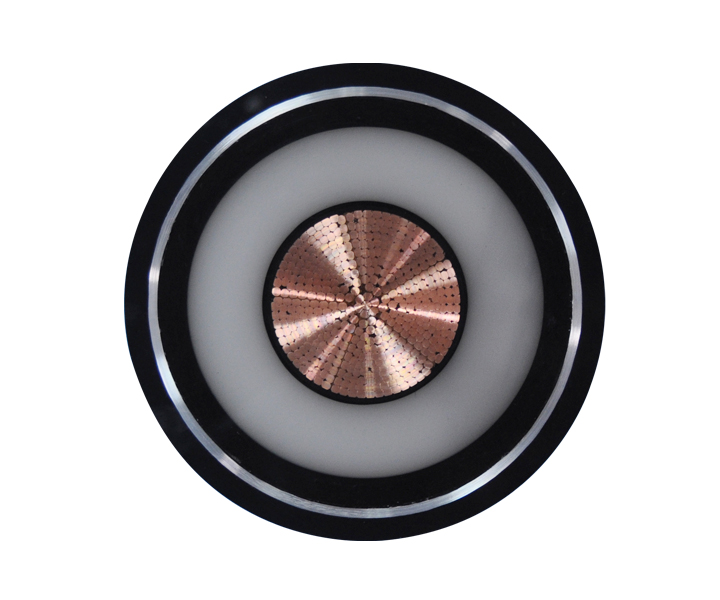
Utility companies rely on XLPE for their most demanding infrastructure projects. The material serves as the standard insulation for medium-voltage (MV), high-voltage (HV), and extra-high-voltage (EHV) grids. Its high dielectric strength allows manufacturers to reduce the overall insulation thickness. This creates lighter, more manageable cables without sacrificing safety or performance. Utilities deploy these cables in underground duct banks, direct burial trenches, and concrete-encased duct systems. The reduced weight and superior electrical properties streamline grid expansion projects. They enable reliable power delivery to expanding urban centers and remote substations, simplifying the logistics of cable pulling and splicing in congested city streets.
Offshore environments present unique challenges for electrical infrastructure. Saltwater, constant vibration, and extreme pressures degrade standard cables rapidly. XLPE delivers exceptional performance in offshore wind farms, shipboard wiring, and subsea interconnectors. When deployed as a marine power cable, the insulation requires specific moisture-blocking designs. Manufacturers incorporate water-swellable tapes, lead sheaths, and heavy metallic armoring to protect the XLPE core from water ingress and mechanical damage. These robust constructions ensure uninterrupted power transmission beneath the ocean surface. They meet the rigorous safety demands of the global maritime industry, supporting dynamic positioning systems and heavy deck machinery.
Renewable energy installations require cables that withstand harsh outdoor conditions and fluctuating loads. Solar farms utilize XLPE cables to connect photovoltaic arrays to central inverters and step-up transformers. The material handles the thermal cycling inherent to solar power generation. Petrochemical plants rely on XLPE to power heavy machinery in chemically aggressive zones where standard plastics would degrade. Heavy manufacturing facilities use these cables to supply reliable energy to automated production lines and large motor loads. The combination of thermal stability and chemical resistance ensures these industrial sectors avoid unplanned downtime and maintain continuous production schedules.
Beyond bulk power delivery, XLPE serves a vital role in automated industrial environments. Modern facilities rely on complex networks of sensors, actuators, and control systems. XLPE's low capacitance makes it highly effective for critical signal and control cables. Low capacitance prevents signal distortion over long cable runs, ensuring precise communication between programmable logic controllers (PLCs) and remote field devices. This electrical clarity prevents data corruption in sensitive manufacturing processes. It guarantees accurate monitoring and control across expansive industrial campuses, reducing the risk of false trips and operational errors.
Engineers frequently compare XLPE to traditional PVC insulation when specifying low to medium voltage systems. The most significant difference lies in their thermal limits. XLPE operates safely at 90°C continuously, while standard PVC is limited to 70°C. This higher thermal capacity allows XLPE cables to carry more current for a given conductor size, potentially allowing for smaller, more cost-effective cable selections. Environmental impact also separates the two materials. XLPE is inherently halogen-free. In the event of a fire, it does not release toxic, corrosive smoke. PVC emits dangerous hydrogen chloride gas when burned, which damages sensitive electronic equipment and poses severe life-safety risks. This makes XLPE the safer choice for enclosed spaces, transit tunnels, and public infrastructure.
Ethylene Propylene Rubber (EPR) is another common thermosetting insulation used in medium voltage applications. When evaluating flexibility, EPR holds a distinct advantage. It is softer and more pliable than XLPE. This makes EPR easier to install in confined spaces, tight manholes, or complex cable trays. However, XLPE outperforms EPR in electrical efficiency. XLPE offers significantly lower dielectric losses and lower capacitance. This makes it superior for higher voltage transmission over long distances where charging currents become a concern. Engineers must weigh the installation convenience of EPR against the long-term electrical efficiency and lower transmission losses of XLPE.
| Property | XLPE | EPR | PVC |
|---|---|---|---|
| Continuous Temperature Rating | 90°C | 90°C / 105°C | 70°C / 90°C |
| Short Circuit Rating | 250°C | 250°C | 160°C |
| Dielectric Losses | Very Low | Medium | High |
| Flexibility | Rigid | Highly Flexible | Moderate |
| Moisture Resistance | Excellent (with TR additives) | Excellent | Good |
The structural rigidity of XLPE presents specific installation challenges for field crews. The cross-linked molecular structure makes the cable stiffer than rubber alternatives. Installation crews must strictly adhere to minimum bending radii guidelines to prevent mechanical damage. Forcing the cable around tight corners or undersized sheaves can cause microscopic cracking in the insulation and damage the semiconducting shields. These micro-cracks compromise the dielectric strength and lead to premature failure through partial discharge. Engineers must calculate bend radii based on the cable's overall diameter and voltage rating. Proper planning of conduit layouts, sweep elbows, and cable tray routing prevents physical damage during the pulling process.
| Cable Type | Minimum Bending Radius (Multiplier of Cable OD) |
|---|---|
| Single Core (Unarmored) | 15x to 20x OD |
| Single Core (Armored) | 12x to 15x OD |
| Multi-Core (Unarmored) | 12x to 15x OD |
| Multi-Core (Armored) | 10x to 12x OD |
Moisture ingress poses a severe threat to underground power systems. Water treeing is a phenomenon where microscopic, tree-like structures form within the insulation. This degradation is caused by the combined presence of moisture and localized electrical stress at impurity sites. Over time, water trees bridge the insulation, causing catastrophic dielectric breakdown. Long-term thermal aging also slowly degrades the polymer structure if operated beyond its rated limits. To mitigate these risks, engineers specify tree-retardant XLPE (TR-XLPE) for wet environments. Manufacturers also incorporate water-swellable tapes and extruded metallic sheaths to create an absolute moisture barrier, ensuring the insulation remains dry throughout its service life.
Standard XLPE insulation is vulnerable to ultraviolet (UV) radiation. Prolonged exposure to direct sunlight breaks down the polymer chains. This causes the insulation to become brittle, crack, and eventually fail, exposing the energized conductor. If the cable will be installed above ground without conduit protection, specific countermeasures are required. Manufacturers add carbon black to the polymer matrix to absorb and dissipate UV energy. Alternatively, they apply specialized UV-resistant outer jacketing, such as high-density polyethylene (HDPE) or specially formulated PVC, over the insulated core. These protective measures ensure the cable maintains its physical integrity in harsh outdoor environments and aerial installations.
The thermosetting nature of XLPE complicates end-of-life disposal. Unlike thermoplastics, XLPE cannot be simply melted down and remolded into new products. This presents environmental restrictions for sustainability-focused organizations managing infrastructure upgrades. However, modern recycling technologies offer viable solutions. Mechanical recycling processes grind the old insulation into fine powders. These powders serve as filler materials in new rubber or plastic compounds for non-electrical applications. Incineration-for-energy recovery provides another disposal route, capturing the high caloric value of the polymer in specialized waste-to-energy plants. Procurement teams must plan for these specific end-of-life management strategies when decommissioning old circuits.
Procuring reliable electrical infrastructure requires strict adherence to international standards. Buyers must verify that the cables meet relevant IEC 60502 specifications for power distribution. North American projects typically require compliance with IEEE and ICEA standards for utility and industrial applications. For maritime applications, the requirements are even more stringent. Cables must carry approvals from recognized marine classification societies. Certifications from organizations like the American Bureau of Shipping (ABS) or Det Norske Veritas (DNV) validate the cable's suitability for harsh offshore environments. These standards ensure baseline safety, flame retardancy, and performance metrics are met before installation begins.
Rigorous testing guarantees the cable will perform as specified upon delivery to the job site. Buyers should demand comprehensive Factory Acceptance Testing (FAT) protocols. Partial discharge testing is critical for medium and high-voltage cables. It detects microscopic voids or impurities within the insulation that could cause premature failure. High-voltage withstand tests subject the cable to extreme electrical stress, verifying its dielectric strength. Hot set testing confirms the degree of cross-linking within the polymer. It ensures the material will not deform under high operational temperatures. These tests provide verifiable proof of manufacturing quality and reduce the risk of commissioning failures.
The XLPE power cable remains the globally preferred choice for reliable, high-capacity power distribution. Its molecular structure provides unmatched thermal stability, dielectric efficiency, and chemical resistance. This combination of properties ensures long-life infrastructure performance across diverse utility, industrial, and marine applications. Proper specification and installation practices maximize the lifespan of these critical assets.
A: XLPE stands for Cross-Linked Polyethylene. It is a thermosetting polymer used primarily as an insulation material for power and signal transmission cables. The cross-linking process enhances the material's thermal stability and mechanical strength, preventing it from melting under high electrical loads.
A: XLPE insulation is rated for a continuous operating temperature of 90°C. It can safely withstand emergency overload conditions up to 130°C and short-circuit temperatures reaching 250°C without losing its structural integrity.
A: Yes, XLPE is highly suitable for marine applications due to its excellent moisture and chemical resistance. However, it requires proper armoring, moisture barriers, and certifications from marine classification societies like DNV or ABS to ensure survivability in harsh offshore environments.
A: XLPE offers superior dielectric strength, lower electrical losses, and higher thermal limits (90°C vs. 70°C) compared to PVC. XLPE is also halogen-free, making it safer during a fire as it does not emit toxic, corrosive smoke.
A: The primary restrictions include structural rigidity, which limits installation bend radii and requires careful pulling calculations. Additionally, recycling presents challenges at the end of its life, as thermoset plastics cannot be simply melted down and reformed like thermoplastics.
A: Water treeing is a microscopic degradation process caused by the presence of moisture and electrical stress within the insulation. Over time, it compromises the dielectric strength. Specifying tree-retardant XLPE (TR-XLPE) effectively prevents this issue in wet environments.
A: Under normal operating conditions and with proper installation, an XLPE insulated cable features a long-life design typically lasting 30 to 40 years or more. Lifespan depends heavily on environmental exposure, load cycling, and adherence to installation guidelines.
 简体中文
简体中文 

