

Views: 0 Author: Site Editor Publish Time: 2026-08-07 Origin: Site


Equipment downtime due to power failure costs thousands of dollars per minute in active extraction zones, and electrical faults present severe life-safety hazards. A Mining Power Cable acts as the critical lifeline of both surface and underground operations. Standard industrial electrical cables cannot survive the extreme mechanical stress, continuous abrasion, moisture, chemical exposure, and severe temperature fluctuations inherent to mining tunnels and open-pit sites. We define the mining power cable as a highly specialized, heavily engineered asset designed specifically for these brutal conditions. To maintain operational continuity, site managers must evaluate cable anatomy, application-specific types, necessary termination accessories, and advanced monitoring technologies. Understanding these components ensures safety, strict regulatory compliance, and uninterrupted power distribution across harsh environments. Selecting the right infrastructure prevents catastrophic failures and keeps heavy machinery running safely.
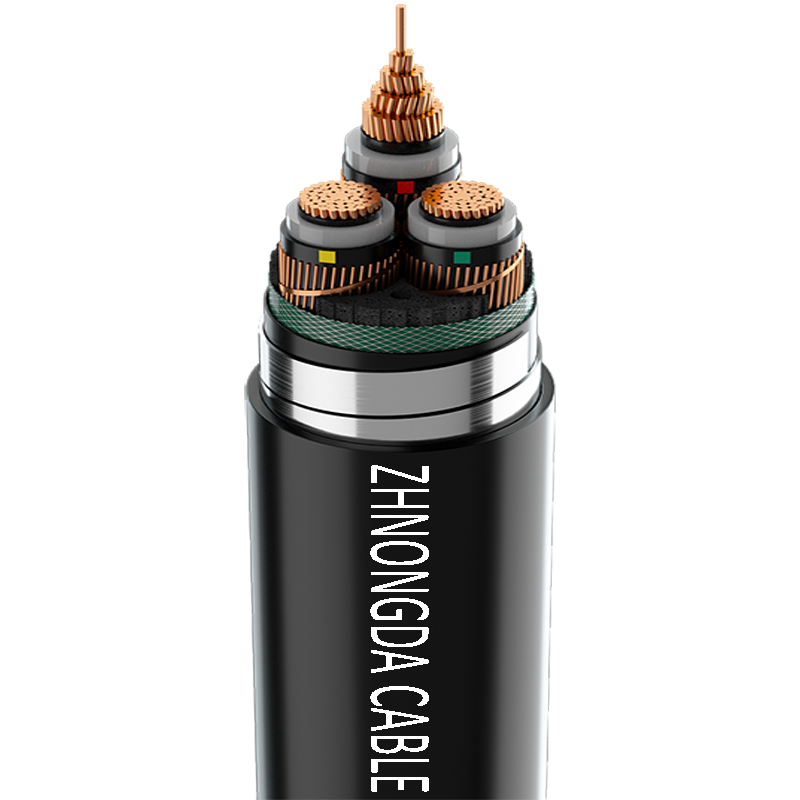
The internal construction of a mining cable dictates its performance in the field. Every layer serves a specific mechanical or electrical purpose, working together to prevent faults under extreme stress.
Mining operations require continuous movement of heavy machinery. Engineers utilize highly stranded, annealed tinned copper conductors to maintain maximum flexibility. This high stranding count prevents metal fatigue. Standard solid conductors would snap under the constant bending and dragging required in active tunnels. Tinned copper also resists corrosion caused by moisture and sulfur-rich environments. The conductor design directly dictates the physical flexibility of the entire assembly. For example, Class I or Class K stranding provides the necessary bend radius for trailing applications, allowing the cable to spool and unspool thousands of times without internal breakage.
Insulation must withstand high electrical loads and extreme heat. Manufacturers rely on advanced thermosetting elastomers, primarily Ethylene Propylene Rubber (EPR). EPR provides exceptional dielectric strength and thermal stability. It resists moisture ingress effectively, preventing electrical leakage even when submerged in flooded tunnel sections. The insulation thickness scales with the voltage rating to ensure personnel safety. Unlike standard PVC, EPR maintains its flexibility in sub-zero surface mining conditions while resisting thermal degradation during heavy load cycles.
The safety architecture relies heavily on proper shielding. Metallic shielding, using copper tape or braided wire, confines the electric field within the cable. This prevents external shocks and equalizes electrical stress across the insulation. Ground-check conductors are integrated into the core design. These conductors monitor ground continuity continuously. If the ground path breaks, the system instantly trips the power to protect personnel from lethal fault currents.
The outer sheath serves as the primary defense against physical destruction. Heavy-duty, reinforced outer jackets use Chlorinated Polyethylene (CPE) or Thermoplastic Polyurethane (TPU). These materials are engineered for maximum resistance to abrasion, tearing, oil, and harsh chemicals. They also feature UV resistance for surface operations. Crucially, mining jackets are formulated to resist flame propagation, preventing fires from spreading through underground shafts. A dual-layer jacket design often incorporates a reinforcing fiber braid between the inner and outer layers to maximize tensile strength and resist tearing when dragged over sharp rocks.
| Material Component | Primary Function | Common Material Used | Key Advantage in Mining |
|---|---|---|---|
| Conductor | Power Transmission | Tinned Copper (Highly Stranded) | Maximum flexibility and corrosion resistance |
| Insulation | Dielectric Protection | Ethylene Propylene Rubber (EPR) | High thermal stability and moisture resistance |
| Shielding | Electric Field Containment | Tinned Copper Braid | Prevents shock hazards and corona discharge |
| Outer Jacket | Mechanical Protection | CPE or TPU | Extreme abrasion, oil, and flame resistance |
Different mining environments demand specific cable architectures. Applying the wrong cable type to a specific machine guarantees premature failure and safety hazards.
Mobile machinery requires constant power while moving across rough terrain. Trailing cables power longwall shearers, continuous miners, loaders, large shovels, conveyors, and dewatering pumps. These cables demand extreme flexibility and drag resistance. They must survive being run over by heavy vehicles and scraped against jagged rocks. Engineers specify extra-heavy-duty jacketing for these dynamic applications. Type SHD-GC is a common specification, featuring individual conductor shielding and a ground-check wire to ensure maximum safety for personnel working directly alongside the moving equipment.
Feeder cables distribute electricity from surface substations to underground power centers. These are typically Medium Voltage (MV) lines, often rated between 5kV and 35kV. Engineers must balance current-carrying capacity (ampacity) with insulation thickness. Installation environments vary between tunnels, cable trays, and direct burial. Feeder cables are less flexible than trailing cables but offer superior protection for permanent or semi-permanent routing. They often utilize a heavier metallic shield and a thicker outer jacket to withstand rock falls and long-term exposure to acidic mine water.
Vertical power distribution requires specialized engineering. Borehole and shaft cables are suspended vertically down deep mine shafts. They integrate heavy steel wire armor. This armor supports the cable's own weight. Without wire armor, the copper conductors would stretch, leading to elongation and structural failure over deep vertical drops. The armor also protects against falling debris. Installation requires specialized clamping systems at the surface to grip the armor wires securely, transferring the mechanical load away from the electrical conductors.
Procurement requires a strict technical evaluation of the site's physical and electrical demands. Guesswork leads to equipment damage and compliance violations.
Site engineers must assess tension limits, crush resistance, and minimum bend radius. Thermal ratings dictate performance in extreme climates. You must match the cable's mechanical and thermal ratings to the physical realities of the site. Rocky terrain requires high crush resistance. Arctic surface operations demand cold-bend flexibility, whereas deep underground environments require high-heat tolerance. A cable rated for -40°C will maintain jacket integrity during winter surface mining, while a standard jacket would shatter under the same conditions.
Determine the required voltage class based on equipment load and transmission distance. Mining cables typically range from 600V to 35kV. Ampacity requirements dictate the conductor size. Thicker insulation is mandatory for higher voltages. However, thicker insulation increases the overall cable diameter and weight. This reduces flexibility and complicates manual handling during installation. Engineers must calculate voltage drop over long tunnel runs to ensure the machinery receives adequate power at the end of the line.
Verify all safety certifications before procurement. Regulatory bodies will shut down operations if unapproved cables are discovered on site. Non-compliant cables introduce severe legal, financial, and safety liabilities.
The cable itself is only one part of the power distribution system. The connection points are historically the most vulnerable areas in any mining electrical network.
A power distribution network is only as reliable as its connection points. Heavy-duty, explosion-proof couplers are required to safely join trailing cables and feeder lines. These connectors must handle high mating cycles. Ingress protection (IP ratings) is critical. High IP ratings keep moisture, coal dust, and explosive gases out of the electrical connection, preventing arc flashes. Couplers often feature mechanical interlocks that prevent disconnection while the line is energized, protecting workers from lethal arcs.
Jacket damage is inevitable in harsh environments. Specialized vulcanized splicing kits are used to repair damaged jackets in the field. These kits restore the dielectric integrity and mechanical strength of the cable. Strain-relief cable glands are essential at junction boxes and equipment entries. They secure the cable and prevent mechanical pull-out from the terminal block.
Modern mining operations are moving away from run-to-failure models. Integrating diagnostic technology directly into the power infrastructure prevents unexpected outages.
Modern infrastructure embeds fiber optic strands directly within the power cable. This allows for continuous, real-time temperature monitoring along the entire cable length. DTS technology identifies localized hot spots instantly. These hot spots are typically caused by insulation degradation, poor splicing, or excessive localized electrical loads. Early detection prevents catastrophic thermal runaway. The interrogator unit pulses light down the fiber and measures the backscatter to pinpoint temperature anomalies within a meter of accuracy.
Distributed Strain Sensing (DSS) detects physical elongation, crushing, or excessive tension. Integrating fiber optic sensing for power cable monitoring alerts operators before mechanical failure occurs. This shifts maintenance strategies from reactive repairs to predictive maintenance. You can replace a stressed cable section during scheduled downtime rather than suffering an unexpected mid-shift outage. This technology is particularly valuable for vertical shaft cables where elongation is a constant threat.
Fiber-optic equipped cables require higher upfront procurement and integration costs. Specialized interrogator units are needed to read the optical data. However, the long-term return on investment is substantial. Preventing a single unplanned outage often covers the cost difference. Continuous monitoring extends cable lifecycles by ensuring operating parameters remain within safe limits, allowing site managers to maximize the utility of their electrical assets.
Procuring the right cable is only the first step. Proper handling, installation, and supply chain management dictate the ultimate success of the electrical infrastructure.
Improper installation permanently damages internal shielding and insulation. Exceeding the maximum pulling tension stretches the copper conductors. Violating the minimum bend radius cracks the EPR insulation. Require strict adherence to manufacturer installation guidelines. Use specialized handling equipment, such as motorized cable reels and tension-monitored winches, to protect the asset during deployment. Dragging a new cable over sharp rocks during installation compromises the jacket before the cable is even energized.
Highly specialized or custom-engineered mining cables often carry long manufacturing lead times. Standard industrial suppliers rarely stock MSHA-approved heavy-duty trailing cables. Establish strategic vendor relationships early in the project planning phase. Maintain adequate on-site spare inventory for critical power paths and proprietary termination accessories to avoid prolonged operational halts. Relying on just-in-time delivery for specialized mining infrastructure introduces unacceptable operational risks.
A: Mining cables feature highly stranded conductors for extreme flexibility, reinforced thermoset insulation, and heavy-duty jackets designed to withstand severe abrasion, crushing, and chemical exposure. Standard industrial cables lack this extreme mechanical durability and are not rated for continuous dragging or explosive environments.
A: A trailing cable provides continuous power to mobile mining equipment, such as longwall shearers, continuous miners, and large shovels. It is designed to be dragged behind the machinery, requiring extreme flexibility and resistance to tearing and crushing.
A: Fiber optic strands embedded in the cable measure temperature and physical strain along the entire length in real-time. This data detects hot spots or mechanical stretching, allowing operators to perform predictive maintenance before a catastrophic failure occurs.
A: Voltage ratings vary by application. Low-voltage trailing cables typically operate between 600V and 2kV. Medium-voltage feeder cables, which distribute power from surface substations to underground centers, generally range from 5kV to 35kV.
A: MSHA approval certifies that the cable meets strict safety and flame-resistance standards required for US mining operations. Using unapproved cables violates federal law and creates severe fire and electrocution hazards.
A: Safe termination requires heavy-duty, explosion-proof high-voltage couplers, strain-relief cable glands, and specialized vulcanized splicing kits. These accessories maintain electrical integrity, prevent moisture ingress, and secure the cable against mechanical pull-out.
A: Repairs require specialized vulcanizing splicing kits. Technicians strip back the damaged layers, rebuild the insulation and shielding with specialized tapes, and apply a vulcanized jacket patch cured with heat to restore mechanical and dielectric integrity.
 简体中文
简体中文 

