

Views: 0 Author: Site Editor Publish Time: 2026-08-11 Origin: Site


Electrical failures in harsh, high-traffic, or subterranean environments carry severe financial and operational penalties. Mechanical damage, continuous abrasion, and environmental exposure routinely compromise standard wiring systems, leading to unexpected downtime and hazardous fault conditions. Standard conduit-wire systems often fail to provide adequate protection against crushing forces, moisture ingress, and rodent damage. Furthermore, installing rigid conduit adds significant labor hours and introduces spatial constraints in complex structural layouts.
The solution lies in specialized infrastructure designed for physical resilience. An armored power cable functions as a versatile, self-contained, and highly durable system. It mitigates physical risks directly at the cable level, streamlines the installation process, and ensures strict compliance in demanding industrial, commercial, and signal-routing applications. By integrating mechanical defense into the cable assembly, facilities can bypass the limitations of traditional conduit while maintaining absolute electrical integrity.
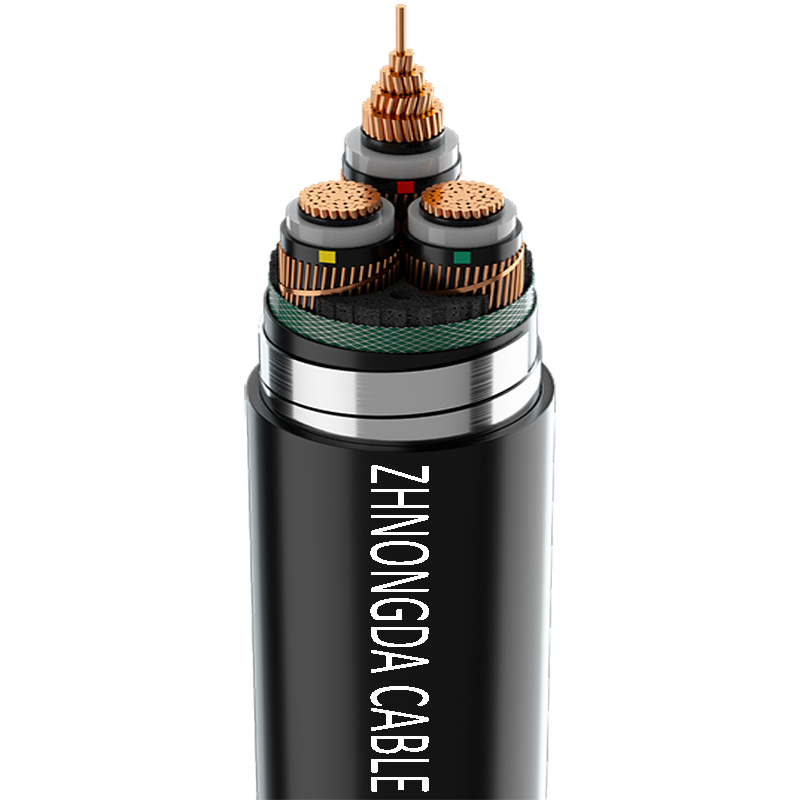
Understanding the protective capabilities of an armored cable requires examining its internal construction. Each layer serves a distinct mechanical or electrical purpose, working together to ensure safe power delivery under extreme physical stress. Field engineers rely on this multi-layered defense to maintain operational continuity in environments where standard wiring would fail within weeks.
The core of the cable begins with the conductor. Manufacturers typically use highly conductive copper or lightweight aluminum. The stranding configuration of these metals dictates the flexibility and current-carrying capacity of the cable. Solid conductors offer rigidity for fixed installations, while stranded variants provide necessary flexibility for routing through complex industrial spaces. These conductors handle both high-load power transmission and sensitive signal routing. When pulling these cables through underground trenches, the tensile strength of the conductor itself plays a role in preventing internal breakage.
Surrounding the conductor is the insulation layer. Cross-Linked Polyethylene (XLPE) or Polyvinyl Chloride (PVC) are the standard materials. XLPE provides superior thermal stability, allowing the cable to operate safely at higher temperatures (typically up to 90°C) without degrading. This dielectric strength prevents electrical leakage and ensures the current remains strictly contained within the conductor pathway. In industrial settings, thermal overloads happen, and XLPE insulation provides the necessary buffer to prevent catastrophic melting.
Next is the bedding layer, an essential inner sheath. This component separates the electrical insulation from the harsh metallic armor. Without bedding, the rigid metal armor would grind against the insulation during installation or thermal expansion, causing internal abrasion and eventual short circuits. The bedding acts as a protective buffer, absorbing internal friction. We often see failures in poorly manufactured cables where the bedding is too thin, leading to armor penetration during tight bends.
The metallic armor layer provides the defining characteristic of the cable. Constructed from robust metal wires or tapes, this layer absorbs blunt impact, dissipates mechanical force, and resists crushing loads. It forms an impenetrable physical barrier against external threats like heavy machinery impact, sharp rock edges in direct burial scenarios, and aggressive rodent attacks. This is the primary reason contractors specify these cables for direct burial without sand beds in rocky terrain.
Finally, the outer sheath encases the entire assembly. This final protective jacket defends the internal metallic and electrical components from environmental degradation. Depending on the installation environment, the sheath utilizes Low Smoke Zero Halogen (LSZH) materials for enclosed spaces or UV-resistant, weatherproof PVC for outdoor and underground exposure. It blocks moisture, resists chemical spills, and prevents the metal armor from rusting.
| Cable Layer | Primary Material | Core Function | Field Application Note |
|---|---|---|---|
| Conductor | Copper / Aluminum | Transmits electrical current or data signals. | Stranded copper is preferred for runs requiring multiple bends. |
| Insulation | XLPE / PVC | Provides dielectric strength and thermal stability. | XLPE is mandatory for high-temperature industrial environments. |
| Bedding | Extruded Polymeric Material | Prevents internal friction between armor and insulation. | Must be inspected for uniform thickness before termination. |
| Armor | Steel / Aluminum | Delivers mechanical protection and crush resistance. | Requires specific gland types for proper mechanical grip. |
| Outer Sheath | LSZH / PVC | Protects against moisture, chemicals, and UV radiation. | LSZH is strictly enforced in underground transit systems. |
Selecting the correct armor type determines the success and safety of the electrical installation. Different metallic configurations address specific mechanical threats and electrical phenomena. Installing the wrong armor type can lead to severe overheating, structural failure, or code violations.
Steel Wire Armor serves as the industry standard for multi-core cables. The heavy galvanized steel wires wrap helically around the bedding layer, providing exceptional tensile strength. This high tensile rating makes SWA the primary choice for direct burial applications, heavy industrial sites, and vertical drops where the cable must support its own substantial weight. The steel wires effectively deflect sharp impacts and resist crushing forces from heavy vehicle traffic above ground. When we trench across active logistics yards, SWA is the only reliable option to survive the constant ground pressure.
Aluminum Wire Armor is strictly necessary for single-core cables. When alternating current flows through a single conductor, it generates a fluctuating magnetic field. If steel armor surrounds a single core, this magnetic field induces eddy currents within the steel, leading to rapid overheating and potential fire hazards. Aluminum is non-magnetic, preventing these dangerous eddy currents. Engineers specify AWA for high-voltage power distribution networks where single-core configurations are mandatory for handling massive electrical loads. You will see AWA extensively in substation tie-ins and main switchgear feeds.
Alternative armoring methods include corrugated steel tape and interlocked armor. Tape armoring involves wrapping flat steel tapes around the cable. This method provides an excellent moisture barrier and superior rodent protection, though it significantly reduces cable flexibility. Interlocked armor, conversely, uses a continuous strip of metal wound in an interlocking pattern. This design offers higher flexibility and is heavily utilized in commercial retrofits where routing cables around tight corners is unavoidable. Interlocked armor is the go-to for navigating complex ceiling plenums in existing structures.
Armoring is not exclusive to high-voltage power distribution. Industrial environments frequently threaten low-voltage signal, control, and instrumentation routing. Data integrity requires physical protection just as much as power delivery. Armored control cables route critical sensor data across factory floors, protecting the delicate internal pairs from forklift traffic, falling debris, and continuous vibration. A severed control cable can shut down an entire production line just as quickly as a severed main power feed.
Facility managers constantly evaluate whether to pull standard unarmored wire through rigid conduit or deploy a self-contained Armored Power Cable. The decision impacts installation speed, structural requirements, and long-term durability. Field experience shows that while conduit has its place, integrated armor solves many logistical headaches on complex sites.
Integrated armor provides consistent, uninterrupted crush resistance and abrasion defense. While traditional PVC or metal conduits offer good protection, they are susceptible to joint failures, cracking under heavy impact, and water accumulation within the pipe. An armored cable maintains a tight, waterproof outer sheath over its metal defense layer, ensuring moisture cannot pool around the conductors. The tensile strength of the integrated steel wires also prevents the cable from stretching and snapping during ground shifts. We frequently replace flooded conduit systems with direct-buried armored cables to permanently solve water ingress issues.
Routing a single, self-contained armored cable drastically reduces installation time. The traditional conduit method requires a multi-step process: measuring the run, cutting the pipe, bending the conduit to navigate obstacles, securing the empty pipe to the structure, and finally pulling the unarmored wire through the completed pathway. Armored cables eliminate the pipe installation phase entirely. Electricians simply lay the cable on trays or cleat it directly to the wall, cutting labor hours significantly. On large-scale industrial builds, this time savings translates directly to meeting tight project deadlines.
Tight or complex structural environments expose the limitations of rigid conduit. Bending metal pipes around existing HVAC ducts, plumbing, and structural beams requires specialized tools and consumes valuable space. Armored cables, particularly those with interlocked armor, offer superior routing capabilities. They navigate complex pathways smoothly, adhering to the contours of the building and saving critical space in crowded service shafts. When retrofitting older facilities, the ability to snake an armored cable through existing congested pathways is invaluable.
The primary trade-off for integrated protection is weight. Armored cables are significantly heavier than unarmored alternatives. This weight increase demands robust structural support. Installers must utilize heavy-duty cable trays, reinforced ladders, and specialized cleats to secure the load safely over long runs. Failing to adequately support the cable leads to excessive strain on termination points and potential structural damage to the mounting surfaces. We always calculate the total weight per meter and ensure the tray supports are rated for the specific load before pulling the first cable.
| Feature | Armored Cable | Unarmored Cable in Conduit |
|---|---|---|
| Installation Speed | Fast (Single pull process) | Slow (Multi-step pipe and pull) |
| Moisture Resistance | High (Tight outer sheath) | Moderate (Conduit joints can leak) |
| Space Requirements | Low (Follows structural contours) | High (Requires rigid bend radii) |
| Weight | Heavy (Requires heavy-duty trays) | Lighter (Distributed across conduit supports) |
The rapid expansion of the Industrial Internet of Things (IoT) drives the need for unified power and data delivery. Remote devices such as high-definition security cameras, environmental sensors, and wireless access points require both bandwidth and reliable low-voltage power. Deploying these devices in harsh environments presents a unique infrastructure challenge. Standard office-grade networking cables simply cannot survive the realities of an industrial site.
Standard Ethernet cables fail quickly when exposed to industrial wear, extreme weather, or rodent attacks. Running them through protective conduit adds unnecessary complexity to network expansions. An armored Power over Ethernet Cable solves this directly. These specialized cables encase standard twisted-pair copper within a robust metallic armor layer and a heavy-duty outer jacket. They deliver the necessary Gigabit bandwidth and PoE power while surviving direct burial, factory floor hazards, and severe weather exposure without requiring secondary conduit protection. We use these extensively for perimeter security cameras where trenching conduit is too disruptive.
Specifying the correct cable requires a rigorous evaluation of the electrical load, the physical environment, and regulatory requirements. Guesswork during the specification phase leads to catastrophic failures. You must approach the selection process methodically, verifying every parameter against site conditions.
Engineers must first define the voltage and current ratings. Matching the cable specifications to the exact load requirements prevents overheating and insulation breakdown. For long cable runs, calculating the voltage drop is critical. If the conductor cross-section is too small, the voltage will drop below acceptable levels before reaching the equipment, causing operational failures. We always upsize the conductor slightly on runs exceeding 100 meters to guarantee stable voltage at the load end.
Environmental compliance dictates the outer sheath material. Enclosed spaces, underground tunnels, and public buildings require Low Smoke Zero Halogen (LSZH) sheathing. In the event of a fire, LSZH materials do not emit toxic halogen gases or thick black smoke, allowing for safer evacuation. Conversely, outdoor routing requires UV-resistant jackets to prevent the sun from degrading the plastic over time. Installing standard PVC in a UV-heavy environment will result in the sheath cracking and exposing the armor within a few years.
Structural load and logistics require careful calculation. The physical weight of an armored cable run is substantial. Project managers must verify that existing infrastructure, including ceiling joists, wall anchors, and cable trays, can bear the combined load of multiple armored cables. Upgrading support structures is often necessary before installation begins. We have seen poorly supported trays collapse under the weight of multiple SWA runs, causing massive damage.
Finally, regulatory standards govern deployment. The National Electrical Code (NEC) and International Electrotechnical Commission (IEC) provide strict guidelines dictating where and how armored cables can be legally deployed. Compliance ensures the installation passes inspection and maintains facility insurance coverage. Always check local amendments to these codes, as municipal inspectors often have specific requirements for direct burial depths and warning tape placement.
Even the highest quality cable will fail if installed incorrectly. Field execution demands precision, specialized tools, and strict adherence to handling protocols. The physical nature of armored cables makes them unforgiving of sloppy installation practices.
Termination presents the most common installation challenge. Standard cable connectors cannot secure armored cables. Installers must use specialized cable glands, such as CW type glands for SWA. These glands perform two critical functions: they provide a watertight environmental seal against the outer sheath, and they mechanically grip the steel armor wires. This mechanical grip ensures the heavy cable does not pull out of the junction box under its own weight. Stripping the armor to the exact length required by the gland is a skill that takes practice to master.
Grounding and bonding the metallic armor is a non-negotiable safety requirement. The metal armor conducts electricity. If an internal fault occurs and the live conductor touches the armor, the entire outer metal layer becomes energized. Properly earthing the armor via the cable gland clears fault currents immediately, tripping the circuit breaker and preventing severe electrocution hazards. We always use earth tags on the glands and bolt them directly to the main grounding busbar.
Installers must strictly observe bend radius limitations. Every manufacturer specifies a minimum bend radius based on the cable's diameter. Forcing an armored cable into a tight corner that exceeds this limit permanently deforms the metal armor. This deformation crushes the internal bedding and insulation, creating immediate short circuits or hidden weaknesses that fail under future thermal stress. Use proper cable rollers and pulling socks to guide the cable smoothly around corners during installation.
Maintenance and fault location require specialized approaches. Locating an internal fault within an armored sheath is difficult because the damage is rarely visible from the outside. Maintenance teams rely on advanced testing protocols, such as Megger testing, to measure insulation resistance and identify degradation before a catastrophic failure occurs. Regular thermal imaging of the termination points also helps identify loose connections before they cause a fire.
Armored power cables stand as the definitive infrastructure choice for direct burial, heavy industrial applications, and high-risk mechanical environments where traditional conduit proves impractical or cost-prohibitive. They consolidate mechanical protection and electrical transmission into a single, highly resilient package.
When shortlisting electrical routing solutions, decision-makers must weigh the upfront material premium and the need for heavy-duty structural support against the substantial long-term savings. Eliminating conduit installation drastically reduces labor costs, while the integrated armor prevents costly maintenance and facility downtime caused by physical cable damage.
Take the following steps to ensure a successful deployment:
A: Armored cable (AC) typically features an interlocking metal tape armor and relies on the metal sheath combined with a bonding wire for grounding. Metal-clad (MC) cable includes a dedicated, full-sized grounding conductor inside the assembly. MC cable is generally more versatile and approved for a wider range of commercial and industrial applications under modern electrical codes.
A: Yes. Steel Wire Armored (SWA) cables are specifically designed for direct burial. The heavy steel wires protect the internal conductors from crushing forces, shifting soil, and sharp rocks. A proper trench depth and warning tape above the cable are still required by code.
A: Single-core cables carrying alternating current generate a magnetic field. If wrapped in magnetic steel armor, this field induces eddy currents within the steel, causing the cable to overheat dangerously. Aluminum is non-magnetic, preventing eddy currents while still providing mechanical protection.
A: While the metallic armor can serve as a Circuit Protective Conductor (CPC) or earth path if properly terminated with the correct glands, many installations still include a dedicated internal earth wire. Relying solely on the armor requires exact calculations to ensure it can handle potential fault currents safely.
A: Cutting requires a specialized heavy-duty hacksaw or an armored cable cutter to slice through the steel wires without damaging the internal insulation. Termination must be done using specific armored cable glands that mechanically clamp the armor wires and provide an earth tag for grounding.
A: The minimum bend radius depends on the cable's overall diameter and the manufacturer's specifications. Typically, for standard multi-core SWA cables, the minimum bend radius is 6 to 8 times the overall diameter of the cable. Exceeding this limit will crush the internal insulation and compromise the cable.
 简体中文
简体中文 

