

Views: 0 Author: Site Editor Publish Time: 2026-08-22 Origin: Site


Electrical failures in maritime environments represent severe safety and navigational hazards. Specifying standard industrial wiring for marine applications leads to rapid degradation from salt, vibration, and oil. This results in compliance failures, costly refits, and extreme fire risks. The marine environment demands specialized engineering to ensure continuous operation under harsh conditions.
To ensure vessel safety and regulatory compliance, engineers and procurement teams must understand the precise engineering requirements of a Shipboard Power Cable. You must calculate exact specifications, evaluate marine cable manufacturers, and navigate strict maritime standards. This guide breaks down the technical specifications, sizing considerations, and evaluation metrics necessary for selecting the correct electrical infrastructure for maritime applications.
A true marine-grade cable differs fundamentally from standard wire used in terrestrial industrial plants or small recreational boats. Success in a commercial or naval maritime environment requires components built for extreme durability. These cables utilize tinned copper conductors to resist oxidation and corrosion from continuous saltwater exposure. Standard bare copper turns green and degrades rapidly in high-humidity, saline air. Marine cables feature specialized cross-linked polyethylene (XLPE) or ethylene propylene rubber (EPR) insulation designed to withstand oil, mud, and mechanical abrasion. They must pass rigorous testing standards for fire resistance and flexibility, ensuring they remain operational during severe vessel movement.
Vessels utilize complex networks of wiring, often sharing the same cable trays. High-voltage and high-current power distribution cables are the heavy lifters. They transmit significant electrical loads to main systems. Control, instrumentation, and fiber optic cables are lighter-gauge wires designed for data transmission, sensor monitoring, and automated system commands. While they run parallel, power cables require significantly thicker insulation and different shielding to handle higher voltages and prevent electromagnetic interference with nearby sensitive communication lines.
| Cable Type | Primary Function | Typical Voltage Rating | Shielding Requirement |
|---|---|---|---|
| Power Cable | Main distribution, propulsion, heavy machinery | 600V to 15kV+ | Armor for mechanical protection, sometimes copper tape for EMI |
| Control Cable | Valve operation, relay logic, automated commands | 300V to 600V | Overall foil or braid shield to block external noise |
| Instrumentation | Sensor data, 4-20mA signals, low-level monitoring | 150V to 300V | Individual pair shielding to prevent cross-talk |
The primary role of these robust cables is to form the backbone of a vessel's electrical grid. They connect the main diesel generators to the primary switchboards and distribute power throughout the ship. Heavy-duty applications include powering main propulsion motors, bow thrusters, and heavy deck machinery such as anchor winches and cargo cranes. Without reliable power transmission to these high-load systems, a vessel cannot navigate, load cargo, or maintain essential operations.
While all marine cables must be durable, requirements differ sharply between commercial and military sectors. Commercial shipbuilding focuses on compliance with international maritime standards like ABS or DNV. These standards prioritize longevity and safety in industrial environments. Naval applications require adherence to stringent MIL-Spec requirements, such as MIL-DTL-24640 and MIL-DTL-24643. These military standards mandate extreme resistance to battle damage, severe shock profiles, and specific weight reductions necessary for surface combatants and submarines.
Marine vessels are subject to constant motion. Continuous diesel engine vibration and the relentless impact of ocean waves create severe mechanical stress on all structural and electrical components. Cables must feature highly flexible stranding (often Class K or Class M) to prevent metal fatigue. Rigid solid conductors will snap under continuous vibration, leading to broken circuits and potential arcing. The outer thermoset jacketing must be exceptionally durable to resist chafing against steel bulkheads and cable trays during this continuous movement.
Fire is the most significant hazard on any vessel. In confined shipboard spaces, the emission of toxic smoke is often more deadly than the flames. Low Smoke Zero Halogen (LSZH) materials are mandatory for jacketing and insulation in enclosed spaces. During a fire, LSZH cables do not release toxic halogen gases (like chlorine or fluorine) and produce minimal smoke. This maintains visibility for evacuation and firefighting efforts while preventing highly corrosive acid gas damage to sensitive electronic equipment on the bridge.
The marine environment exposes electrical infrastructure to a harsh cocktail of corrosive substances. Jacketing materials must resist degradation from hydraulic fluids, diesel fuel, and lubricating oils commonly found in engine rooms. For offshore platforms, resistance to drilling mud (often specified under standards like NEK 606) is essential. Continuous saltwater exposure requires robust chemical resistance to prevent moisture ingress. Moisture causes rapid corrosion of the internal copper conductors and eventual dielectric breakdown.
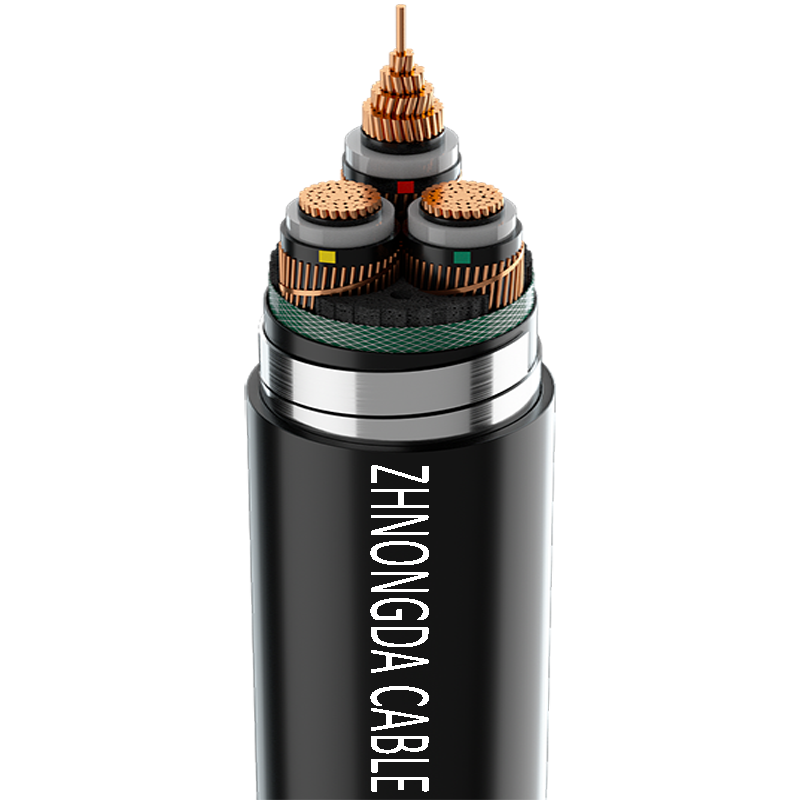
Calculating the safe operating current requires understanding the specific installation environment. Ambient temperatures in engine rooms are significantly higher than standard industrial settings, often reaching 45°C or 50°C. This elevated ambient temperature reduces the cable's ability to dissipate internal heat. When cables are bundled together in congested trays, their heat dissipation is further restricted. Engineers must apply specific derating factors to the base power cable amperage to ensure the conductors do not exceed their thermal limits under full load conditions.
| Ambient Temperature (°C) | Derating Factor (90°C Rated Cable) | Derating Factor (100°C Rated Cable) |
|---|---|---|
| 30 | 1.00 | 1.00 |
| 40 | 0.91 | 0.93 |
| 45 | 0.82 | 0.87 |
| 50 | 0.71 | 0.82 |
Vessels can be hundreds of meters long, requiring extensive cable runs from the engine room to equipment located at the bow or the bridge. Over these long distances, electrical resistance causes a drop in voltage. If the voltage drop exceeds 3% to 5%, critical equipment may fail to start or operate inefficiently, leading to premature motor failure. Precise calculations are required to select a conductor size large enough to maintain acceptable voltage levels at the furthest points of the distribution network. You must factor in the total length of the run, the current load, and the specific resistance of the tinned copper conductor.
The insulation surrounding the conductors must be rated for the maximum expected operating temperature and the system voltage. Standard temperature ratings for marine cables are typically 90°C or 100°C. The thickness and material of the insulation correlate directly with the voltage classes. Low-voltage distribution requires 600V or 1000V ratings. Main propulsion and heavy thruster systems often utilize medium voltage ratings (5kV to 15kV). Selecting the correct insulation thickness ensures long-term reliability and prevents dielectric breakdown under high electrical stress.
Selecting marine electrical components requires navigating a complex landscape of international regulations. Engineers must verify compliance with standards such as IEEE 45 for electrical installations on shipboard, and IEC 60092. The cables must carry type approvals from recognized classification societies like the American Bureau of Shipping (ABS), Det Norske Veritas (DNV), or the United States Coast Guard (USCG). These certifications guarantee the product has been rigorously tested for marine use, including flame propagation, cold bend testing, and oil resistance.
Specifying the right construction involves balancing flexibility with mechanical protection. Highly flexible cables are easier to route through tight bulkheads, complex bends, and congested spaces. This reduces installation time and labor costs. However, unarmored flexible cables are more susceptible to physical damage from dropped tools or shifting cargo. Heavily armored cables provide superior mechanical protection against impact and crushing but are significantly stiffer. They are harder to install, require larger bend radii, and add substantial weight to the vessel.
The choice of shielding and armor depends on the installation location and adjacent equipment. Braided aluminum or bronze armor is specified when mechanical protection is paramount, such as in exposed deck areas or cargo holds. Bronze provides excellent corrosion resistance in salt air. Copper tape or braid shielding is required to prevent Electromagnetic Interference (EMI) and Radio Frequency Interference (RFI). Proper shielding ensures high-power lines do not disrupt sensitive shipboard navigation, radar, and communication equipment.
Installing heavy electrical lines in confined maritime spaces presents significant challenges. Exceeding the manufacturer's minimum bend radius during installation in tight bulkheads can permanently damage the cable. Over-bending stresses the conductors and causes micro-cracks in the insulation. This compromises dielectric strength and leads to eventual failure or short circuits. Installers must carefully plan routing paths to respect these mechanical limitations, often using specialized pulling rollers and lubricants to ease the cable through complex tray systems.
Routing new lines during drydock repairs involves specific difficulties. Integrating modern LSZH cables with legacy maritime electrical systems requires careful planning to ensure compatibility and maintain safety standards. Navigating congested, pre-existing cable trays often means removing obsolete wiring or finding alternative routes. Space constraints make pulling new heavy-gauge lines labor-intensive. Shipyards must coordinate electrical pulls with other hot work and structural repairs to avoid damaging the new jackets.
The integrity of the electrical system relies heavily on the quality of its connections. Achieving watertight seals where cables pass through bulkheads or enter equipment enclosures is critical. This prevents water ingress and maintains the vessel's watertight integrity. You must use specialized marine-grade cable glands and Multi-Cable Transits (MCTs). Improper glanding leads to corrosion at the connection points, loss of environmental sealing, and compromises the entire system.
Marine electrical systems require proactive maintenance to ensure continuous reliability. A framework for routine inspection during drydock maintenance should include checking outer jackets for cracking or abrasion, testing for moisture ingress, and inspecting terminations for signs of corrosion or overheating. Regular insulation resistance testing (megger testing) helps identify degrading insulation before it results in a catastrophic failure while at sea. Technicians should log megger readings over time to track the degradation curve of the insulation.
A: Standard marine wire is typically used for small recreational boats and lacks the robust construction required for commercial vessels. Shipboard cables feature specialized jacketing for extreme chemical resistance, tinned copper conductors for severe corrosion resistance, and must pass rigorous international maritime certifications like ABS or DNV.
A: Calculating ampacity requires determining the base current load and applying derating factors based on the installation environment. You must account for high ambient temperatures in engine rooms and the thermal effects of bundling multiple cables together in congested trays, which restricts heat dissipation.
A: LSZH stands for Low Smoke Zero Halogen. In the event of a fire, LSZH materials do not emit toxic halogen gases and produce minimal smoke. This is mandatory in confined shipboard spaces to maintain visibility for evacuation and prevent corrosive acid gas damage to electronic systems.
A: No, MIL-Spec cables are specifically designed for naval applications, requiring extreme shock and battle damage resistance. Commercial vessels typically require cables certified by international maritime bodies such as ABS, DNV, or the USCG, which focus on industrial safety and longevity.
A: Protection against Electromagnetic Interference (EMI) and Radio Frequency Interference (RFI) is achieved by specifying cables with copper tape or braid shielding. This shielding blocks electromagnetic noise, ensuring high-power transmission lines do not disrupt sensitive navigation and communication equipment.
 简体中文
简体中文 

