

Views: 0 Author: Site Editor Publish Time: 2026-08-30 Origin: Site


The term "low voltage" creates massive confusion across the electrical industry. Telecommunications engineers consider anything under 50V low voltage. However, power distribution engineers follow National Electrical Code (NEC) and International Electrotechnical Commission (IEC) standards, defining a Low Voltage Power Cable as operating up to 1,000V or 2,000V. Mis-specifying these cables based on generic definitions leads to compliance failures, thermal degradation, safety hazards, and extensive project rework.
Specifying the correct cable requires understanding the exact electrical load, environmental conditions, and regulatory requirements of your project. Relying on marketing terminology rather than engineering specifications often results in catastrophic system failures. This technical evaluation guide defines, compares, and specifies the correct cables for residential, commercial, industrial, and utility environments.
Different engineering sectors define voltage thresholds based on their specific operational hazards. In the telecom and smart home sectors, low voltage refers to signaling wire operating under 50V. These wires transmit data or power small devices like thermostats and landscape lighting. They lack the dielectric strength required for heavy power distribution.
Industrial power transmission relies on entirely different metrics. A true low voltage power cable is engineered to handle substantial current for building infrastructure, heavy machinery, and grid distribution. These cables are typically rated for 600V, 1,000V, or 2,000V. In specific international transit or heavy industrial applications, ratings can occasionally extend to 3,000V. Confusing a 50V signaling wire with a 1,000V power distribution cable will result in immediate insulation breakdown and severe arc flash hazards.
The National Electrical Code (NEC) and the International Electrotechnical Commission (IEC) provide the foundational frameworks for voltage classification. The NEC generally classifies systems operating at 2,000V or less as low voltage, heavily regulating their installation in commercial and industrial facilities. NEC Article 300 outlines the specific wiring methods required for these voltage levels.
The IEC takes a slightly different approach. IEC standards typically define low voltage as up to 1,000V for alternating current (AC) and up to 1,500V for direct current (DC). Engineers working on international projects must reconcile these differences. A cable certified for a specific NEC application may require additional testing to meet IEC standards for a European installation.
Evaluating a power cable requires looking past generic marketing labels. Baseline selection must focus on the intended system voltage, the current type (AC vs. DC), and the continuous load requirements. You must verify the cable's dielectric withstand capabilities and ensure the insulation is rated for the maximum peak voltage of the system, not just the nominal operating voltage. Transients and voltage spikes can easily exceed nominal ratings, demanding a robust safety margin in the cable specification.
The conductor forms the core of any electrical transmission system. Copper and aluminum dominate the market, each offering distinct engineering advantages. Copper delivers superior electrical conductivity and exceptional tensile strength. It requires less physical space for the same ampacity, making it ideal for tight conduit runs and complex machinery wiring. Copper also resists oxidation better than aluminum, ensuring stable terminations over decades of use.
Aluminum provides a massive weight reduction, weighing roughly 30% as much as copper for an equivalent volume. While aluminum has lower conductivity requiring a larger conductor size for the same ampacity, its lightweight nature makes it the standard for large-scale utility distribution and heavy commercial feeders. Modern aluminum alloys (like the 8000 series) have largely eliminated the thermal expansion issues that plagued older aluminum wiring.
Insulation prevents current from escaping the conductor, while the jacket protects the internal components from environmental damage. Thermoplastic materials, primarily Polyvinyl Chloride (PVC), soften when heated. PVC is highly flexible, flame-retardant, and suitable for general indoor applications. However, it struggles in extreme temperatures and harsh chemical environments.
Thermoset materials, including Cross-linked Polyethylene (XLPE) and Ethylene Propylene Rubber (EPR), undergo a chemical curing process that prevents them from melting at high temperatures. XLPE offers excellent moisture resistance and high dielectric strength, making it ideal for underground and outdoor routing. EPR provides superior flexibility and exceptional resistance to ozone and weathering, often chosen for harsh industrial environments.
| Material | Type | Max Operating Temp | Flexibility | Moisture Resistance | Primary Use Case |
|---|---|---|---|---|---|
| PVC | Thermoplastic | 75°C to 90°C | High | Moderate | Indoor commercial wiring, control panels |
| XLPE | Thermoset | 90°C | Moderate | Excellent | Direct burial, wet locations, utility feeders |
| EPR | Thermoset | 90°C to 105°C | Very High | Excellent | Harsh industrial, heavy machinery, cold weather |
Mechanical protection is critical in environments prone to physical impact. Armored cables utilize Interlocked Armor (aluminum or steel) or Continuously Corrugated Weld (CCW) designs to protect the internal conductors. Armored configurations often eliminate the need for rigid conduit, speeding up installation in complex industrial facilities.
Electromagnetic Interference (EMI) shielding is less common in standard power distribution but absolutely critical in specific applications. Variable Frequency Drives (VFDs) generate significant electrical noise that can disrupt nearby control signals. Using a shielded LV power cable containing copper tape or a braided wire shield contains this noise, ensuring reliable operation of sensitive factory automation systems.
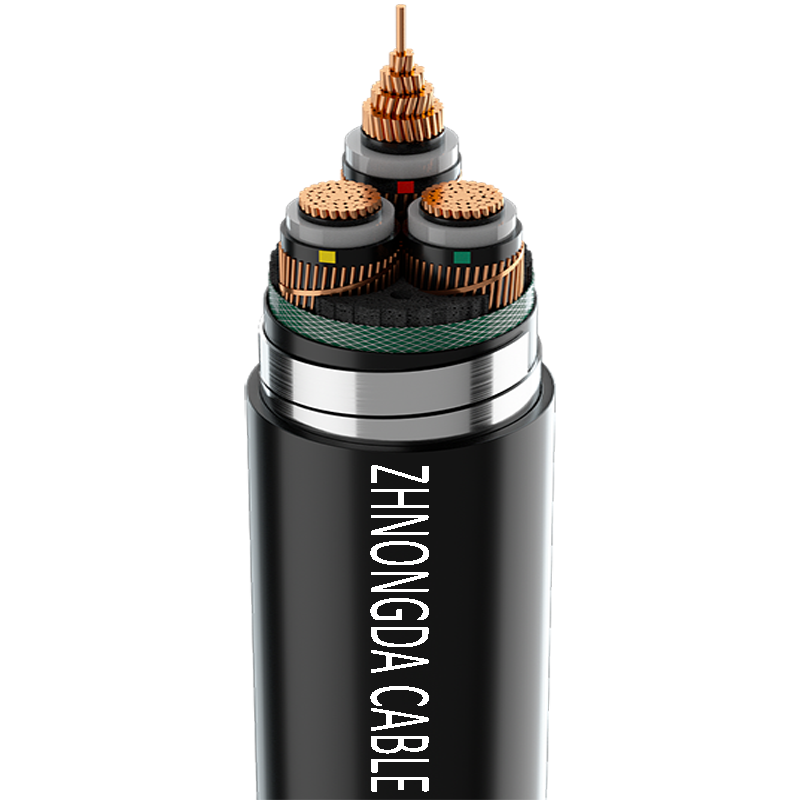
Industrial environments push electrical infrastructure to its limits. Cables here supply power to heavy machinery, motor control centers, and automated assembly lines. These settings require cables with high resistance to oil, chemicals, and mechanical abrasion. VFD cables are deployed extensively to control motor speeds, requiring specialized shielding to manage harmonic distortion and voltage spikes.
Commercial high-rises and retail centers rely on extensive low voltage networks. These cables route power from the main switchgear to secondary distribution panels on each floor. They power HVAC systems, heavy lighting loads, and elevator motors. Fire safety is a massive concern in commercial spaces, necessitating the use of Low Smoke Zero Halogen (LSZH) jackets in plenum spaces to protect occupants during a fire.
The renewable energy sector heavily utilizes these cables for power collection. In solar farms, string cables connect individual photovoltaic panels to combiner boxes, requiring extreme UV and moisture resistance. Wind turbines use highly flexible EPR cables in the nacelle to handle constant twisting while transmitting power down the tower. Grid-edge distribution networks rely on robust XLPE-insulated cables to deliver reliable power to residential neighborhoods.
Household wiring represents one of the most common low voltage cable applications. Service entrance cables bring 120V/240V power from the utility transformer into the home's main breaker panel. Branch circuit wiring then distributes this power to outlets and appliances. It is critical to distinguish these standard 120V/240V power applications from the under 50V wiring used for smart home sensors, doorbells, and landscape lighting, which require entirely different installation methods.
Medium Voltage (MV) cables, typically operating between 5kV and 35kV, require complex structural elements to manage intense electrical fields. MV cables incorporate semi-conducting screens over the conductor and insulation to equalize electrical stress and prevent corona discharge. Low voltage cables operate below the threshold where corona discharge is a primary concern. They feature a simpler construction, relying purely on the thickness and quality of the primary insulation to contain the voltage.
Over-specifying a cable by selecting a higher voltage rating than necessary increases the overall diameter, weight, and rigidity of the installation. This makes routing through tight conduits exceptionally difficult. Conversely, under-specifying the thermal rating or environmental resistance leads to rapid insulation degradation. Engineers must balance the operational risks of thermal failure against the physical constraints of the installation environment.
The physical size difference between LV and MV cables drastically impacts installation. LV cables have significantly tighter allowable bending radii, making them easier to route through complex building geometries. Conduit fill capacities are also higher for LV cables due to their thinner insulation profiles. Terminating an LV cable generally requires standard crimp or mechanical lugs, whereas MV terminations require complex stress cones and specialized splicing kits to manage electrical field gradients.
The installation environment dictates the jacket and insulation materials. You must identify all external threats before specifying a low voltage electrical cable. Direct burial applications require heavy-duty XLPE insulation and specific USE-2 (Underground Service Entrance) ratings to withstand moisture and soil pressure. Installations in petrochemical facilities demand jackets resistant to hydrocarbons and corrosive solvents. Cables routed outdoors must feature carbon black additives or specialized compounds to prevent UV degradation.
Conductor sizing is determined by the continuous load current and the length of the run. You must calculate the required ampacity based on the equipment specifications. Long cable runs suffer from voltage drop due to the inherent resistance of the conductor material. The NEC recommends limiting voltage drop to 3% for branch circuits and 5% for overall feeders to ensure equipment operates efficiently. Furthermore, you must apply derating factors if the ambient temperature exceeds 30°C or if multiple current-carrying conductors are bundled in the same conduit, which restricts heat dissipation.
Regulatory compliance ensures system safety and legality. Project specifications must map directly to testing standards. Common certifications include UL 44 for thermoset-insulated wires, UL 854 for service-entrance cables, and specific CSA standards for Canadian installations. European projects require the CE mark, indicating compliance with relevant IEC directives. Failing to verify these certifications prior to installation will result in failed inspections and mandatory replacement.
The majority of cable failures occur at the termination points, not within the cable run itself. Improperly crimped lugs or loose mechanical connections create high-resistance points. As current flows through this resistance, it generates extreme heat, eventually melting the insulation and causing a phase-to-phase or phase-to-ground fault. Mitigate this risk by specifying exact lug types compatible with the conductor material (especially critical for aluminum) and enforcing strict torque requirements using calibrated tools.
Cables generate heat under load. When multiple cables are packed tightly into a conduit, this heat cannot dissipate. Exceeding NEC Chapter 9 conduit fill limits accelerates insulation degradation and drastically reduces the lifespan of the system. Engineers must calculate the total cross-sectional area of the cables and ensure it does not exceed the allowable percentage of the conduit's interior area. Proper spacing in cable trays is equally important to maintain ambient airflow.
Installing heavy cables through long conduit runs subjects them to massive mechanical stress. Exceeding the maximum allowable pulling tension stretches the copper or aluminum conductors, reducing their cross-sectional area and creating localized hot spots. High sidewall pressure around conduit bends crushes the insulation, compromising its dielectric strength. Installation teams must calculate pulling tension beforehand, use appropriate pulling lubricants, and utilize tension-monitoring equipment during the pull.
A low voltage power cable is a highly engineered component requiring precise alignment between electrical load, environmental conditions, and regulatory standards. Treating these cables as generic commodities introduces severe operational risks, ranging from thermal degradation to catastrophic arc faults. Proper specification demands rigorous attention to conductor material, insulation chemistry, and installation constraints.
The critical path for selection follows a strict logic: Verify the true system voltage requirement first. Select the conductor material based on space and ampacity needs. Determine the necessary insulation and armor based on environmental threats like moisture, chemicals, or physical impact. Calculate ampacity while factoring in voltage drop and thermal derating. Finally, confirm distributor availability to maintain project schedules.
A: In industrial power distribution, standards like the NEC and IEC typically define low voltage power cables as operating up to 1,000V or 2,000V. In specific transit or heavy industrial applications, ratings can occasionally extend to 3,000V. This is vastly different from the telecom industry, which considers anything under 50V as low voltage.
A: Yes. Standard 120V/240V household power wiring used for outlets and appliances is technically classified as low voltage in the electrical power industry. This is distinct from the under 50V signaling wire used for thermostats, doorbells, or landscape lighting.
A: Only if it is specifically engineered and rated for direct burial. The cable must feature robust insulation, typically XLPE, and carry specific certifications like USE-2 to withstand constant moisture, soil pressure, and subterranean environments.
A: In electrical engineering, a wire refers to a single electrical conductor. A cable refers to an assembly of multiple insulated conductors bundled together within a common protective outer jacket. Cables provide superior mechanical protection and are used for complex power distribution.
A: Voltage drop calculation requires four primary variables: the cross-sectional size of the conductor, the material (copper or aluminum), the total length of the cable run, and the continuous load current. The NEC recommends keeping voltage drop below 3% for branch circuits.
A: Cross-linked Polyethylene (XLPE) is generally the best choice for outdoor applications due to its exceptional moisture resistance and thermal stability. If using PVC, it must be a specially formulated blend with carbon black additives to provide adequate UV resistance.
A: Generally, standard power distribution does not require shielding. However, shielding is absolutely critical when connecting Variable Frequency Drives (VFDs) to motors. The shield contains the severe electromagnetic interference generated by the drive, preventing disruption to nearby control systems.
 简体中文
简体中文 

