

Views: 0 Author: Site Editor Publish Time: 2026-08-16 Origin: Site


Selecting the correct power transmission components carries immense operational stakes. Incorrect specification directly leads to equipment failure, compliance violations, and severe safety hazards including fire, arc flash, and electrocution. Procurement teams and engineers constantly navigate overlapping terminologies, regional regulatory standards like NEC or IEC, and varying environmental demands. This complexity often causes costly project delays or dangerous installations when the wrong materials arrive on site.
You must establish a clear distinction between bulk infrastructure wiring and detachable device connections. Bulk wiring involves permanent power cables routed through facilities, cable trays, or underground ducts. Detachable connections are power cords used for specific equipment interfacing. This guide focuses on both, providing a structured framework for evaluating your options. We will move from broad voltage classifications and cable construction anatomy to specific insulation materials and data center equipment standards.
Effective power transmission requires delivering the required current safely. You must accomplish this without exceeding thermal limits, experiencing excessive voltage drop, or causing electromagnetic interference. These baseline success criteria dictate every aspect of power cable classification. When you pull wire through a conduit or lay it in a trench, the physical and electrical properties must align perfectly with the site conditions.
To evaluate any cable, you must break down its fundamental construction dimensions. Every layer serves a specific engineering purpose, and failing to specify even one layer correctly can compromise the entire installation.
Voltage ratings define the primary tiers of power cables. Each tier serves specific industrial applications and requires entirely different termination techniques and safety clearances.
Application environments heavily dictate necessary physical protections. Direct burial requires robust mechanical defense like steel tape or wire armor. Aerial installations demand UV resistance and high tensile strength, often incorporating steel messenger wires. Conduit routing requires smooth, low-friction jackets for easy pulling over long distances. Indoor tray installations often necessitate strict fire ratings to prevent flame propagation across facility zones.
| Conductor Material | Conductivity (Relative) | Weight | Termination Complexity | Primary Use Case |
|---|---|---|---|---|
| Copper (Cu) | 100% (Standard) | Heavy | Standard lugs, easy crimping | Commercial buildings, tight spaces, high-vibration equipment |
| Aluminum (Al) | ~61% of Copper | Lightweight | Requires oxide inhibitors, specific Al/Cu lugs | Utility transmission, long-distance heavy industrial feeders |
Different industrial scenarios demand specialized electrical cable types. You must match the physical construction to the environmental hazards present on site. A cable designed for a clean indoor server room will fail rapidly if exposed to cutting fluids on a factory floor.
Steel Wire Armour (SWA) and Aluminum Wire Armour (AWA) provide critical mechanical protection. You need them in harsh, high-traffic, or underground environments where the risk of physical impact is high. The armour prevents crush damage from heavy machinery and stops rodent attacks in subterranean runs. However, these cables introduce grounding requirements and termination complexities. You must use specialized brass glands to ensure continuous earth continuity and secure the heavy armor wires properly.
Industrial automation heavily relies on Variable Frequency Drives (VFD) to control motor speeds. These drives generate significant Electromagnetic Interference (EMI) and Radio Frequency Interference (RFI) due to high-frequency switching. Screened or shielded cables contain this interference. They play a critical role in preventing motor bearing damage caused by common-mode stray currents. They also stop signal disruption in adjacent control wiring. Proper VFD cables often feature symmetrical ground wires to balance the induced currents.
Public infrastructure, hospitals, and transit systems require strict fire safety compliance. Low Smoke Zero Halogen (LSZH) and fire-rated cables meet these demands. When burned, standard PVC releases toxic black smoke and corrosive halogen gases that damage respiratory systems and destroy sensitive electronics. LSZH cables reduce toxic gas emission and maintain visibility for evacuation. Fire-resistant variants incorporate mica glass tapes to maintain circuit integrity during combustion. This protects personnel and allows emergency lighting and fire suppression pumps to operate during a blaze.
Heavy-duty elastomeric cables, like the H07RN-F specification, offer extreme flexibility and durability. You will use them for temporary power distribution, mobile equipment, mining machinery, and overhead cranes. They withstand high-vibration environments and resist oil, weather, and severe mechanical stress. The rubber jacket maintains its flexibility even in sub-zero temperatures where standard plastics would crack.
Control cabinets, motor control centers, and switchgear require dense internal routing. Single-core and multi-core panel wires serve this purpose. They offer high flexibility for tight bending radii within industrial automation enclosures. Common designations include MTW (Machine Tool Wire) and THHN, which feature nylon jackets for oil and abrasion resistance during installation.
Emerging infrastructure introduces new requirements that standard cables cannot meet. Solar photovoltaic systems require UV-resistant Solar PV cables designed to withstand decades of direct sunlight and extreme temperature fluctuations on rooftops. Electric vehicle infrastructure demands liquid-cooled EV charging cables. These specialized cables manage continuous high-amperage loads without overheating, utilizing integrated coolant tubes alongside the copper conductors to keep the cable manageable and safe for consumer handling.
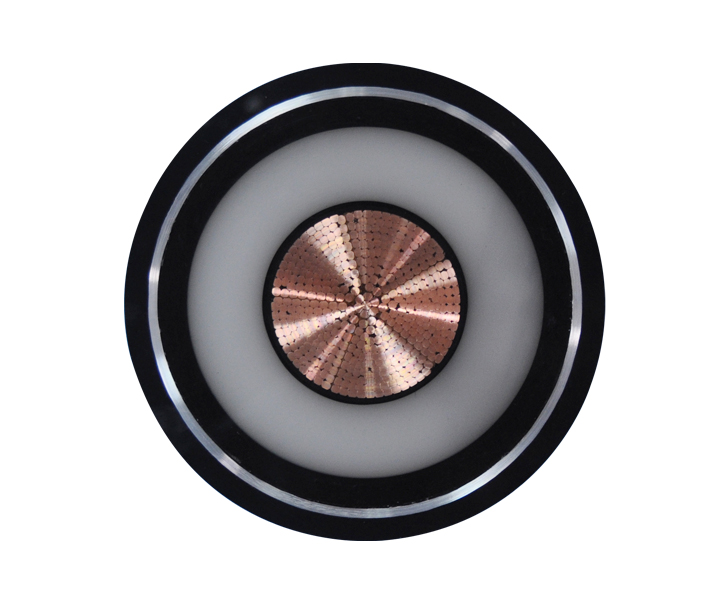
Insulation dictates a cable's maximum operating temperature, dielectric strength, and environmental resistance. Selecting the right cable insulation types is critical for long-term reliability. If you push a cable past its thermal rating, the insulation degrades rapidly, leading to catastrophic short circuits.
Polyvinyl Chloride (PVC) remains highly common for general indoor applications. It is cost-effective, flexible, and easy to strip during termination. However, it has a lower maximum operating temperature, typically 70°C to 90°C depending on the specific compound. It exhibits poor performance in extreme cold, becoming brittle and prone to cracking during installation. Furthermore, it releases toxic halogens when burned, making it unsuitable for confined public spaces.
Cross-Linked Polyethylene (XLPE) and Ethylene Propylene Rubber (EPR) undergo a chemical curing process during manufacturing. This cross-linking prevents the material from melting at high temperatures, providing exceptional thermal tolerance. XLPE handles up to 90°C continuous operation, 130°C emergency overload, and 250°C during short-circuits. It offers excellent moisture resistance, superior longevity, and lower dielectric losses, making it the standard for medium and high-voltage underground distribution.
| Performance Metric | PVC (Thermoplastic) | XLPE (Thermosetting) | EPR (Thermosetting Rubber) |
|---|---|---|---|
| Continuous Temperature | 70°C - 90°C | 90°C | 90°C - 105°C |
| Short-Circuit Temperature | 160°C | 250°C | 250°C |
| Moisture Resistance | Moderate | Excellent | Excellent |
| Flexibility | High | Moderate (Stiff) | Very High |
| Dielectric Loss | High | Very Low | Medium |
Data center and enterprise IT procurement require strict adherence to international standards. You cannot rely on generic consumer cables for mission-critical server racks. The IEC 60320 standard governs most IT equipment power connections globally, ensuring interoperability and safe load management.
You will frequently encounter C13/C14 and C19/C20 connectors in server environments. C13/C14 connectors handle standard IT equipment, switches, and lower-draw servers, rated for 10A to 15A depending on regional voltage. C19/C20 connectors manage high-density servers, blade chassis, and Power Distribution Units (PDUs). They feature horizontal pins and are rated for 16A to 20A. High-availability environments often utilize locking connectors. These specialized cords feature mechanical retention mechanisms that prevent accidental disconnects caused by vibration from cooling fans or human error during rack maintenance.
North American deployments rely heavily on NEMA standards for wall and PDU connections. NEMA 5-15P is the standard 120V wall plug. L6-20P and L6-30P represent locking connectors for higher voltages (208V/240V) commonly used in server rooms. Global deployments face severe procurement challenges due to localized plug types. You must source BS 1363 for the UK, Schuko (CEE 7/7) for Europe, and AS/NZS 3112 for Australia. Mismatched plugs cause immediate deployment delays and force dangerous workarounds if not planned correctly.
Standard equipment cords for office and light commercial use fall into three distinct groups. Polarized cords feature one wider prong to ensure correct hot and neutral alignment, protecting internal appliance circuitry. Non-polarized cords are reversible, used for double-insulated devices. Three-prong cords include a dedicated ground pin for fault protection, routing stray current safely to the earth rather than through the user.
Custom workstations, industrial PCs, and rackmount servers require specific internal power delivery mechanisms. The cables connecting the Power Supply Unit (PSU) to the motherboard and peripherals must handle massive DC current loads without voltage droop.
Motherboards and CPUs utilize ATX 24-Pin and EPS cables. The 24-pin cable provides the primary 3.3V, 5V, and 12V rails to the motherboard logic. EPS cables (usually 8-pin) deliver dedicated 12V power directly to the CPU Voltage Regulator Modules (VRMs). These ensure stable voltage delivery across multiple rails during heavy computational loads.
High-draw components like GPUs and AI hardware accelerators require dedicated PCIe cables. You will see traditional 8-pin PCIe connectors and the newer 12VHPWR (16-pin) standards designed for ATX 3.0 power supplies. You must evaluate power delivery carefully for these hardware accelerators. Improper seating of the connector, extreme bending near the terminal, or inadequate wire gauge (using 18 AWG instead of 16 AWG) in high-wattage connectors introduce severe fire risks due to increased contact resistance and localized melting.
Choosing the right Power Cable Types requires balancing electrical performance against physical implementation risks. A cable that looks perfect on a spec sheet can fail in the field if you ignore installation variables.
Cables generate heat due to electrical resistance. When you bundle dozens of cables in a tray, route them through thermal insulation in a wall, or deploy them in high ambient temperatures (like a foundry or desert facility), they cannot dissipate heat effectively. They overheat. You must mitigate this risk. Strict adherence to NEC or IEC derating tables is mandatory. You apply correction factors based on ambient temperature and the number of current-carrying conductors in a raceway. You often need to upsize conductor cross-sections (e.g., moving from 4/0 to 250 kcmil) to compensate for these thermal constraints and prevent insulation breakdown.
Cables fail prematurely due to UV exposure, moisture ingress, or chemical exposure. Standard PVC jackets will crack if exposed to direct sunlight for years. Unmitigated electromagnetic interference disrupts sensitive PLC control systems and data networks. You mitigate these failures by specifying appropriate outer jackets, such as Polyurethane (PUR) for abrasion resistance or Neoprene for oil resistance. You must also integrate proper copper tape or tinned copper braid shielding to block EMI, ensuring the shield is properly grounded at the source.
Counterfeit cables pose a massive danger to infrastructure projects. Copper-Clad Aluminum (CCA) is sometimes falsely marketed as pure copper. CCA has higher resistance, lower tensile strength, and overheats under heavy loads designed for pure copper. It is strictly prohibited by the NEC for standard building wiring. You must require verifiable UL, CE, RoHS, or CSA certifications. Source your materials exclusively from authorized distributors and demand factory test reports for large bulk orders.
Power cable selection remains a multi-variable engineering decision. You must align the electrical load, environmental stress, cable construction, and regulatory codes to ensure a safe and reliable installation. Follow these actionable steps for your next procurement cycle:
A: Electrical cables refer to bulk, permanent wiring installed within infrastructure, such as walls, cable trays, or underground conduits. Power cords are flexible, detachable assemblies with connectors on one or both ends, used to plug specific equipment into a power source.
A: XLPE offers superior thermal performance. It withstands continuous operating temperatures up to 90°C and short-circuit temperatures up to 250°C. It also provides excellent moisture resistance, higher dielectric strength, and lower dielectric losses compared to standard PVC.
A: Data centers primarily use IEC 60320 standard cables. C13/C14 cables handle standard 10A-15A IT loads for switches and basic servers. C19/C20 cables manage heavier 16A-20A loads for high-density blade servers and main PDU inputs.
A: Cables are classified by their maximum voltage capacity. Low Voltage (LV) is under 1kV for commercial building use. Medium Voltage (MV) spans 1kV to 35kV for industrial distribution and substations. High Voltage (HV) exceeds 35kV for utility-scale transmission.
A: An undersized cable experiences excessive electrical resistance. This causes significant voltage drop, reducing equipment efficiency and potentially damaging motors. It also leads to severe thermal degradation of the insulation, creating a high risk of electrical fires.
A: Yes, through the use of hybrid cords. A common example is a cable with a NEMA 5-15P plug for a North American wall outlet on one end, and an IEC C13 connector for the IT equipment on the other, bridging the two standards.
A: A Variable Frequency Drive (VFD) cable is a heavily shielded cable. It is required in industrial automation to connect VFDs to AC motors. The shielding contains severe electromagnetic interference generated by the drive, protecting nearby control wiring and preventing motor bearing damage.
 简体中文
简体中文 

