

Views: 0 Author: Site Editor Publish Time: 2026-08-06 Origin: Site


Reliable power transmission is the foundational requirement for any commercial, industrial, IT, or residential infrastructure, yet the physical conduit is often treated as an afterthought in system design. Deploying the wrong power transmission solution leads to critical failures, including voltage drop, thermal degradation, hardware damage, or severe compliance and safety violations such as fire hazards, electric shocks, and OSHA penalties. Moving beyond basic definitions, this guide provides a technical evaluation framework for understanding specific power cable applications, assessing environmental and electrical demands, and selecting the exact specifications required for safe, continuous operation. Knowing exactly what Power Cables are used for and how to specify them prevents catastrophic downtime and ensures long-term facility safety.
The primary mechanism for transmitting electrical energy from a power source—such as the municipal grid, a standby generator, or an Uninterruptible Power Supply (UPS)—to an electrical load relies on conductive materials encased in protective insulation. Copper and aluminum serve as the standard conductors in the electrical industry. Copper offers superior conductivity and flexibility, making it ideal for tight routing and high-vibration environments. Aluminum provides a lighter, cost-effective alternative for long-distance utility distribution and heavy feeder lines, provided installers use proper anti-oxidant compounds and compatible termination lugs to prevent galvanic corrosion.
Distinguishing between permanent infrastructure wiring and temporary device-level connections is necessary for code compliance. Infrastructure cables are installed within walls, routed through underground conduits, or suspended in heavy industrial cable trays. These permanent installations require specific fire ratings and physical protection. Conversely, power cords are flexible assemblies used to plug appliances, server racks, or peripherals into wall receptacles. You cannot legally or safely substitute a flexible power cord for permanent building wiring.
The operational and financial impact of underspecified cabling manifests quickly in high-demand environments. When you install a cable with an insufficient wire gauge for the connected load, the natural electrical resistance generates excessive heat. This thermal stress degrades the insulation over time, leading to micro-cracks, short circuits, and eventual equipment failure. Inconsistent power delivery caused by voltage drop forces motors to draw more current, burning out windings prematurely. Facility hazards escalate from simple tripped breakers to full-scale electrical fires if the protective jacket fails.
| Conductor Material | Primary Advantages | Common Applications | Installation Considerations |
|---|---|---|---|
| Copper | High conductivity, excellent flexibility, low thermal expansion. | Data centers, residential wiring, industrial machinery, medical facilities. | Heavier and more expensive; requires robust support in vertical runs. |
| Aluminum | Lightweight, highly cost-effective for large gauges. | Utility distribution, service entrances, large commercial feeders. | Requires anti-oxidant paste at terminations; larger bend radius needed. |
Data centers operate under extreme power density requirements. You must route power to high-density server racks, Power Distribution Units (PDUs), and UPS systems without restricting airflow in the raised floor or overhead trays. These environments demand cables with tight bend radii to navigate complex rack architectures. Installers frequently utilize specific IEC connector standards, such as C13/C14 for standard servers and C19/C20 for high-draw blade chassis. High-temperature ratings are mandatory to withstand the ambient heat generated in hot-aisle containment zones.
Manufacturing facilities rely on robust electrical distribution to deliver three-phase power to heavy machinery, large induction motors, power tools, and automated assembly lines. Standard commercial wiring fails rapidly in these settings. You must specify armored or highly shielded cables to protect the conductors from physical impact, forklift traffic, and constant vibration. The outer jackets must resist degradation from exposure to cutting oils, industrial solvents, and extreme temperature fluctuations common in stamping plants or foundries.
Routing power through office buildings and commercial spaces involves supplying HVAC systems, primary light fixtures, and localized sub-panels. Code compliance drives material selection here. Adherence to plenum-rated (CMP) requirements is strictly enforced for cables routed through drop ceilings or raised floors used as air-handling spaces. Plenum jackets are constructed from low-smoke, zero-halogen (LSZH) materials or Teflon to prevent the distribution of toxic smoke through the ventilation system in the event of a fire.
Residential electrical wiring forms the backbone of a home, safely distributing grid power from the main breaker panel to individual branch circuits. Installers typically use non-metallic sheathed cable (commonly known as Romex) for interior wall routing. These cables provide flexible, reliable power delivery for household appliances, lighting circuits, and consumer electronics. Dedicated circuits for high-draw appliances like electric ranges or HVAC compressors require heavier gauge conductors to handle the sustained amperage.
Certain applications require highly specialized construction to ensure safety and continuity. Medical-grade cables, used in hospitals and surgical centers, feature solid pins and specialized grounding mechanisms. These "Green Dot" cables ensure life-support and patient monitoring equipment remain uninterrupted even if the cord is subjected to heavy physical stress. For outdoor and direct burial applications, cables are engineered with UV-resistant jackets and moisture-blocking gels. These robust designs are utilized for exterior lighting, telecommunications infrastructure, and underground utility routing where standard PVC would crack and fail.
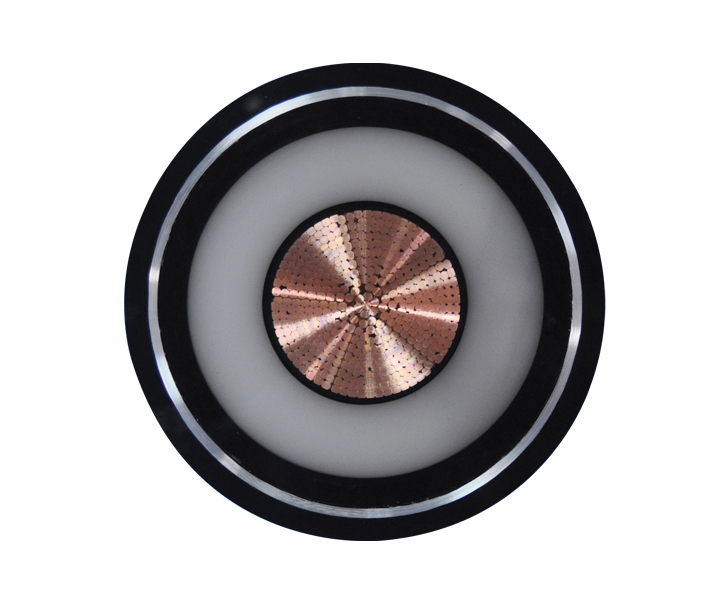
Calculating the maximum continuous load and peak draw of the connected equipment dictates your baseline specifications. You must match the American Wire Gauge (AWG) or metric cross-sectional area to the required amperage. A lower AWG number indicates a thicker wire capable of carrying more current. Failing to size the conductor correctly results in overheating, insulation melt, and catastrophic failure. When specifying an AC Power Cable, you must also account for the voltage rating of the insulation. A cable rated for 300V cannot be safely used on a 480V three-phase industrial circuit, regardless of the conductor size.
Evaluating material trade-offs ensures the cable survives its operating environment. Polyvinyl Chloride (PVC) is cost-effective and suitable for general indoor use, but it becomes brittle in freezing temperatures. Rubber and Neoprene compounds offer high flexibility and excellent abrasion resistance, making them ideal for portable tools and temporary power drops. Polytetrafluoroethylene (PTFE) or Teflon provides extreme temperature tolerance and chemical resistance for aerospace or harsh industrial applications. You must align jacket properties with environmental risks, such as specifying SOOW (Service, Oil-resistant inside and out, Water-resistant) for indoor/outdoor industrial use.
| Jacket Material | Characteristics | Best Use Case |
|---|---|---|
| PVC (Polyvinyl Chloride) | Inexpensive, moderate flexibility, flame retardant. | Indoor commercial wiring, standard appliance cords. |
| EPR (Ethylene Propylene Rubber) | Highly flexible, excellent thermal stability, weather resistant. | Industrial feeders, high-voltage utility connections. |
| XLPE (Cross-linked Polyethylene) | High moisture resistance, excellent dielectric strength. | Underground direct burial, wet industrial environments. |
| PTFE (Teflon) | Extreme heat and chemical resistance, low friction. | Plenum spaces, chemical plants, high-temperature machinery. |
Identifying environments with high electromagnetic interference (EMI) or radio frequency interference (RFI) is a critical step in cable selection. Routing power lines near large induction motors, variable frequency drives (VFDs), or radio transmitters introduces noise into the electrical system. Selecting foil or braided copper shielding maintains power integrity and prevents the power cable from broadcasting interference to adjacent low-voltage data cables. In highly sensitive environments, a combination of foil for high-frequency noise and braided copper for low-frequency noise provides the best protection.
Mapping regional plug standards ensures physical compatibility and safety. North America relies on the NEMA standard, the UK uses BS 1363, and Europe utilizes the Schuko system. You must ensure the receptacle and the plug are rated for the identical voltage and amperage. Plugging a 15-amp device into a 20-amp circuit is generally safe, but attempting to draw 20 amps through a 15-amp rated plug and cable assembly will cause the connector to melt, leading to electric shocks or electrical fires.
Checking for recognized testing laboratory marks validates the manufacturer's claims. Look for UL Listed, CSA, or ETL stamps on the cable jacket. Ensuring compliance with local building codes, such as the National Electrical Code (NEC), is mandatory. The NEC dictates conduit fill limits, which restrict how many cables can be pulled through a single pipe to prevent heat buildup. It also governs installation methods, specifying support intervals and acceptable routing paths for different cable types.
Long cable runs naturally resist current flow. This resistance leads to a drop in voltage at the end of the line, which can starve and damage sensitive equipment like compressors or servers. To mitigate this risk, you must calculate voltage drop percentages before pulling any wire. For runs exceeding standard lengths (typically over 100 feet), upsize the cable gauge by lowering the AWG number. This increases the conductor mass, reduces resistance, and ensures the equipment receives the proper operating voltage.
Bundling too many power cables together restricts airflow and traps heat. This thermal buildup degrades the insulation, increases resistance, and creates severe fire hazards. Adhering strictly to conduit fill capacities prevents this issue. When using cable trays, maintain proper spacing between high-amperage lines. Utilize ladder-style trays rather than solid-bottom trays to allow for adequate heat dissipation in heavy industrial or data center environments.
The market is flooded with Copper-Clad Aluminum (CCA) cables falsely marketed as pure copper. CCA cables have higher resistance and lower flexibility than pure copper. Using CCA in high-draw applications leads to severe overheating, system outages, and fire risks under heavy loads. Establish strict vendor vetting processes to mitigate this threat. Demand detailed spec sheets, physically verify the cable weight (CCA is noticeably lighter than pure copper), and check the UL registration numbers against the official database to ensure authenticity.
A: Power cables are permanent infrastructure components installed inside walls, conduits, or underground to distribute electricity. Power cords are flexible, temporary assemblies with connectors on either end, used to plug devices directly into wall receptacles.
A: They are utilized across all sectors to connect hardware, industrial machinery, and commercial appliances to alternating current power sources, such as municipal grids, wall outlets, or data center PDUs.
A: Residential wiring relies on non-metallic sheathed cables like Romex for basic indoor routing. Industrial applications require heavy-duty, armored, or shielded cables with chemical-resistant jackets to withstand harsh environments and high voltages.
A: Determine the maximum continuous amperage draw of your equipment, factor in the total length of the cable run to account for voltage drop, and select an AWG size rated to handle that current safely.
A: An undersized cable creates excessive electrical resistance, causing it to overheat. This melts the insulation, causes severe voltage drops that damage equipment, and creates an immediate fire hazard.
A: No. Outdoor or direct burial cables require specific UV-resistant jackets and moisture-blocking compounds. Standard indoor cables will quickly degrade, crack, and fail if exposed to sunlight or buried in wet soil.
A: Longer cables increase electrical resistance, causing a drop in voltage by the time the power reaches the load. For long runs, you must use a thicker wire gauge to minimize resistance and ensure adequate voltage delivery.
 简体中文
简体中文 

