

Views: 0 Author: Site Editor Publish Time: 2026-08-11 Origin: Site


Specifying incorrect cable components introduces severe operational risks, ranging from thermal degradation and mechanical failure to catastrophic compliance violations in industrial environments. When insulation melts under load or jackets degrade from chemical exposure, the resulting downtime heavily impacts project timelines and safety metrics. Engineers and procurement teams must balance electrical performance, environmental resilience, and project constraints when evaluating power cable specifications.
This guide deconstructs the core components of power cables, analyzing the specific materials used for conductors, insulation, and jacketing. By understanding the physical and chemical properties of these elements, project managers can facilitate precise, application-specific procurement decisions that ensure long-term grid reliability.
Understanding the distinct function of each cable layer is required to evaluate overall performance and failure risks. A cable is not merely a wire; it is a highly engineered assembly designed to carry current safely through hostile environments. Differentiating between bare wires and fully constructed power cables is the first step. Bare wires are typically restricted to specific overhead transmission or grounding applications where ambient air provides the necessary insulation. Fully constructed cables require multi-layered protection for safe routing underground, in trays, or through conduit.
To properly evaluate a cable for field deployment, you must understand its structural hierarchy. Each layer serves a specific, non-interchangeable purpose:
When you strip back a heavy-duty industrial cable, you see these layers working in tandem. If any single layer fails—if the jacket tears, the armor corrodes, or the insulation degrades—the entire cable assembly is compromised. Field engineers must evaluate the integrity of each layer during installation to prevent premature system failure.
The journey from raw metal to a finished electrical conduit involves precise metallurgical and chemical processes. Wire drawing and annealing form the foundation. This process reduces copper or aluminum rods into precise wire gauges while restoring the metal's flexibility through controlled heat treatment. Without annealing, the drawn metal would be too brittle for practical installation, snapping under the tension of a standard conduit pull.
Next comes stranding. By twisting multiple fine wires together to create a single conductor, manufacturers significantly improve the flexibility of the final Power Cable Materials compared to solid cores. This flexibility is vital for pulling cables through complex conduit bends and navigating tight switchgear enclosures. The geometry of the stranding—whether concentric, bunched, or rope-lay—dictates the mechanical behavior of the conductor during installation.
Extrusion follows, involving the high-temperature application of thermoplastic or thermosetting compounds over the conductor. This step forms seamless, void-free insulation and jacketing layers essential for preventing electrical tracking. The extrusion process must be perfectly calibrated; even microscopic voids in the insulation can lead to partial discharge and eventual dielectric breakdown in high-voltage applications.
The final stage is cabling and assembly. This involves grouping multiple insulated conductors together with fillers to maintain a circular profile. Protective armor or shielding is applied before the final outer sheath is extruded over the entire assembly, locking the internal components in place and sealing them against moisture. The precision of this assembly phase determines the cable's final outer diameter, which directly impacts conduit fill calculations.
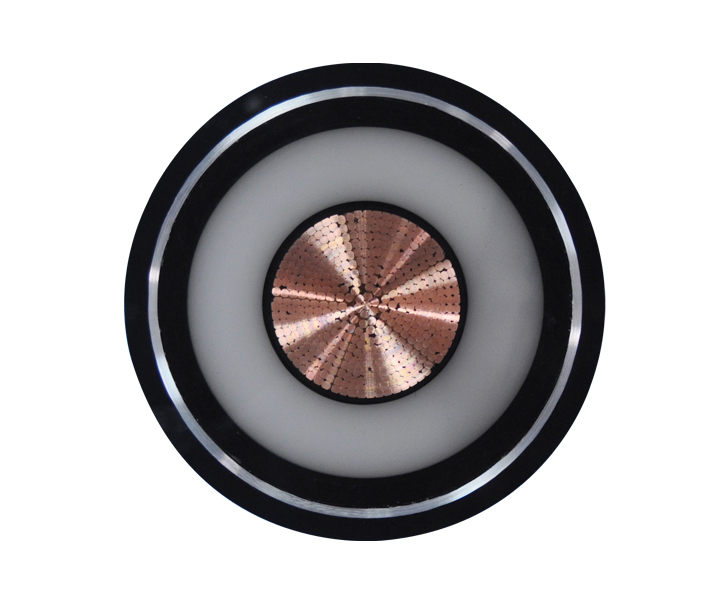
The choice of conductor metal fundamentally dictates the physical dimensions and termination requirements of the electrical system. Copper conductors feature a high-performance profile characterized by high electrical conductivity, low electrical resistance, and high tensile strength. They are ideal for space-constrained installations, high-vibration environments, and complex routing where tight bending radii are necessary. However, implementation risks include significant weight in large-gauge applications, making handling difficult and increasing the physical strain on cable trays and supports.
Aluminum conductors present a different set of advantages. They possess lower conductivity than copper, which requires a larger cross-sectional area for an equivalent ampacity rating. Despite this, they are significantly lighter. This makes aluminum the standard for overhead transmission lines and large-scale commercial distribution feeders where weight reduction simplifies structural support requirements. The implementation risks for aluminum include susceptibility to cold flow (creep) and galvanic corrosion. Installers must use specialized termination techniques, such as dual-rated lugs and anti-oxidant compounds, to prevent high-resistance connections and subsequent thermal failures.
| Performance Metric | Copper Conductors | Aluminum Conductors |
|---|---|---|
| Electrical Conductivity | Excellent (Standard reference) | Lower (Requires larger gauge for same ampacity) |
| Physical Weight | Heavy (Increases structural load) | Lightweight (Ideal for long spans) |
| Tensile Strength | High (Resists stretching during pulls) | Moderate (Requires careful tensioning) |
| Termination Requirements | Standard lugs and methods | Requires anti-oxidant paste and specific torque |
| Oxidation Behavior | Conductive oxide layer | Highly resistive oxide layer (Requires mitigation) |
Insulation prevents phase-to-phase and phase-to-ground faults. Thermoplastic insulation, primarily Polyvinyl Chloride (PVC), is cost-effective, flexible, and inherently flame-retardant. However, its limitations include a lower thermal tolerance, typically operating safely between 70°C to 90°C. PVC softens at high temperatures and can embrittle in extreme cold, limiting its use in harsh outdoor environments or high-load industrial circuits where ambient temperatures fluctuate wildly.
Thermosetting insulation, such as Cross-Linked Polyethylene (XLPE) and Ethylene Propylene Rubber (EPR), undergoes a chemical change during curing that prevents melting at high temperatures. XLPE offers excellent moisture resistance, high dielectric strength, and an elevated thermal rating, often supporting 90°C continuous operation and up to 250°C during short-circuit events. EPR provides superior flexibility and corona resistance, making it preferred in medium-to-high voltage applications. Thermosets offer higher ampacity for the same conductor size compared to thermoplastics, directly impacting overall conduit sizing and installation efficiency.
Elastomeric or rubber insulation is characterized by being highly flexible and resilient against physical deformation. This application suitability makes it essential for temporary power setups, mining operations, and trailing cables where continuous movement, dragging, and impact are expected daily. Rubber compounds maintain their flexibility even in sub-zero temperatures, ensuring the cable remains workable in harsh winter conditions.
High-voltage systems and harsh physical environments demand supplementary layers. Metallic shielding usually consists of copper tape or wire braids. This layer is used to confine the dielectric field within the cable, ensuring uniform electrical stress across the insulation. It also serves to mitigate electromagnetic interference (EMI) in medium and high voltage systems, protecting adjacent low-voltage control circuits from induced noise that could disrupt sensitive instrumentation.
Armoring materials provide the necessary defense against physical destruction. Galvanized steel wire or tape offers high crush and impact resistance, serving as the standard for direct burial or heavy industrial routing where heavy machinery operates. Aluminum armor provides a lighter alternative for indoor or tray-routed cables, offering adequate protection without the excessive weight of steel. A critical implementation risk involves the improper grounding of shields and armor. Failure to ground these metallic layers correctly can lead to induced circulating currents, resulting in severe thermal degradation and potential fire hazards.
When specifying armored cables, you must also consider the bending radius. Steel wire armor (SWA) severely restricts how tightly a cable can be bent without damaging the internal conductors. Installers must calculate tray transitions and conduit sweeps carefully to accommodate the stiffness of heavily armored cables.
The outer jacket is the first line of defense against the installation environment. Polyvinyl Chloride (PVC) serves as the standard general-purpose jacket. It offers good resistance to moisture and common industrial chemicals. However, when burned, standard PVC releases toxic halogens and dense smoke, making it unsuitable for poorly ventilated areas or mass transit applications.
Polyurethane (PUR) provides exceptional mechanical toughness. It is highly resistant to abrasion, tearing, and oil exposure. This makes PUR ideal for continuous-flex applications, such as robotics, automated assembly lines, and drag chains. Low Smoke Zero Halogen (LSZH) compounds focus heavily on compliance and life safety. They are mandatory for confined spaces, transit systems, and data centers. LSZH materials emit minimal smoke and no toxic halogen gases during combustion, protecting personnel and sensitive electronics during a fire.
Chlorinated Polyethylene (CPE) offers excellent UV, ozone, and weather resistance. This compound is heavily utilized for harsh outdoor installations and petrochemical environments where exposure to sunlight and corrosive atmospheric elements would rapidly degrade standard PVC. CPE jackets maintain their integrity over decades of exposure to the elements, reducing long-term replacement cycles.
The specific combination of conductors, insulation, and jackets creates distinct categories of electrical infrastructure. Low voltage cables, rated up to 1kV, typically utilize copper conductors paired with PVC or XLPE insulation. These are optimized for building wiring, localized machinery, and standard commercial distribution. They are generally easier to terminate and route due to their smaller overall diameter and lack of complex shielding requirements.
Medium and high voltage cables, ranging from 1kV to over 100kV, require advanced engineering. These Power Cable Types demand EPR or XLPE insulation, robust metallic shielding, and specialized semi-conductive layers to manage intense electrical stress and prevent partial discharge. Flexible and trailing cables rely on finely stranded copper and rubber or PUR jacketing to withstand continuous movement without material fatigue. Armored cables, such as Steel Wire Armor (SWA) or Metal Clad (MC), are defined by their integrated mechanical protection, effectively eliminating the need for external conduit in specific routing scenarios.
Selecting the correct cable requires a systematic evaluation of site conditions and electrical demands. Electrical requirements dictate matching the conductor material and cross-section to the necessary ampacity needs and acceptable voltage drop over the run length. You must calculate the continuous load, potential short-circuit currents, and harmonic distortions to ensure the conductor will not overheat.
Environmental assessment involves evaluating ambient temperature extremes, chemical exposure, UV radiation, and mechanical abrasion risks to select the appropriate jacketing compound. Regulatory and safety compliance ensures that the selected materials meet NEC, UL, IEEE, or IEC standards. Particular attention must be paid to fire performance, ensuring proper plenum ratings or LSZH specifications are met where legally mandated. Finally, the total installation parameters must factor in the impact of material weight and flexibility on labor hours, conduit sizing, and the required termination hardware.
The reliability of a power system is fundamentally dictated by the precise alignment of cable materials with the operational environment and electrical load. Prioritize conductor material based on weight constraints and termination capabilities, then specify insulation and jacketing based on thermal requirements and environmental hazards.
A: Bare wire lacks any protective coating and is used primarily for overhead transmission where ambient air provides insulation. Insulated power cables feature dielectric layers and outer jackets, allowing them to be safely routed underground, in conduits, or through buildings without causing short circuits.
A: XLPE is a thermosetting material that offers superior moisture resistance and a higher thermal rating (up to 90°C continuous) compared to PVC. It does not melt under high heat, making it highly reliable for the demanding conditions of direct burial and underground duct banks.
A: Aluminum can replace copper, but not directly gauge-for-gauge. Because aluminum has lower conductivity, a larger cross-sectional area is required to carry the same current. Additionally, aluminum requires specific termination lugs and anti-oxidant compounds to prevent corrosion.
A: Extrusion applies insulation and jacketing compounds under high heat and pressure. A precise extrusion process ensures a seamless, void-free layer. Any microscopic voids or uneven thickness can lead to partial discharge, electrical tracking, and eventual insulation failure.
A: UV resistance is achieved by adding specific chemical stabilizers, such as carbon black, to the jacketing compound during manufacturing. These additives absorb or reflect ultraviolet radiation, preventing the polymer chains in materials like PVC or CPE from degrading and cracking in sunlight.
 简体中文
简体中文 

