

Views: 0 Author: Site Editor Publish Time: 2026-08-26 Origin: Site


Utilizing improper electrical wiring in marine environments carries severe consequences. The risks extend far beyond simple power failures. You face high probabilities of galvanic corrosion, sudden electrical fires, and catastrophic equipment failure when standard wiring meets saltwater. Standard residential or commercial cables are fundamentally inadequate for these harsh conditions. They cannot handle the constant vibration, UV exposure, and corrosive moisture found on vessels and platforms.
Matching electrical load requirements with the physical realities of the sea requires a specific technical evaluation framework. You must carefully assess conductor material, insulation ratings, ampacity sizing, and regulatory compliance to ensure safety and reliability. Choosing the right Marine Power Cable dictates the operational safety of your entire electrical system.
Saltwater acts as a highly conductive electrolyte. When untinned bare copper is exposed to a marine atmosphere, a rapid chemical reaction occurs. Capillary action pulls moisture deep into the wire strands beneath the insulation. This exposure leads to black wire corrosion. The copper oxidizes, turning brittle and dark. This corrosion drastically increases electrical resistance within the wire. Higher resistance generates excess heat, which eventually melts insulation and triggers electrical fires. Standard bare copper simply cannot survive the constant moisture and salinity found in bilges and engine compartments.
We see this constantly on older refits. A previous owner uses standard building wire for a bilge pump. Within two seasons, the wire turns black for three feet up the jacket. The pump fails to activate during a heavy rainstorm because the voltage drop across the corroded wire is too high to spin the motor. You end up replacing the pump, the float switch, and the entire wire run.
Marine vessels endure relentless engine vibration and wave pounding. Diesel engines produce low-frequency harmonics that travel through the hull and bulkheads directly into the wiring harnesses. Solid core wires or low-strand-count cables suffer from work hardening under these conditions. The metal becomes brittle as it flexes repeatedly. Eventually, the conductors snap inside the jacket. This breakage causes intermittent power failures or dangerous arcing.
Marine environments demand highly stranded cables that can absorb mechanical stress without experiencing metal fatigue. A standard household Romex cable uses a solid copper core. If you run that through a boat bulkhead, the natural flexing of the fiberglass hull underway will shear that solid copper in a matter of months.
The physical environment on a boat destroys standard PVC jackets. UV rays bake exposed wiring on radar arches and flybridges, causing standard insulation to crack and flake away. Bilge water, engine oil, hydraulic fluid, and diesel fuel degrade non-marine plastics rapidly. You need specialized marine-grade insulation designed to resist these specific chemical and environmental attacks. Without it, the protective jacket fails, exposing live conductors to water and fuel vapors.
Sourcing generic stranded wire from local hardware stores is a dangerous mistake. These wires lack the required individual strand tinning. They rarely feature the proper three-conductor configurations needed for safe AC systems. Furthermore, their insulation does not meet ABYC standards for oil and heat resistance. Relying on terrestrial wiring for marine applications compromises the entire electrical grid of the vessel. Automotive wire (SAE) is also smaller in diameter than American Wire Gauge (AWG) marine wire, meaning an SAE 10-gauge wire carries less current than an AWG 10-gauge wire, leading to dangerous overheating if misapplied.
The manufacturing process of a proper marine cable involves individually tinning each copper strand before twisting them together. This tin coating provides a sacrificial barrier against oxidation. If moisture penetrates the jacket, the tin protects the underlying copper. This ensures the cable maintains its conductivity and flexibility over years of service in damp, salty air. When you strip a quality marine wire, it looks silver, not copper-colored. If you scrape that silver coating with a knife, you will see the copper underneath.
Marine cables are categorized by their flexibility, primarily Type 2 and Type 3 stranding. Type 2 represents standard marine stranding. It offers adequate flexibility for fixed runs where the cable remains stationary after installation. Type 3 features a much higher strand count, making it highly flexible. You use Type 3 for moving parts, tight bends, engine connections, and shore power cords where constant motion occurs.
| Stranding Type | Strand Count (Example: 10 AWG) | Flexibility Level | Primary Use Cases |
|---|---|---|---|
| Type 1 | 1 (Solid Core) | None | Never use on boats. Terrestrial only. |
| Type 2 | 19 strands | Moderate | Fixed internal wiring, straight runs, main distribution panels. |
| Type 3 | 105 strands | Maximum | Shore power cords, engine wiring, tight bends, moving machinery. |
The outer jacket must withstand severe abuse. Required properties include high resistance to moisture, oil, gasoline, and extreme temperature fluctuations. Quality marine jackets are typically rated for 105°C dry and 75°C wet environments. You must also match the maximum voltage rating of the cable to your system requirements. Using a cable rated for 300V on a system demanding 600V insulation invites catastrophic dielectric failure. Cross-linked polyethylene (XLPE) is frequently used in high-end marine applications because it offers superior thermal resistance compared to standard PVC.
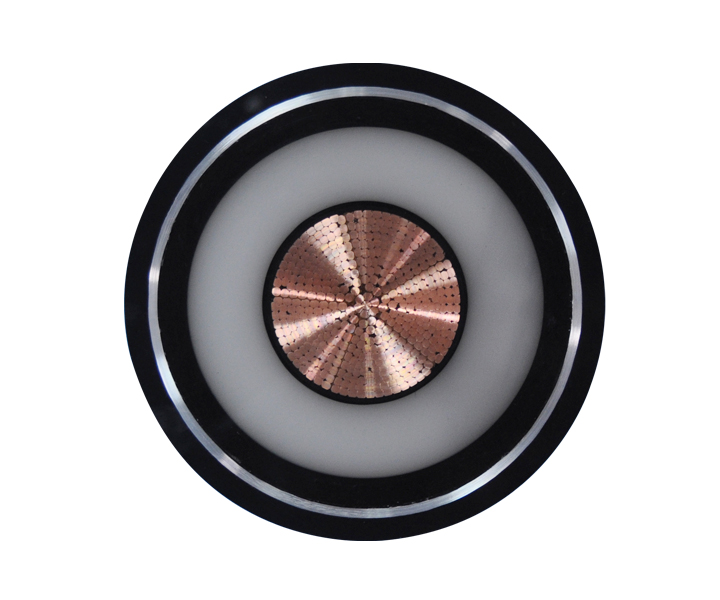
You must accurately determine the maximum current the circuit will carry. Calculate the total amps by dividing total wattage by the system voltage. Factor in continuous loads, which run for more than three hours, versus intermittent loads. A properly sized marine electrical cable must handle the peak continuous load without overheating.
Voltage drop is the loss of electrical power as current travels through the wire. The 3% voltage drop rule applies to critical systems like bilge pumps, navigation lights, and electronics. The 10% rule applies to non-essentials like cabin lighting. You calculate this based on the total round-trip length of the cable (from the panel to the device and back to the ground bus). Always use ABYC voltage drop tables to cross-reference your amp load and run length to find the correct wire gauge.
| System Type | Acceptable Drop | Examples of Equipment | Impact of Excessive Drop |
|---|---|---|---|
| Critical | 3% | Bilge pumps, VHF radios, navigation lights, blowers. | Equipment failure, reduced pump volume, radio transmission loss. |
| Non-Critical | 10% | Cabin lighting, fans, stereo systems, accessory outlets. | Dim lights, slow fans, minor inefficiencies. |
Routing cables through hot engine rooms changes their performance. High ambient temperatures reduce the amount of current a wire can safely carry. You must derate the cable's ampacity based on the temperature rating of its insulation and the ambient heat of the space. This often forces the selection of a larger gauge wire to safely carry the same load through an engine compartment. If a 10 AWG wire is rated for 60 amps at 30°C, running it through a 50°C engine room might reduce its safe capacity to 45 amps.
Shore power cords connect the vessel to the dock pedestal. These external cables face constant UV exposure, saltwater immersion, and physical abrasion against concrete docks. They require heavy-duty weatherproofing and high-visibility jackets. Standard amperages are typically 30A or 50A. They must feature proper three-conductor configurations to ensure a safe ground connection for standard AC shore power. The outer jacket is usually a heavy thermoset rubber or specialized thermoplastic that remains flexible even in freezing temperatures.
Permanent internal routing requires a dedicated shipboard power cable. These come in flat or round profiles to accommodate different conduit spaces. Multi-conductor cables simplify running complex circuits, while single-core wires handle heavy DC loads like battery banks and bow thrusters. Strict color-coding standards apply. Modern ABYC standards require yellow for DC negative to prevent dangerous confusion with black AC hot wires. Red is used for DC positive. AC wiring follows standard black (hot), white (neutral), and green (ground) conventions.
Commercial maritime operations, oil rigs, and wind farms demand specialized wiring. An offshore power cable handles extreme environments. These cables feature heavy-duty armoring, often galvanized steel wire or braided bronze, to prevent physical crushing. They carry high-voltage capacities and possess extreme depth ratings for subsea deployment. Specialized winch reel cables are designed to maintain structural integrity under constant tension during deployment at ports or on dynamic positioning vessels. These cables often integrate fiber optics alongside heavy copper conductors to transmit both power and control data simultaneously.
Legacy twist-lock shore power connections harbor inherent design flaws. The metal blades offer a very small surface area for electrical contact. As the connection ages or loosens from boat movement, resistance increases at these small contact points. This leads to arcing, overheating, and frequently melted plugs. This vulnerability is a leading cause of dockside electrical fires. You will often see brown scorch marks around the ground or neutral pins on older boats. That is a clear indicator of high resistance and impending failure.
Newer connection standards mitigate these fire risks. Systems like SmartPlug offer significantly larger contact areas. They utilize straight-push insertion rather than twisting, which secures the connection more firmly against tension. The locking mechanism is external to the electrical pins, meaning the pins do not bear the mechanical load of the heavy cord hanging off the side of the hull. Many also integrate thermal breakers that automatically cut power if the pin temperature rises to dangerous levels.
When upgrading shore power connections, you must weigh the costs. Buying a completely new shore power cord assembly is the most secure but expensive option. Alternatively, you can safely cut an existing, healthy cable to retrofit it with a modern boat-side receptacle. This requires ensuring the existing cable jacket and internal conductors are free from corrosion or heat damage before attaching the new plug. If you cut the cord and see black copper, you must keep cutting back until you find clean, silver-tinned wire. If you cannot find clean wire, the entire cord is trash.
The integrity of the cable ends dictates the safety of the entire circuit. You must use marine-grade, adhesive-lined heat shrink tubing over all connections. This seals out moisture and prevents oxidation at the terminal.
Never rely on solder alone. Solder creates a hard spot in the flexible wire. Under marine vibration, the wire will eventually crack and fail exactly where the solder ends and the flexible wire begins.
Compliance is not optional. The American Boat and Yacht Council (ABYC) and the United States Coast Guard (USCG) define the baseline legal and safety requirements for vessels in US waters. Wiring must specifically meet UL 1426 "Boat Cable" standards. This certification guarantees the wire possesses the correct stranding, tinning, and insulation properties to survive marine environments safely. Coast Guard inspectors will look for the UL 1426 stamp on the wire jacket during commercial vessel inspections. If it is missing, the vessel fails.
Global commercial shipping and offshore platforms operate under different jurisdictions. These applications require compliance with IEC standards. Furthermore, components must often carry approvals from classification societies like Lloyd's Register, DNV, or the American Bureau of Shipping (ABS). These certifications ensure the cables meet rigorous international safety protocols for commercial maritime operations, including strict fire-retardant and low-smoke zero-halogen (LSZH) requirements for enclosed shipboard spaces.
A: No. Standard residential wire lacks the individual strand tinning required to prevent rapid saltwater corrosion. It also features solid cores or low strand counts that break under marine vibration. Furthermore, residential insulation is not rated to withstand the oil, fuel, and high heat found in vessel engine compartments, making it extremely dangerous for marine use.
A: Shipboard cables feature highly durable insulation specifically designed to resist continuous exposure to bilge water, engine oil, and marine fuels. They possess higher strand counts for better vibration resistance. Most importantly, true shipboard cables carry ABYC or UL 1426 certifications, whereas standard automotive wires do not meet these stringent marine safety requirements.
A: You must determine the total circuit amps and measure the total round-trip length of the wire run. Use these figures alongside ABYC voltage drop tables. Apply the 3% voltage drop rule for critical systems like navigation, and the 10% rule for non-critical systems like cabin fans. Always adjust for engine room temperature derating.
A: The cost is driven by the materials required for safety. They use high-purity, individually tinned copper strands which are expensive to manufacture. The outer jacketing utilizes specialized, heavy-duty polymers resistant to UV rays, saltwater, and physical abrasion. Finally, they feature heavy-duty molded connectors designed to maintain conductivity in wet environments.
A: Replacement is based on condition, not a strict timeline. Inspect the cable monthly. You should replace it immediately if you observe discoloration or scorch marks on the prongs, melted plastic around the connector, stiffness or cracking in the outer jacket, or any deep cuts exposing internal wires.
A: Never leave the cable in tight coils while in use, as this creates dangerous induction heat. Keep all connections elevated and out of standing dock water. Always leave enough slack in the line to accommodate tidal changes and boat movement, preventing tension from pulling the plug out of the receptacle.
A: These cables are utilized in commercial maritime operations, subsea connections, and the offshore energy sector. They power oil rigs, wind farms, and heavy-duty winch reels. They are specifically engineered with heavy steel or synthetic armor to prevent crushing and are rated for high-voltage transmission in extreme subsea environments.
 简体中文
简体中文 

