

Views: 0 Author: Site Editor Publish Time: 2026-08-10 Origin: Site


Solar installations often fail at their weakest link. While solar panels and inverters receive the bulk of the procurement focus, substandard cabling remains the primary cause of direct current arc faults, system downtime, and premature efficiency degradation. Specifying incorrect wire types creates severe financial and safety risks. Using standard building wire instead of dedicated solar wire leads directly to ultraviolet degradation, insulation failure, and strict non-compliance with local electrical codes.
To mitigate these risks, project engineers and installers must adopt a rigorous evaluation framework. Selecting the correct Photovoltaic Cable requires matching the wire to system voltage, environmental exposure, specific installation zones, and total cable length. A precise specification strategy ensures long-term asset reliability, prevents catastrophic thermal events on the roof, and guarantees optimal energy yield over the lifespan of the array.
Direct current solar cables face unique environmental stressors that standard alternating current wiring never encounters. Solar arrays operate in exposed outdoor environments, subjecting the wiring to constant, extreme temperature fluctuations. A rooftop or ground-mount array can experience freezing conditions at night and surface temperatures exceeding 70°C during peak sunlight. Furthermore, constant exposure to direct ultraviolet radiation and moisture ingress accelerates the chemical breakdown of standard insulation materials. When you run standard THHN outside, the jacket becomes brittle and cracks within a few years, exposing bare copper to rain and snow. Dedicated solar wire uses cross-linked polymers designed specifically to handle these massive thermal swings and UV bombardment without losing structural integrity.
Undersized cables introduce severe performance penalties through voltage drop. When a wire gauge is too small for the current it carries, electrical resistance increases. This resistance converts electrical energy into heat. Resistance heating creates a significant fire hazard and directly reduces the overall energy yield of the solar asset. Every watt lost to heat is a watt that fails to reach the inverter. In a large commercial array, a 5% voltage drop translates to thousands of lost kilowatt-hours over the system's life. You must calculate the exact distance from the furthest panel to the combiner box and size the copper accordingly to keep losses under 2%.
A successful cable specification balances three primary criteria. First, it must guarantee strict compliance with the National Electrical Code (NEC) Article 690 or regional equivalents. Second, the system design must restrict power loss to less than 2-3% across all DC runs. Finally, the physical lifespan of the cable must match the 25-plus year operational warranty of the solar modules it connects. If you have to climb back on a roof in year ten to pull new wire because the original jackets degraded, the installation failed its primary objective.
Understanding the distinctions between cable categories prevents catastrophic installation errors. The industry standard is the PV Wire. This single-conductor cable features exceptionally thick insulation designed for maximum UV and ozone resistance. It serves as the primary solution for exposed panel interconnects and string wiring. Manufacturers build this wire to handle the harsh realities of rooftop environments. The jacket resists abrasion when rubbing against aluminum racking during high wind events. It remains flexible enough in cold weather to allow installers to make tight bends behind module frames without stressing the copper core.
USE-2 wire offers an alternative for specific routing scenarios. Installers frequently utilize USE-2 for underground conduit runs connecting ground-mount arrays to inverter stations. However, USE-2 lacks the flexibility of PV wire and typically carries a lower maximum temperature rating. While standard USE-2 operates safely up to 90°C, premium PV wire often handles temperatures up to 150°C, providing a wider safety margin in extreme climates. You should never use USE-2 for exposed rooftop wiring. Reserve it strictly for direct burial applications or long underground conduit pulls where UV exposure is zero.
THHN and THWN wires belong strictly to the AC side of the installation. These wires are designed for indoor use or protected conduit runs connecting the inverter to the main breaker panel. Installers must never deploy THHN or THWN for exposed DC solar connections, as their thermoplastic insulation degrades rapidly under direct sunlight. Even inside a rooftop conduit, THHN can fail if ambient temperatures exceed its rating. Keep these wires inside the building envelope or in buried AC conduits.
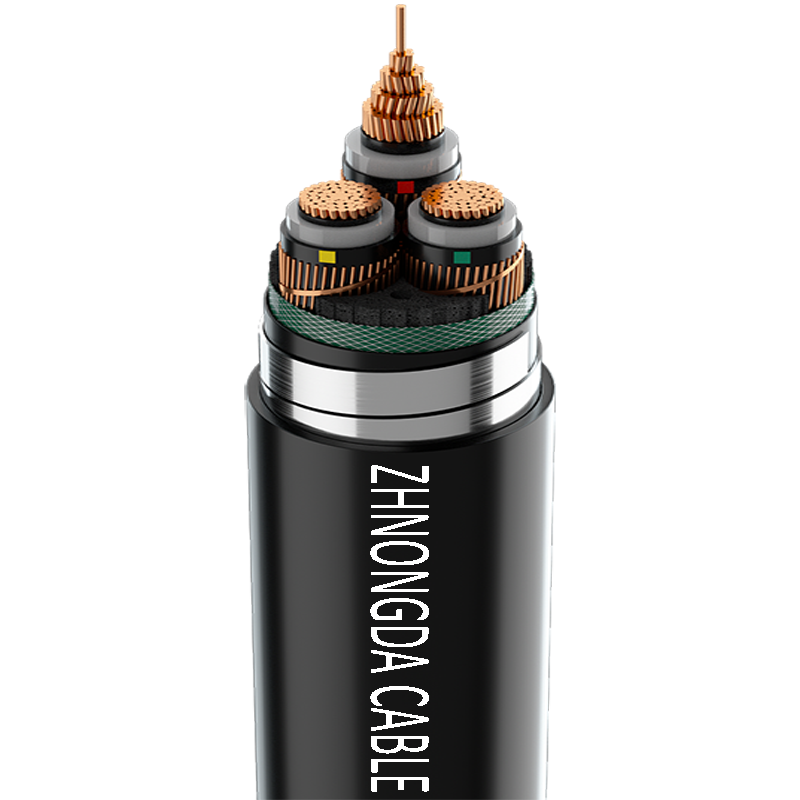
Matching the cable voltage rating to the system design dictates the efficiency of the entire array. Standard PV cables carry ratings of 600V, 1000V, or 1500V DC. Residential rooftop systems traditionally operate within the 600V threshold. However, utility-scale and modern commercial systems are rapidly shifting to 1500V architectures. Operating at 1500V directly increases overall system efficiency. Higher voltage allows the system to push the same amount of power using less current. Lower current reduces resistance, thereby minimizing energy loss over long cable runs. This architectural shift also lowers raw material costs by allowing engineers to specify smaller wire gauges for equivalent power delivery.
| System Type | Standard Voltage Rating | Primary Advantage | Typical Wire Gauge (AWG) |
|---|---|---|---|
| Residential Rooftop | 600V DC | Compatible with standard microinverters and string inverters | 10 AWG to 12 AWG |
| Commercial C&I | 1000V DC | Allows longer strings, reducing combiner box requirements | 8 AWG to 10 AWG |
| Utility Scale | 1500V DC | Maximizes power transmission, minimizes copper costs | 6 AWG to 10 AWG |
Accurate wire sizing prevents overheating and excessive voltage drop. The baseline ampacity calculation begins with the solar panel's Short Circuit Current (Isc). To meet NEC safety standards, engineers multiply the Isc by a continuous load factor, typically 1.56. This calculation determines the absolute minimum ampacity the wire must safely handle. The physical distance between the array and the inverter or charge controller heavily influences gauge selection. Even if a specific wire gauge easily handles the calculated amperage, long physical runs require stepping up the gauge. Thicker wire reduces electrical resistance, mitigating voltage drop over extended distances.
Insulation chemistry determines the physical longevity of the cable. Cross-linked Polyethylene (XLPE) dominates the solar industry due to its superior thermal stability. Unlike standard Polyvinyl Chloride (PVC), XLPE maintains its structural integrity at high temperatures without melting or deforming. XLPE also provides excellent cold-bend capabilities, allowing installers to route cables during freezing weather without cracking the jacket. Furthermore, the cross-linking process grants the insulation exceptional resistance to chemical degradation, moisture ingress, and prolonged environmental exposure. When you strip XLPE in the field, you immediately notice how much tougher it is compared to standard building wire.
Procurement teams must verify authoritativeness through recognized testing laboratories. In North America, UL 4703 serves as the definitive Standard for Photovoltaic Wire. In European and international markets, TÜV Rheinland certification (EN 50618) dictates compliance. These certifications require rigorous physical testing. Cables must survive 720-hour accelerated UV exposure tests without cracking. They undergo severe flame retardancy tests and extreme weatherproofing assessments. Specifying certified wire guarantees that the product meets the baseline safety requirements for high-voltage DC applications. Never accept uncertified wire from unknown vendors, as it introduces massive liability into the project.
The wiring directly connecting the solar modules requires maximum environmental resilience. This zone demands high UV resistance and flexibility for tight routing behind module frames and mounting rails. The cable must also maintain seamless compatibility with standard MC4 connectors to ensure watertight, low-resistance junctions. Installers typically use 10 AWG PV wire for these short interconnects. You must secure these wires tightly to the racking using stainless steel clips to prevent them from resting on the abrasive roof surface or whipping in the wind.
The transition from the charge controller to the battery bank represents a shift from high-voltage DC to lower-voltage, high-current DC. A standard 24V power cable or 48V equivalent must handle massive amperage spikes during peak charging cycles. This zone requires significantly thicker gauges, such as 4 AWG, 2 AWG, or larger battery interconnect cables, to transfer high current without dangerous overheating. You must use fine-stranded copper in this zone to maintain flexibility, and terminate the ends with heavy-duty copper lugs crimped with a hydraulic tool. Loose connections here will melt battery terminals.
Once the power passes through the inverter, the installation transitions to standard AC wiring practices. Installers typically utilize THWN-2 copper conductors routed through rigid or flexible conduit. This segment must strictly adhere to local grid compliance and standard building electrical codes. You must size these AC conductors based on the maximum continuous output current of the inverter, applying standard NEC conduit fill and thermal derating factors if the pipe runs across a hot roof before entering the building.
| Installation Zone | Current Type | Recommended Cable Type | Key Requirements |
|---|---|---|---|
| Panel Interconnects (String) | High Voltage DC | PV Wire (UL 4703 / TÜV) | UV resistance, MC4 compatibility, XLPE insulation |
| Underground Home-Runs | High Voltage DC | USE-2 or Direct Burial PV | Moisture resistance, crush resistance |
| Controller to Battery Bank | Low Voltage, High Amperage DC | Heavy Gauge Battery Cable | High ampacity, flexibility, robust terminal lugs |
| Inverter to Service Panel | Standard AC | THWN-2 in Conduit | Code compliance, conduit protection |
Auditing cable manufacturers ensures the procurement of reliable components. Buyers should evaluate vendors based on ISO 9001 certifications and the purity of their raw materials. High-quality solar cables utilize oxygen-free copper or heavily tinned copper conductors. Tinned copper prevents oxidation, which is critical in humid or coastal environments. Procurement teams should strictly avoid Copper-Clad Aluminum (CCA) for solar applications. CCA suffers from higher resistance, physical brittleness, and a tendency to break during installation. If a vendor offers a price that seems too good to be true, they are likely substituting pure copper for CCA.
Evaluate the manufacturer's in-house testing facilities and quality control processes. Reliable vendors provide detailed Technical Data Sheets (TDS) and guarantee production capacity and predictable lead times for large-scale utility projects. You need a partner who can deliver consistent jacket thickness and concentricity across thousands of spools. Analyzing cost versus longevity trade-offs is critical. Saving margins on cheaper, non-certified wire inevitably leads to higher operations and maintenance costs. Insulation failures require expensive troubleshooting, system downtime, and eventual full-scale cable replacement, far exceeding the initial savings of budget wire.
Connector mismatches represent a severe implementation risk. Installers frequently cross-mate different brands of MC4 connectors, assuming universal compatibility. Microscopic differences in pin tolerances between brands create high-resistance faults, leading directly to melted connectors and rooftop fires. Always use connectors from the exact same manufacturer for mating pairs. If the panel comes with Staubli connectors, you must crimp Staubli connectors onto your home-run wires. Do not mix and match hardware to save a few dollars.
Improper routing causes mechanical damage over time. Installers must avoid dragging cables over sharp racking edges and strictly respect the manufacturer's minimum bend radii. Secure all exposed runs using UV-rated zip ties or stainless steel cable clips to prevent wind-induced abrasion. When pulling wire through conduit, use appropriate pulling lubricants to avoid stretching the copper or tearing the XLPE jacket. A damaged jacket inside a conduit will eventually cause a ground fault that is incredibly difficult to locate.
Conduit fill regulations require careful attention. When multiple current-carrying conductors are bundled inside a conduit exposed to high rooftop temperatures, the NEC mandates thermal derating. Engineers must recalculate the wire's ampacity based on the ambient temperature and the number of wires in the pipe. If you run six strings through a single conduit across a hot asphalt roof, you will likely need to increase the wire gauge from 10 AWG to 8 AWG to maintain safety compliance and prevent the insulation from melting under load.
A: Standard wire uses PVC insulation designed for protected indoor environments. Photovoltaic cable features thick, cross-linked polyethylene (XLPE) insulation engineered specifically to withstand direct UV radiation, extreme temperature fluctuations, and moisture ingress in exposed outdoor solar arrays.
A: USE-2 wire is suitable for underground conduit runs but is not ideal for direct connection to solar panels. It is less flexible than PV wire and typically has a lower maximum temperature rating (90°C), making it less resilient to the extreme heat generated directly behind solar modules.
A: Multiply the panel's Short Circuit Current (Isc) by 1.56 to find the minimum ampacity. Then, use a standard DC voltage drop calculator factoring in the total physical cable length. If the calculated voltage drop exceeds 3%, increase the wire gauge until the drop is mitigated.
A: The size depends entirely on the maximum amperage output of the charge controller. Because 24V systems push high current, you typically need thick gauges ranging from 4 AWG to 2/0 AWG. Always size the cable to handle the controller's peak output without exceeding safe temperature limits.
A: UL 4703 certification guarantees the cable has passed rigorous independent testing for high-voltage DC applications. It ensures the wire can survive 720 hours of accelerated UV exposure, meets strict flame retardancy standards, and will not degrade prematurely in harsh outdoor environments.
A: High-quality, certified PV cables insulated with XLPE are engineered to last 25 to 30 years. This lifespan is intentionally designed to match or exceed the standard performance warranties of the solar panels they connect, minimizing the need for mid-lifecycle rewiring.
A: Yes, but only if the specific PV cable is explicitly rated for direct burial. If it lacks this rating, the cable must be routed through appropriate watertight conduit to protect it from soil moisture, shifting ground, and physical damage.
 简体中文
简体中文 

