

Views: 0 Author: Site Editor Publish Time: 2026-08-31 Origin: Site


Power cables form the nervous system of industrial and commercial infrastructure. When they fail, the resulting unplanned downtime, safety hazards, and replacement labor costs heavily outweigh the initial cable price. You cannot afford to leave these assets exposed. Implementing robust Power Cable Protection requires more than just pulling wire through a pipe. It demands a calculated approach to defend against mechanical stress, harsh environmental conditions, and electromagnetic interference.
Specifying inadequate defenses leads to premature jacket degradation and catastrophic faults. On the other hand, over-engineering the routing inflates capital expenditures without adding real value. Effective infrastructure relies on a systems-based strategy. Facility managers and electrical engineers must balance built-in defenses, like internal shielding and armor, with external routing hardware. This balance ensures long-term operational reliability and strict code compliance across the entire facility.
Industrial environments punish electrical infrastructure. Heavy machinery, forklift traffic, and moving equipment constantly threaten to crush exposed lines. Motors and generators induce constant vibration, causing friction against routing surfaces. During installation, high tensile stress from pulling can stretch and deform internal conductors. Proper power cable damage prevention accounts for these dynamic forces from day one.
Edge-abrasion is a silent killer of electrical systems. When you route lines through grounded conducting barriers, sheet metal enclosures, or circuit breaker knockouts, sharp edges act like saw blades against the polymer jacket. Vibration slowly cuts through the outer layers. These micro-abrasions compromise the primary insulation, exposing live conductors. This leads directly to ground faults, short circuits, or severe arc flash incidents.
To identify mechanical stress points during routine maintenance, follow these field inspection steps:
Standard polymer jackets fail quickly under harsh environmental conditions. Prolonged ultraviolet (UV) radiation from direct sunlight breaks down chemical bonds in standard plastics. This causes embrittlement, chalking, and deep cracking. Moisture ingress is a severe threat for underground or outdoor installations. Water treeing develops within the insulation, eventually bridging the gap between the conductor and the ground, causing a blowout.
Manufacturing and processing facilities introduce aggressive chemical threats. Machine oils, industrial solvents, and corrosive atmospheric agents destroy standard PVC jackets. You must select materials engineered to withstand specific chemical exposures to maintain structural integrity.
| Chemical Threat | Standard PVC Resistance | Recommended Jacket Material | Typical Application Environment |
|---|---|---|---|
| Machine Oils & Lubricants | Poor to Fair | Polyurethane (PUR) or CPE | Automotive manufacturing, CNC machining floors |
| Harsh Solvents (e.g., MEK) | Poor | Fluoropolymers (PTFE/FEP) | Chemical processing plants, paint facilities |
| Acids and Alkalis | Fair | Cross-linked Polyethylene (XLPE) | Wastewater treatment, battery storage rooms |
| Prolonged UV Exposure | Poor (unless heavily stabilized) | EPR or UV-rated XLPE | Solar farms, rooftop HVAC feeds |
High-voltage lines generate massive electromagnetic fields. These fields disrupt adjacent sensitive data, communication, or low-voltage control lines. Protecting these circuits requires containing the electromagnetic emissions right at the power source. Internal shielding handles this requirement effectively.
Internal metallic shields also defend the line itself from high-voltage surges and lightning strikes. The shield provides a controlled, low-impedance path to ground for fault currents. This prevents dangerous electrical leaks into the surrounding environment. Without proper shielding, induced voltages build up on the jacket, creating severe shock hazards for maintenance personnel.
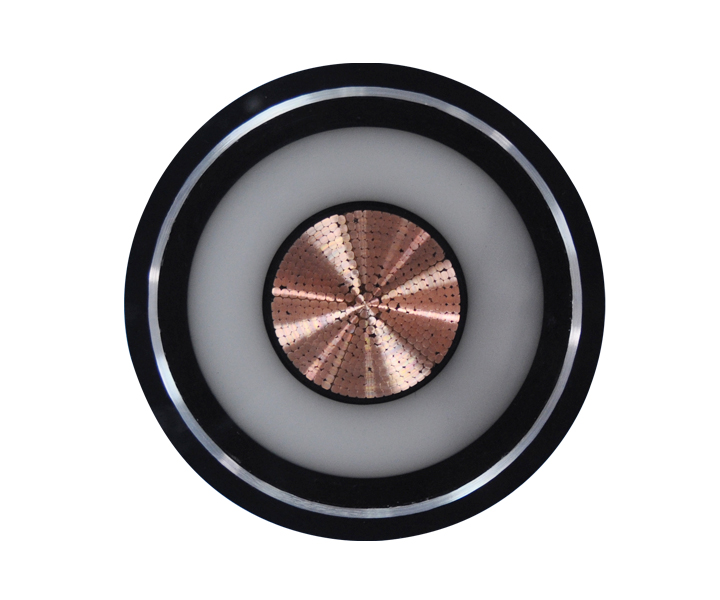
Rigid Metal Conduit (RMC) and galvanized steel piping deliver the highest level of cable mechanical protection for high-impact industrial zones. These thick-walled metal tubes deflect impacts from heavy equipment and provide an excellent grounding path. However, they are heavy, difficult to bend, and require significant labor to thread and install on-site.
PVC and non-metallic conduits offer excellent corrosion resistance. They are ideal for underground direct-burial applications and chemically aggressive environments. While they resist moisture, standard PVC shatters under high physical impact and becomes dangerously brittle in extreme cold. Flexible liquid-tight conduits bridge the gap. They offer vibration isolation and the flexibility needed to route power lines through complex, confined machinery spaces where rigid pipes cannot fit.
Steel Wire Armor (SWA) and Aluminum Interlocked Armor (AIA) integrate physical protection directly into the assembly. Using armored cables often eliminates the need for external conduits in specific tray installations, streamlining the routing process. The metallic armor provides substantial crush resistance and stops rodent damage in exposed areas.
Copper tape and braided wire shielding operate beneath the outer jacket to manage electrical threats. This internal shielding mitigates EMI and provides internal surge protection. By providing a continuous fault current path, the shield ensures that any insulation failure immediately trips the circuit breaker rather than energizing surrounding metal structures.
Heat shrink tubing, cold shrink assemblies, and mastic tapes provide localized environmental sealing. You need these solutions to protect splices, terminations, and jacket repairs from moisture ingress and dust accumulation. They conform tightly to irregular shapes, creating a reliable, long-lasting moisture barrier.
Braided sleeving and UV-stabilized wraps offer lightweight, flexible options for abrasion resistance in exposed, low-impact areas. For commercial and light-industrial spaces, heavy-duty polyurethane floor protectors and drop-over covers prevent pedestrian or forklift damage. These ramps safely route temporary or permanent lines across open floors while eliminating trip hazards.
Cable cleats prevent mechanical damage during catastrophic short-circuit events. When a short circuit occurs, massive electromechanical forces attempt to violently whip the conductors apart. Heavy-duty cleats contain these forces, keeping the routing paths secure and preventing the lines from destroying themselves or surrounding infrastructure.
Grommets and edge protection hardware are mandatory when passing lines through sharp sheet metal or transformer housings. Properly specified glands and connectors maintain the IP or NEMA rating of the enclosure. They seal out water and dust while providing essential strain relief to prevent the line from being pulled out of its termination block.
Selecting appropriate cable protection systems begins with a hard look at the site. Engineers must classify the environment: indoor versus outdoor, direct burial versus aerial suspension. Identifying hazardous classified locations, such as ATEX or IECEx zones where explosive gases or dust are present, fundamentally changes the required protection strategy.
You must establish success criteria based on the anticipated lifecycle of the facility, the specific voltage class, and the environmental severity. A coastal installation exposed to salt spray requires vastly different material specifications than a climate-controlled data center. Conduct a thorough audit of the routing path before specifying any materials.
The National Electrical Code (NEC), IEC standards, and local building codes strictly dictate permissible protection methods. Compliance ensures baseline safety and facility insurability. These frameworks specify exactly which types of conduits or armored cables you can use in specific occupancies and hazardous zones.
UL listings and CE marks verify that the protection materials have passed independent safety testing. Fire-rating requirements heavily influence material selection. For example, lines routed through environmental air spaces must be plenum-rated to prevent the spread of toxic smoke. Low-smoke zero-halogen (LSZH) jackets are mandatory in poorly ventilated transit tunnels or underground mines.
Adding layers of physical protection traps the heat generated by electrical current. As conductors operate, resistance produces thermal energy. If this heat cannot dissipate through the conduit or armor, the internal temperature rises rapidly, degrading the insulation.
Engineers must calculate ampacity derating factors when routing multiple lines through a single conduit or a heavily covered tray system. The more enclosed the lines are, the less current they can safely carry. Failing to account for this thermal bottleneck leads to overheating, insulation melting, and eventual electrical fires.
| Number of Current-Carrying Conductors in Conduit | Derating Factor (Multiplier applied to base ampacity) | Impact on System Design |
|---|---|---|
| 1 to 3 | 1.00 (No derating) | Standard design parameters apply. |
| 4 to 6 | 0.80 | Requires larger conductor size to carry the same load. |
| 7 to 9 | 0.70 | Significant heat trapping; consider splitting into multiple conduits. |
| 10 to 20 | 0.50 | Severe thermal bottleneck; highly inefficient design. |
Over-bending armored cables or rigid conduits during installation causes severe hidden damage. Exceeding the minimum bend radius creates micro-cracking in the polymer insulation. It can also kink or tear the internal metallic shield, compromising its electrical integrity and water resistance.
To mitigate this risk, mandate strict adherence to manufacturer bend radius specifications. Utilize proper pulling equipment, such as large-diameter sheaves and tension monitors. This ensures the line is not deformed during complex routing through tight facility corridors or underground vaults.
Failing to properly bond and ground metallic protection systems creates severe shock hazards. An ungrounded shield acts as a massive capacitor, storing lethal amounts of electrical energy. Improper grounding also nullifies the EMI protection, allowing interference to disrupt facility operations.
Mitigation requires implementing standardized, code-compliant grounding protocols. Installers must utilize specified grounding glands and bonding jumpers. Ensure that all metallic conduits, trays, and armors are continuously bonded to the facility's main grounding electrode system.
Deploying standard PVC protection in areas exposed to specific chemical solvents or extreme UV radiation leads to rapid embrittlement and structural failure. The protection system literally crumbles away, leaving the energized conductors exposed to the elements and mechanical strikes.
Always cross-reference chemical compatibility charts before specifying non-metallic protection systems. Select specialized polymers, such as polyurethane or cross-linked polyethylene, when routing lines through petrochemical facilities, wastewater treatment plants, or areas with intense, direct sunlight exposure.
Optimal protection relies on a carefully engineered system that addresses specific mechanical, environmental, and electrical threats simultaneously. Relying on a single product or a generic installation method leaves critical infrastructure vulnerable to premature failure and hazardous faults. Every layer of protection must work in unison with the built-in defenses of the conductor.
To ensure long-term reliability and safety, follow these next steps:
A: The most effective method combines UV-resistant, heavy-duty polymer jackets with physical barriers like rigid galvanized steel conduit or direct-burial rated PVC. Ensuring all connections utilize weather-tight, IP-rated glands prevents moisture ingress and long-term degradation.
A: In high-impact zones, routing lines through Rigid Metal Conduit (RMC) or utilizing Steel Wire Armored (SWA) assemblies provides the highest crush and impact resistance. Heavy-duty cleats must also secure the lines against vibration and short-circuit forces.
A: Shielded cables feature a layer of copper tape or braid designed to block electromagnetic interference (EMI) and manage electrical surges. Armored cables feature a heavy metallic outer layer designed specifically to prevent physical crushing and mechanical damage.
A: PVC conduit works well for underground direct burial and corrosive environments but lacks the impact resistance required for exposed, high-traffic industrial areas. It shatters under heavy physical impact or in freezing temperatures, making metal conduit preferable above ground.
A: Enclosing lines in conduits, thick armor, or covered trays traps heat generated by electrical resistance. This requires ampacity derating, meaning the conductor must carry less current than its maximum rating to prevent the trapped heat from melting the insulation.
A: Never route bare lines directly through raw metal holes. You must use properly sized rubber grommets, edge protection hardware, or strain-relief glands to prevent the sharp metal edges from slicing through the jacket due to vibration.
A: Cable cleats must be used for large conductors to contain the massive electromechanical forces generated during a short circuit. Standard plastic ties will instantly snap under these forces, whereas cleats securely anchor the lines and prevent destructive whipping.
 简体中文
简体中文 

