

Views: 0 Author: Site Editor Publish Time: 2026-08-20 Origin: Site


A common misconception in procurement and facility engineering is treating electrical wiring as a generic, interchangeable commodity where the lowest price wins. This assumption overlooks the complex engineering required for safe, reliable energy transfer. When decision-makers assume all wiring is identical, they expose their infrastructure to severe operational risks. Substandard power delivery leads to significant voltage drop, thermal degradation, premature equipment failure, and critical compliance violations in mission-critical environments.
To prevent catastrophic failures and ensure continuous operation, engineers and project managers must move beyond superficial visual inspections. Establishing a rigorous, specification-driven evaluation framework is necessary to differentiate between consumer-grade wiring and industrial-grade power solutions. Understanding the internal architecture, material science, and application-specific ratings of these components ensures infrastructure remains safe, efficient, and compliant with international standards.
Identical exterior dimensions often hide vastly different conductor volumes and material qualities. A cable measuring 10mm in outer diameter might contain pure oxygen-free copper, or it might conceal Copper-Clad Aluminum (CCA). CCA uses a thin layer of copper over an aluminum core, drastically reducing conductivity and increasing brittleness. While the outer jacket looks the same, the internal current-carrying capacity is fundamentally compromised. When pulling wire on a commercial site, the weight difference is immediately noticeable; CCA is significantly lighter, which is the first red flag for an installer.
Fill ratios and stranding techniques further impact flexibility and conductivity. High-quality Power Cables utilize tightly bundled, high-strand-count copper to maximize the cross-sectional area within a given gauge. Cheaper alternatives often use fewer, thicker strands with excess filler materials like cheap paper or plastic twine, resulting in a stiff cable that is difficult to route and prone to internal breakage under mechanical stress. When terminating these cheaper lines in a tight junction box, the stiff strands often snap, requiring a complete re-pull of the run.
To identify substandard internal architecture before installation, field engineers should follow these steps:
Inadequate wire gauge (AWG) directly increases electrical resistance. When a conductor is too small for the required amperage, the resistance impedes electron flow, converting electrical energy into heat. This thermal output degrades the surrounding insulation over time, creating a severe fire hazard and risking short circuits. In industrial settings, we frequently see melted insulation on undersized lines feeding heavy motor loads, a direct result of ignoring basic electrical physics during the specification phase.
Over long runs, this resistance causes a significant voltage drop. Consider a 500-foot run to a remote compressor on a manufacturing floor. If the wire is undersized, the equipment at the receiving end receives lower voltage than required, forcing the compressor's motor to draw more current to compensate. This increased current draw leads to higher operating temperatures, reduced hardware lifespan, and intermittent system shutdowns that disrupt continuous operations. The physics cannot be cheated; you either specify the correct copper mass upfront, or you pay for it in burned-out equipment later.
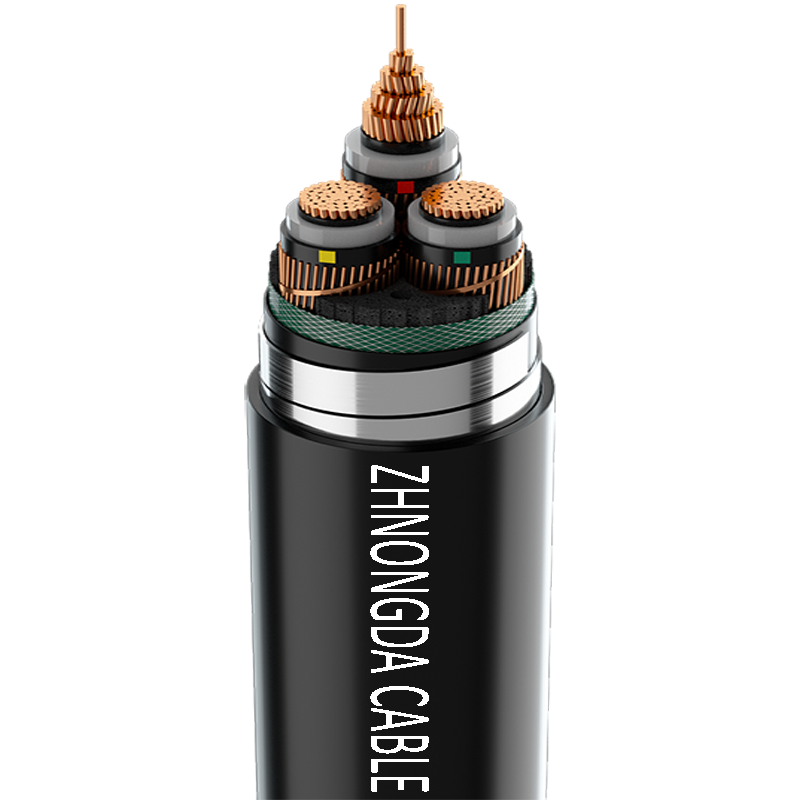
The choice between solid and stranded conductors depends heavily on vibration resistance and routing requirements. Solid conductors offer lower resistance over long, straight distances and are ideal for permanent, fixed installations within walls or conduits. However, they lack flexibility and will snap if subjected to continuous movement. Stranded conductors consist of multiple smaller wires twisted together, providing the flexibility needed for complex routing and environments subject to heavy vibration, such as generator enclosures or heavy machinery housings.
Conductivity success relies on material purity and resistance to oxidation. Pure electrolytic tough pitch (ETP) copper or oxygen-free copper provides superior electrical performance. In environments exposed to moisture or corrosive gases, tinned copper strands are necessary to prevent oxidation, which would otherwise increase resistance and degrade the connection points over time. Bare copper turns green and brittle in wastewater treatment plants; tinned copper survives.
| Stranding Class | Flexibility Level | Typical Strand Count (Example: 4 AWG) | Primary Application |
|---|---|---|---|
| Class B | Low (Standard) | 7 or 19 strands | Fixed commercial wiring, conduit pulls |
| Class C | Medium | 19 or 37 strands | Industrial switchgear, moderate routing |
| Class K | High (Flexible) | 420 strands | Motor leads, temporary power drops |
| Class M | Extreme (Continuous Flex) | 1045 strands | Welding leads, robotic drag chains |
Dielectric materials determine a cable's thermal rating, chemical resistance, and dielectric strength. Standard PVC is sufficient for dry, indoor commercial spaces but fails rapidly in harsh industrial environments. When exposed to cutting fluids on a CNC machining floor, standard PVC swells, softens, and eventually splits, exposing live conductors to the metal chassis.
Specific jacketing choices must map directly to environmental outcomes. Polyurethane (PUR) jackets offer exceptional abrasion and oil resistance for manufacturing floors, while UV-stabilized jackets prevent cracking and degradation in outdoor installations exposed to direct sunlight. Cross-linked Polyethylene (XLPE) provides excellent moisture resistance and high overload capacity, making it the standard for underground utility feeds and heavy industrial power distribution.
Shielded designs are necessary to prevent noise coupling when high-voltage lines run adjacent to low-voltage data or micro-coax cables. Variable frequency drives (VFDs) and heavy motors generate significant electromagnetic interference (EMI) that can corrupt data signals and cause erratic behavior in nearby sensitive electronics. Running an unshielded motor lead next to a PLC communication line guarantees dropped packets and phantom machine faults.
Shielding typically comes in foil or braided formats. Foil shielding provides 100% coverage against high-frequency noise but is fragile and unsuitable for flexing applications. Braided copper shielding offers high durability and structural integrity, though coverage usually ranges from 85% to 95%. For maximum protection in harsh EMI environments, engineers specify cables combining both foil and braided shields, ensuring both high-frequency and low-frequency noise is contained and shunted to ground.
Dynamic environments place unique mechanical stresses on wiring, including dragging across rough concrete, crushing under heavy machinery, and continuous flexing. Standard building wire will fail rapidly under these conditions. A Portable Power Cable is specifically engineered to survive temporary deployments and harsh physical abuse. You see these deployed as spider boxes on construction sites, where they are run over by forklifts and left in standing water.
These applications require high-strand-count conductors (Class K or M) to maintain flexibility without breaking. Furthermore, thermoset elastomeric jackets, such as those found on SOOW or Type W cables, provide the necessary structural integrity. These jackets resist cuts, impacts, and chemical exposure, ensuring safe power delivery on construction sites, mining operations, and theatrical stages. Unlike thermoplastic jackets that melt under high heat or shatter in freezing temperatures, thermoset rubber maintains its mechanical properties across extreme temperature ranges.
Robotics and automated machinery require continuous-flex ratings. Cables in these applications undergo millions of bending cycles inside drag chains. Standard stranded wire will experience strand breakage, leading to localized heating and eventual failure. When a single internal strand breaks, it acts like a needle, puncturing the insulation from the inside out and causing a dead short against the machine frame.
Specialized torsion-resistant designs are required to prevent "corkscrewing," a phenomenon where internal conductors twist and bulge through the outer jacket. Automation cables utilize precise lay lengths, PTFE tape wrapping, and central strength members (like Kevlar aramid fibers) to absorb torsional stress and keep the internal geometry stable during rapid, repetitive movements. The jacket material is also formulated to be low-friction, preventing the cables from binding against each other inside the track.
Low-power FPGAs and high-speed mixed-signal environments demand strict power delivery requirements. Even minor voltage fluctuations or induced noise can corrupt data integrity and cause logic errors in sensitive microprocessors. In these environments, the power delivery network is just as critical as the data network.
Premium, noise-free delivery is mandatory in laboratory test and measurement setups, such as RF testing, and semiconductor probe manufacturing. These environments often require cleanroom-rated, low-outgassing materials to prevent airborne contamination. The wiring must provide absolute voltage stability and heavy shielding to ensure test results remain accurate and unaffected by external electrical noise. Materials like PTFE or FEP are commonly specified here because they do not shed particulates and offer exceptional dielectric properties.
In data centers, wiring must be evaluated based on airflow optimization, tight bend radii, and seamless integration with high-density power distribution units (PDUs). Bulky, inflexible wiring blocks cooling aisles, increasing server temperatures and cooling costs. Routing thick, stiff lines under raised floors creates air dams that starve server racks of chilled air.
Advanced cable organization strategies mimic logical routing to prevent thermal pooling. When power lines run parallel to sensitive neural or data architectures, maintaining physical separation and using shielded designs minimizes crosstalk. Proper routing ensures efficient heat dissipation and protects the integrity of high-speed data transmission. Using angled connectors and custom-length whips eliminates excess slack, keeping the under-floor or overhead tray environment clean and thermally efficient.
Relying on manufacturer datasheets from ISO-certified facilities is non-negotiable for enterprise procurement. ISO certification ensures the manufacturer adheres to strict quality control processes, guaranteeing consistency across large production runs. Without this baseline, material quality can vary wildly from batch to batch, leaving you with a compliant product on Monday and a fire hazard on Friday.
Verifying third-party testing marks, such as UL (Underwriters Laboratories) or CE, is crucial to avoid counterfeit products. Procurement teams must check the certification numbers against official databases rather than accepting printed logos at face value. Authentic certifications prove the product has passed rigorous safety and performance testing.
To audit a supplier's compliance claims, follow this verification protocol:
Flame test ratings like VW-1 (Vertical Wire) and FT4 dictate how a cable behaves during a fire. VW-1 tests a single wire's ability to self-extinguish, while FT4 is a more rigorous tray cable test evaluating fire spread in bundled configurations. Selecting the correct rating prevents wiring from acting as a fuse that spreads fire between building floors. In commercial high-rises, specifying anything less than a riser-rated or plenum-rated jacket is a direct violation of the National Electrical Code.
Low Smoke Zero Halogen (LSZH) designs play a critical safety role in poorly ventilated or highly populated infrastructure spaces. Standard PVC jackets release toxic, corrosive halogen gases and thick black smoke when burned. LSZH materials eliminate these halogens, ensuring clear escape routes and protecting sensitive electronic equipment from corrosive smoke damage during a fire emergency. Transit authorities mandate LSZH in subway tunnels specifically because smoke inhalation and acid gas damage are far more lethal than the flames themselves.
A conceptual trade-off analysis reveals the danger of prioritizing upfront savings. Purchasing generic, unverified wiring reduces capital expenditure (Capex) initially. However, this savings is quickly erased by the operational expense (Opex) of troubleshooting intermittent power faults, replacing degraded lines, and suffering unplanned facility downtime. The labor cost to pull a replacement line through 300 feet of rigid conduit dwarfs the initial material savings.
High-quality infrastructure requires a larger initial investment but delivers reliable performance over decades. The cost of a single hour of manufacturing downtime caused by a melted conductor far exceeds the premium paid for industrial-grade wiring. Facility managers must evaluate procurement through the lens of operational continuity rather than just the line-item material cost.
Partnering with established manufacturers featuring decades of proven expertise is safer than buying from generic distributors. Experienced factories understand the nuances of material science and application engineering, providing valuable guidance during the specification phase. They can look at your environmental variables and recommend a jacket compound you may not have considered.
Transitioning from off-the-shelf options to custom premium assemblies and wiring harnesses becomes necessary when integrating with specific OEM equipment. Custom harnesses reduce installation time, eliminate excess length that causes thermal pooling, and ensure exact connector compatibility for complex machinery. Having a factory terminate, test, and pot the connectors guarantees a weather-tight seal that field terminations rarely achieve.
Common red flags in vendor datasheets include missing compliance data, vague material descriptions (e.g., "copper alloy" instead of "pure copper"), and absent thermal ratings. These omissions often indicate substandard manufacturing. If a datasheet lacks a clear AWG size, stranding count, and insulation thickness, the product is not suitable for industrial use.
A robust risk mitigation strategy involves auditing suppliers directly. Procurement teams should request verifiable test reports, inspect factory ISO certificates, and consult market research rankings before committing to bulk procurement. Rigorous vetting ensures the physical product matches the engineering specifications. Counterfeit wire is a massive issue in global supply chains, often featuring fake UL stamps and undersized aluminum cores disguised as copper.
| Counterfeit Red Flag | Inspection Method | Risk if Ignored |
|---|---|---|
| Unusually light weight | Compare spool weight against standard copper weight charts | High resistance, overheating, fire hazard (likely CCA) |
| Smudged or missing print legend | Visually inspect the jacket for clear, continuous printing | Lack of traceability, unverified safety ratings |
| Jacket tears easily by hand | Attempt to stretch and tear a small sample of the jacket | Premature insulation failure, short circuits, shock hazard |
| No UL file number on jacket | Check for the 'E' number and verify in the UL database | Code violations, failed electrical inspections, lack of insurance coverage |
A: Calculate the maximum amperage load of your equipment and measure the total run distance to account for voltage drop. Reference the National Electrical Code (NEC) or local electrical codes, which provide specific ampacity charts matching wire gauge (AWG) to safe current limits based on insulation type and ambient temperature.
A: Copper-Clad Aluminum (CCA) uses an aluminum core coated in copper. It has significantly lower conductivity, higher electrical resistance, and is more brittle than pure copper. Pure copper provides superior flexibility, handles higher thermal loads safely, and prevents the overheating risks associated with CCA under heavy current draw.
A: Use portable designs for temporary power setups, mobile equipment, and dynamic environments. They feature finely stranded conductors and durable elastomeric jackets (like SOOW) designed to withstand continuous flexing, dragging, abrasion, and crushing, whereas standard building wire will quickly break under mechanical stress.
A: Shielding prevents the emission of Electromagnetic Interference (EMI) and Radio Frequency Interference (RFI). High-voltage lines generate noise that can disrupt nearby sensitive electronics, micro-coax lines, data networks, or test instruments. Shielding contains this noise, ensuring clean data transmission and accurate instrument readings.
A: LSZH stands for Low Smoke Zero Halogen. In the event of a fire, LSZH jackets burn cleanly, emitting very little smoke and zero toxic, corrosive halogen gases. This rating is critical for safety in enclosed spaces, tunnels, and transit hubs to maintain visibility and protect human life.
A: Inspect the outer jacket for the printed UL mark and the specific registration number. Take that registration number and search for it directly in the official UL Product iQ online database. If the manufacturer and product details do not match the database, the cable is likely counterfeit.
 简体中文
简体中文 

