

Views: 0 Author: Site Editor Publish Time: 2026-08-21 Origin: Site


Outdoor electrical work carries high stakes. Selecting the wrong materials or installation method results in code violations, rapid material degradation, safety hazards, and the costly reality of re-trenching. When you run electricity to outbuildings, exterior lighting, or heavy equipment, you face strict technical specifications. You must navigate the differences between UF-B, THWN-2, and USE-2, weigh the material trade-offs of copper versus aluminum, and adhere to National Electrical Code (NEC) requirements. The correct choice depends entirely on your project parameters. You must evaluate your installation method, total run distance, amperage load, and local environmental conditions. Direct burial requires different materials than conduit installations. Long distances demand specific sizing strategies to prevent equipment damage. This guide provides a technical framework for evaluating and selecting the right Power Cable for your underground and outdoor projects.
Installation Method Dictates Cable Type: Direct burial requires specifically rated assemblies (like UF-B), while conduit installations typically utilize individual, water-resistant conductors (like THWN-2).
Distance Amplifies Voltage Drop: Long underground runs require upsized conductors to prevent voltage drop, which can damage equipment and reduce efficiency.
Code Compliance is Non-Negotiable: Trench depth, conduit material, and cable ratings must align with NEC standards (typically 18 to 24 inches deep depending on the method) and local municipal amendments.
Material Trade-offs: Copper offers superior conductivity and requires smaller gauges, while aluminum provides significant cost savings for long, high-amperage feeder runs but requires specific termination techniques.
Establishing a foundational project scope prevents rework. Decide upfront if the project requires a simple 120V supply or a robust 240V supply. A 120V circuit works perfectly for basic shed lighting, standard convenience outlets, and small outdoor power tools like string trimmers or battery chargers. A 240V supply becomes mandatory when you plan to operate HVAC units, heavy-duty welders, air compressors, or install a full subpanel in a detached garage or workshop. Making this decision early dictates your trenching depth, conduit size, and conductor gauge. If you guess wrong, you will find yourself digging a second trench a year later.
Phased construction introduces another layer of complexity. Consider scenarios where you need to power a temporary guesthouse or RV while building a main house. You must size your Underground Power Cable to handle current temporary loads while future-proofing for permanent structural demands. Installing an undersized feeder line now means abandoning it later. Smart planning involves laying an oversized conduit or pulling heavier gauge wire initially to accommodate the eventual main service panel connection. You can always install a 100-amp wire and put it on a 50-amp breaker for now, but you cannot put a 50-amp wire on a 100-amp breaker later.
Outdoor wiring faces severe environmental threats. Moisture ingress remains the primary enemy of electrical systems. Underground conduits eventually fill with water. It is not a matter of if, but when. Ground condensation and minor joint leaks guarantee that any wire inside a buried pipe will eventually sit in water, making wet-rated insulation non-negotiable. UV exposure rapidly degrades standard cable jackets where they emerge above ground. Soil acidity attacks metallic components over time. Physical damage poses a constant risk from landscaping equipment, shovels, and frost heave. Frost heave can literally shear wires apart if you fail to install proper expansion fittings at the transition points where the pipe comes out of the ground.
Success ultimately means passing inspection. Verify local codes before renting trenching equipment. Municipal inspectors, often referred to as the Authority Having Jurisdiction (AHJ), enforce stricter rules than the baseline NEC regarding underground installations. Some jurisdictions prohibit direct burial entirely, mandating conduit for all subterranean runs regardless of depth. Failing to pull the proper permits or ignoring local amendments guarantees a failed rough-in inspection. The inspector will make you unearth the entire project to verify the pipe and wire.
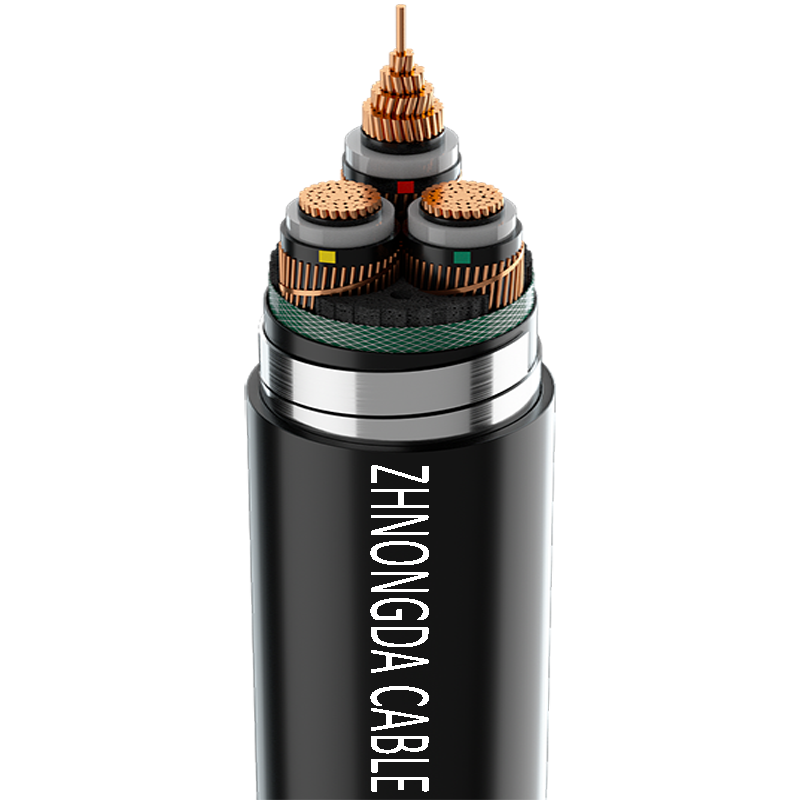
Your installation architecture dictates every subsequent material choice. The direct burial approach involves laying a specifically rated wire assembly directly into a trench. This method offers lower upfront material costs because you avoid purchasing lengths of PVC or metal piping. Installation moves faster in clear, sandy soil since you skip the labor of cutting, gluing, and fitting conduit sections. Direct burial works best for short runs, low-traffic areas, and projects with fixed, low-amperage requirements like landscape lighting or a single shed outlet.
Direct burial carries significant drawbacks. The wire remains highly vulnerable to physical damage from future digging, fence post installation, or burrowing rodents. The NEC requires deeper trenching for direct burial, typically 24 inches, to mitigate these physical risks. Digging a 24-inch trench by hand through clay or rocky soil takes days of backbreaking labor. Furthermore, direct burial makes future upgrades impossible without re-digging the entire trench. If you decide to add a high-draw power tool to your shed later, you cannot simply pull a larger wire through the existing path.
The conduit installation approach utilizes Schedule 40 PVC, Schedule 80 PVC, or Rigid Metal piping to house individual conductors. This architecture provides superior physical protection against shovels, rocks, and pests. Conduit allows for shallower trenches. The NEC permits 18-inch trenches for PVC and just 6 inches for Rigid Metal conduit under specific conditions. A properly sized conduit system enables you to pull new or upgraded wires in the future without disturbing the landscaping. You simply attach a pull string to the old wire, pull it out, and use the string to drag the new, heavier gauge wire through the pipe.
Conduit installations require higher material costs and more labor-intensive preparation. You must calculate conduit fill capacity accurately to ensure you do not overstuff the pipe. Overstuffing causes dangerous heat buildup and makes pulling wire physically impossible. You also have to manage sweeping bends rather than sharp 90-degree elbows to prevent the wire from binding. Conduit systems represent the optimal choice for high-traffic areas, routing under driveways, long feeder runs, and any project where future power expansion remains likely.
Installation Architecture Comparison
Feature | Direct Burial | PVC Conduit (Schedule 40/80) | Rigid Metal Conduit |
|---|---|---|---|
Standard Trench Depth | 24 inches | 18 inches | 6 inches |
Physical Protection | Low | High | Maximum |
Future Upgrades | Requires re-trenching | Pull new wire through existing pipe | Pull new wire through existing pipe |
Labor Intensity | Low (except for digging depth) | Medium (gluing, fitting, pulling) | High (threading metal pipe) |
Selecting the exact wire type requires matching the insulation properties to your chosen installation architecture. Using indoor-rated wire outdoors guarantees catastrophic failure.
UF-B features solid plastic sheathing that encapsulates individual conductors, making it highly moisture-resistant. Manufacturers design this specifically for direct burial without requiring a conduit system. It serves as the standard choice for residential direct burial projects.
While UF-B excels in the dirt, it presents physical challenges. The tough outer jacket proves notoriously difficult to strip without nicking the internal insulation. You need a specialized UF stripping tool to do it cleanly. The assembly remains physically stiff, making it hard to route through tight spaces or structural framing once it enters the building. You should never run UF-B inside a conduit for long distances. The solid sheathing prevents proper heat dissipation inside the pipe, and the stiffness makes pulling it through PVC bends an agonizing, high-friction process that often results in torn jackets.
THWN-2 stands for Thermoplastic, Heat and Water-resistant, Nylon-coated. These are individual conductors rather than a bundled assembly. THWN-2 represents the industry standard for underground conduit runs. It boasts a high ampacity rating, safely operating at temperatures up to 90°C.
The slick nylon coating makes pulling THWN-2 through PVC conduit relatively easy, even through multiple sweeps. Electricians use wire pulling lubricant to make the process even smoother. You must use THWN-2 only inside a complete conduit system. It lacks the structural integrity for direct burial and will fail rapidly if exposed directly to soil and rocks.
USE-2 features cross-linked polyethylene (XLPE) insulation. This material is highly resistant to moisture, extreme heat, and crushing forces. Electricians rely on USE-2 for industrial applications, large solar panel arrays, and direct burial service entrances connecting utility transformers to main structural panels.
USE-2 handles harsh environments exceptionally well. Standard USE-2 is not rated for indoor use due to its specific fire-resistance properties. If your run enters a building, you must ensure the product is dual-rated, such as RHH/RHW-2/USE-2, to comply with indoor fire codes. Otherwise, you have to terminate the USE-2 in a junction box on the exterior of the building and transition to an indoor-rated wire.
Copper delivers superior conductivity, allowing you to use a smaller diameter wire for the same amperage. It resists oxidation better than aluminum and provides more reliable connections at standard terminals. Copper remains the best choice for 120V branch circuits and shorter runs where material costs remain manageable.
Aluminum, or copper-clad aluminum, provides massive cost savings for heavy-gauge feeder lines. When running a 240V subpanel feed over a long distance, copper becomes prohibitively expensive. Aluminum handles heavy loads efficiently on a budget. You must use a larger gauge wire and upsize your conduit accordingly. You also face mandatory installation techniques. You must apply anti-oxidant compound at all bare aluminum terminations. You must ensure your breakers and lugs are specifically rated for aluminum (marked AL/CU) to prevent thermal expansion failures. Finally, you must use a torque screwdriver or wrench to tighten the lugs to the manufacturer's exact specifications, as loose aluminum connections cause arcing and fires.
Underground Wire Specification Matrix
Specification | UF-B | THWN-2 | USE-2 |
|---|---|---|---|
Primary Application | Direct Burial | Inside Conduit Only | Direct Burial / Service Entrance |
Insulation Type | Solid Plastic Sheathing | Thermoplastic, Nylon-Coated | XLPE (Cross-linked Polyethylene) |
Moisture Resistance | High | High | Extreme |
Indoor Rating | Yes | Yes | Only if dual-rated (RHH/RHW-2) |
Ease of Pulling | Very Poor | Excellent | Moderate |
Accurate sizing prevents equipment failure and fire hazards. Calculate the total amperage load for your outbuilding based on your initial 120V or 240V decision. A standard 20-amp 120V circuit requires 12 AWG copper wire. This setup handles basic lighting and a few standard receptacles. A 60-amp 240V subpanel requires significantly larger conductors, typically 6 AWG copper or 4 AWG aluminum. Tally the continuous loads (lighting and HVAC running for more than three hours) and non-continuous loads (intermittent power tools) to determine the baseline ampacity requirement.
Distance complicates these calculations. As electricity travels through a wire, natural resistance causes the voltage to drop. The NEC recommends a maximum voltage drop of 3% for branch circuits. Mitigating voltage drop on long runs requires upsizing the conductors.
Consider a practical field example. You want to run a 20-amp circuit 150 feet to a backyard shed. While 12 AWG copper technically handles 20 amps, pushing that current over 150 feet results in a voltage drop exceeding safe limits. When voltage drops, motors in power tools draw more current to compensate. This leads to overheating, tripped breakers, and premature motor burnout on expensive equipment like table saws or air compressors. To maintain proper voltage over that 150-foot distance, you must upsize the wire from 12 AWG to 10 AWG.
Always measure your exact run distance before buying materials. Include the horizontal trench distance, the vertical drops into the trench, the vertical rises into the panels, and the routing inside the building walls. A 100-foot run across the yard often requires 130 feet of wire once you account for the vertical transitions and panel connections.
Digging the trench consumes more time and physical effort than the electrical work itself. Adhere strictly to NEC depth requirements. Standard direct burial requires a 24-inch trench. PVC conduit requires an 18-inch trench. Rigid metal conduit allows for a 6-inch trench. The code offers a DIY-friendly exception: a GFCI-protected 120V circuit rated at 20 amps or less, using UF-B, only requires a 12-inch trench. This exception saves significant labor for simple residential projects like running power to a birdbath pump or a single landscape light.
Soil conditions dictate your bedding strategy. If you encounter rocky soil, you cannot simply throw UF-B or PVC into the trench and backfill. Sharp rocks will puncture jackets and crack PVC under the weight of the settling soil. Lay a sand bed at the bottom of the trench, place your electrical lines, and cover them with another layer of sand before backfilling with native soil.
Transitioning from underground to above-ground creates a critical vulnerability point. Where the wire emerges from the earth to enter a building or panel, it faces immediate threats from weed whackers, lawnmowers, and foot traffic. The NEC requires physical protection at this transition. Use Schedule 80 PVC (which has thicker walls than Schedule 40) or metal conduit sleeves to protect the wire from the bottom of the trench up to the termination point. Install a PVC expansion fitting on the vertical riser. As the ground freezes and thaws, the soil shifts. The expansion fitting allows the pipe to slide up and down slightly without ripping the meter box or subpanel off the side of the building.
Permitting and inspection pitfalls ruin many outdoor projects. Never bury your trench before the rough-in inspection. The electrical inspector must physically verify the trench depth, the conduit integrity, the bedding material, and the wire type. If you backfill the trench too early, the inspector will force you to unearth the entire run. Leave the trench open, keep your permit visible, and ensure all warning tapes are ready for installation during the final backfill phase.
Calculate your total continuous and non-continuous amperage load to determine the exact wire gauge required for your outbuilding or equipment.
Measure the exact trench route, including all vertical drops and rises, to accurately calculate voltage drop and purchase the correct length of materials.
Consult your local municipal building department to verify specific trench depth requirements and pull the necessary electrical permits.
Rent a mechanical trencher for runs longer than 20 feet to ensure you reach the required NEC depth without compromising the installation due to physical fatigue.
A: While the NEC allows UF-B inside conduit for physical protection, it is highly discouraged for long runs. The solid plastic sheathing prevents proper heat dissipation, leading to dangerous heat buildup. Additionally, the stiff, flat profile of UF-B makes pulling it through PVC bends extremely difficult and labor-intensive.
A: Standard direct burial requires a 24-inch trench. PVC conduit installations require an 18-inch trench. Rigid metal conduit requires a 6-inch trench. A specific NEC exception allows a 12-inch trench for a 120V, 20-amp (or less) circuit that is GFCI-protected before it enters the ground.
A: Yes. The NEC requires placing a red warning tape in the trench to prevent future excavation accidents. You must backfill a portion of the trench and lay the warning tape exactly 12 inches above the buried electrical line or conduit before completing the backfill.
A: No. Underground conduits are legally classified as "wet locations" because they inevitably accumulate condensation and groundwater over time. Standard NM-B (Romex) utilizes paper wrapping inside the jacket, which will rot, degrade the insulation, and cause a catastrophic short circuit.
A: The "W" in THWN-2 stands for water-resistant. THWN-2 is specifically rated for wet locations, making it mandatory for underground conduits. Standard THHN is rated only for dry locations. Most modern wire manufactured today is dual-rated as THHN/THWN-2, but you must verify the stamp on the insulation.
A: You must use Schedule 80 PVC in areas subject to physical damage. This typically includes the transition point where the conduit emerges from the ground and runs up the side of a building or pole. Schedule 40 PVC is generally acceptable for the buried portion of the trench.
 简体中文
简体中文 

