

Views: 0 Author: Site Editor Publish Time: 2026-10-05 Origin: Site


Imagine a commercial freighter navigating a brutal North Atlantic storm. In this harsh environment, an electrical failure is never just a minor inconvenience. It is a critical safety hazard. A sudden blackout can compromise the entire vessel, its cargo, and the lives of the crew. Hundreds of manufacturers worldwide claim to produce marine-grade wiring. As a result, procurement managers and marine engineers face a daunting decision at the bottom of the purchasing funnel. How do you separate top-tier manufacturers from unreliable vendors?
The definitive proof of a reliable supplier lies in their portfolio of international maritime certifications. These documents are not merely administrative checkboxes. They are rigorous technical endorsements from the world's leading regulatory authorities. This guide explores how buyers can navigate complex maritime approvals. By understanding the specific requirements of major classification societies, procurement teams can make secure, compliant, and long-lasting purchasing decisions for their fleets.
Certification is Non-Negotiable: A legitimate supplier must hold valid certificates from recognized maritime classification societies to ensure baseline safety and legal compliance.
The Big Three: Understanding the specific regional and technical requirements of CCS DNV ABS is crucial for global maritime compliance and insurance validity.
Specialized Testing for High Voltage: High-voltage infrastructure requires far more rigorous testing compared to standard low-voltage alternatives, focusing heavily on thermal endurance and partial discharge analysis.
Verification Protects Your Investment: Always verify a supplier’s certificates directly through official classification society databases to avoid counterfeit products and operational failures.
Maritime engineering is strictly regulated. A Class Approval, often called Type Approval, serves as definitive third-party verification. It proves that a product meets strict safety, environmental, and performance standards. Unlike self-declared compliance marks, this process requires a classification society auditor to physically inspect the manufacturing facility. They witness exhaustive material testing and deeply evaluate the factory's quality management system.
From a legal and operational standpoint, international maritime frameworks mandate the use of certified equipment on commercial vessels. Procuring uncertified electrical infrastructure is a critical compliance violation. If a vessel utilizes unapproved wiring, it risks failing Port State Control inspections. This failure can result in the ship being immediately detained at the dock. Furthermore, in the event of a fire or mechanical failure, maritime insurance providers will swiftly void coverage if uncertified cables are discovered in the wreckage.
Looking at broader industry trends, the maritime sector is undergoing a massive transformation. The rapid shift towards decarbonization, shore power integration, and offshore renewable energy is forcing classification societies to continuously update their standards. Modern vessels increasingly incorporate hybrid propulsion systems, massive battery banks, and alternative fuels. Consequently, shipboard electrical infrastructure must handle unprecedented power loads and extreme thermal stresses. We are seeing a distinct industry push toward higher voltage ratings and enhanced fire survivability. Legacy cables designed a decade ago often fail to meet the electrical demands of today's green-tech ships. Therefore, holding up-to-date approvals is more critical than ever.
Obtaining these maritime certifications requires massive capital investment. A factory must commit substantial resources to advanced research, specialized testing laboratories, and continuous independent audits. Holding these approvals proves that a supplier possesses robust manufacturing capabilities. This effectively separates industry-leading manufacturers from lower-tier vendors who merely rebrand standard industrial wires.
While there are over a dozen classification societies globally, a top-tier manufacturer will typically hold approvals from the most recognized organizations. These certifications ensure that the cables can be legally installed on vessels registered under various international flags. Understanding the nuances of these major societies helps buyers align their procurement with their vessel's operational region and technical requirements.
Classification Society | Primary Region & Influence | Key Technical Focus |
|---|---|---|
CCS | Asia / Global Commercial Tonnage | Scalability, international baseline compliance, bulk carrier standards. |
DNV | Europe / North Sea / Offshore Wind | Extreme cold climate resilience, deep-water pressure, mechanical stress. |
ABS | North America / Offshore Oil & Gas | Fire resistance, harsh chemical endurance, drilling mud survivability. |
The China Classification Society has established dominance in the booming Asian shipbuilding and repair market. Because it aligns closely with unified international requirements, earning this approval is a strong indicator of a supplier's strict quality baselines. DNV is widely regarded as the European standard and is heavily trusted across the offshore wind sector. Cables seeking DNV approval must often prove their durability against extreme cold climate conditions. In contrast, the American Bureau of Shipping remains the gold standard for the global offshore energy sector. ABS places a massive focus on operational safety, particularly regarding fire resistance and hydrocarbon endurance.
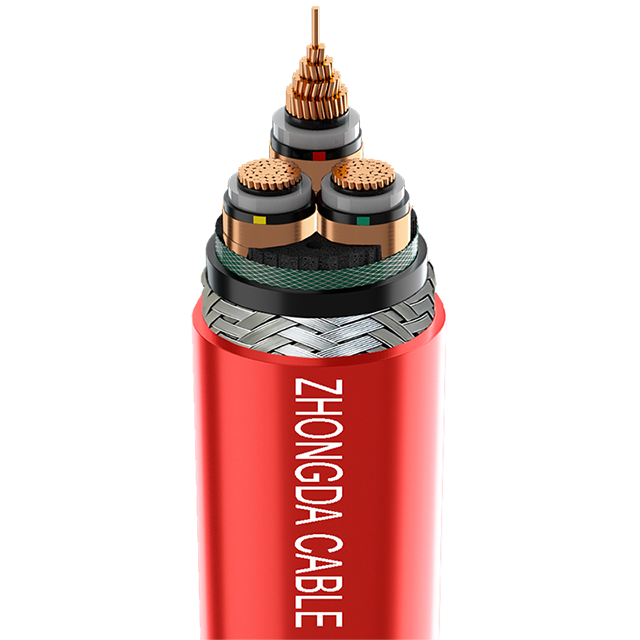
When outfitting modern vessels with heavy propulsion systems, procurement managers must understand the vast technical divide between standard low-voltage wiring and high-voltage marine infrastructure. A Shipboard HV Power Cable typically ranges from 3.6/6kV up to 26/35kV. These heavy-duty lines are tasked with distributing massive amounts of primary power from the main generators to thrusters, propulsion motors, and heavy lifting machinery.
Electrical stress in high-voltage applications is exponentially greater. Consequently, these cables undergo much stricter scrutiny during the certification process. The parameters require complex testing that goes far beyond basic electrical continuity. High-voltage marine cables utilize advanced cross-linked polyethylene or ethylene propylene rubber insulation. They also incorporate semi-conductive screens and copper tape shielding to manage electrical fields safely.
Partial discharge testing is a crucial metric for high-voltage integrity. This test measures microscopic electrical sparks within micro-voids in the insulation. Over time, these tiny sparks degrade the material and can cause catastrophic explosive arc flashes. Class approvals mandate strict partial discharge limits to ensure the insulation is virtually flawless. Furthermore, the cables must demonstrate exceptional short-circuit withstand capabilities. They must survive immense thermal and magnetic forces during a power surge without melting or deforming, allowing circuit breakers time to trip safely.
To truly appreciate the value of these certifications, it is essential to break down the actual physical and chemical trials a Marine Power Cable must survive. Standard commercial cables are fundamentally unequipped to handle maritime conditions and would immediately fail these tests.
In a shipboard fire, there is no immediate escape. Toxic smoke and corrosive gases are often more deadly than the flames themselves. Marine approvals mandate compliance with strict standards, such as IEC 60332-3-22 for flame retardance in bunched cables and IEC 60754 for halogen-free properties. These tests prove that the low smoke zero halogen sheath will self-extinguish. It will not emit dense, toxic gases like chlorine that blind crew members and permanently corrode sensitive navigation electronics.
Vessel engine rooms and offshore platforms constantly expose infrastructure to harsh chemical cocktails. Certifications dictate strict testing for mud and oil resistance. During these evaluations, the cable jacket is submerged in heated drilling fluids and diesel for hundreds of hours. To pass, the jacket must retain its tensile strength and elongation properties without swelling or dissolving.
Standard industrial cables use bare copper. This material rapidly oxidizes and turns black when exposed to salt-laden ocean air, leading to increased electrical resistance and dangerous overheating. Marine approvals mandate the use of high-flexibility, corrosion-resistant tinned copper conductors, typically IEC 60228 Class 2 or Class 5. The micro-thin tin coating protects the underlying copper from galvanic corrosion. Meanwhile, the highly stranded design allows the cable to withstand the constant low-frequency vibrations generated by massive marine diesel engines without suffering metal fatigue.
Procurement managers face high stakes when selecting electrical infrastructure. To transition from research to secure purchasing, use this practical engineering checklist when evaluating a potential vendor.
First, verify the voltage rating and cross-sectional area. Many suppliers claim to be approved, but their clearance may only cover standard 0.6/1kV lighting cables. Ensure the certificate specifically lists the exact voltage rating, whether it is 1.8/3kV or 8.7/15kV, and the conductor size you are purchasing.
Second, demand Factory Acceptance Test reports for your specific batch. A type approval proves the factory can make the cable. A factory acceptance test report proves they actually manufactured your specific batch correctly. This covers routine tests like conductor resistance and high-voltage spark testing.
Third, confirm strict adherence to IEC 60092 standards. This standard is the universal baseline for electrical installations in ships. Confirming compliance ensures the physical dimensions, insulation thickness, and electrical properties meet global expectations.
In today's complex global supply chain, procurement professionals must acknowledge the reality of counterfeit products and falsified documentation. Trusting a digital document blindly can lead to catastrophic legal and safety consequences for the vessel operator.
Fortunately, industry regulators are increasingly digitizing their verification processes. Every major classification society maintains a publicly accessible official online database. Procurement managers should utilize tools such as the DNV Approval Finder or the ABS Type Approval Database. By entering the certificate number provided by the supplier, you can instantly verify its active status.
When viewing the official database entry, meticulously cross-reference the data. Ensure that the manufacturer's exact legal name and the physical factory address match the supplier's quotation. Counterfeiters often use a legitimate certificate number but alter the manufacturer name on the document. Verify that the specific product ranges, voltage ratings, and material compositions listed in the database precisely match the items you intend to purchase.
Choosing a reliable marine supplier is ultimately an exercise in severe risk management. Valid class approvals are your frontline defense. They guarantee that the products you install will protect your vessel, your crew, and your operational compliance.
Whether you are wiring a small coastal workboat or routing a massive high-voltage feed through a deep-water offshore platform, certifications from recognized authorities prove the long-term durability of your electrical power systems. Always verify documents independently before issuing a purchase order.
To ensure your next maritime project is powered safely and compliantly, partner with a certified manufacturer. Explore the extensive range of compliant solutions at ZD Cables to find the exact marine wire and high-voltage infrastructure tailored to your vessel's classification requirements.
There is no single most important approval. The requirement depends entirely on where the ship is built, its operational region, and its flag state registry. However, certifications from the China Classification Society, Det Norske Veritas, American Bureau of Shipping, and Lloyd's Register are universally recognized as the top tier of maritime certifications, providing the broadest global acceptance.
These acronyms represent three of the world's leading maritime classification societies. They are the China Classification Society, Det Norske Veritas, and the American Bureau of Shipping. These organizations independently verify that marine equipment meets strict international safety and performance standards.
High-voltage cables manage immense electrical stress and require complex multi-layer insulation systems alongside advanced metallic shielding. The testing for high-voltage cables includes highly stringent partial discharge and thermal endurance evaluations to prevent catastrophic arc flashes. This requires advanced manufacturing capabilities that standard factories simply do not possess.
Marine grade cables are specifically engineered to survive harsh ocean environments. Unlike standard wire, marine cables feature tinned copper conductors to prevent saltwater corrosion, highly flexible stranding to absorb engine vibrations, and specialized low smoke zero halogen jackets that resist oil, mud, and extreme temperatures while preventing toxic smoke during a fire.
Yes, tinning is highly critical for marine environments. Bare copper oxidizes rapidly when exposed to moisture and salt air, which increases electrical resistance and can cause dangerous overheating. The thin layer of tin protects the copper core from galvanic corrosion, ensuring the cable maintains its conductivity and structural integrity over the lifespan of the vessel.
No. Standard industrial cables lack the specific halogen-free, flame-retardant, and vibration-resistant properties required by international maritime law. Using uncertified cables violates safety regulations, creates severe hazards during a fire, and will instantly void the vessel's maritime insurance policy.
Type Approval Certificates typically expire every four to five years. A reliable supplier must undergo continuous and rigorous factory audits by the classification societies to maintain these renewals. This ensures that their manufacturing quality and material sourcing remain consistent over time.
 简体中文


