

Views: 0 Author: Site Editor Publish Time: 2026-10-30 Origin: Site


Picture a commercial vessel navigating a severe North Atlantic squall. Saltwater spray, relentless mechanical vibrations, and freezing temperatures continuously assault the ship's infrastructure. Have you ever witnessed what happens to standard commercial wiring in these conditions? I have seen it disintegrate in a matter of weeks. In these unforgiving maritime environments, electrical failure is never just a minor inconvenience. It is a critical safety hazard. It is a potential operational disaster.
Choosing the right manufacturing partner requires far more than casually browsing a product catalog or comparing price sheets. It demands a rigorous, multi-step auditing process to verify safety protocols, regulatory compliance, and long-term reliability. Procurement managers and marine engineers cannot afford to rely on polished marketing claims alone. They need empirical proof of competence from the factory floor.
The purpose of this guide is to provide a comprehensive framework for vetting suppliers from a frontline engineering perspective. By following these objective evaluation criteria, you can mitigate operational risks and secure a supply chain capable of delivering premium Marine Cable that meets the stringent demands of modern maritime operations.
Mandatory Certifications: A legitimate supplier must hold recognized approvals from major maritime classification societies, including ABS, DNV, and Lloyd’s Register.
On-Site Verification: A thorough facility walkthrough remains an objective, non-negotiable requirement to verify actual manufacturing capabilities.
Quality Control is King: The presence of in-house testing laboratories for fire resistance, mud resistance, and electrical integrity serves as a primary indicator of a reliable manufacturer.
Traceability: A successful assessment ensures the vendor maintains strict, documented traceability for all raw materials utilized in their production lines.
Procurement in the maritime industry extends far beyond standard commercial purchasing. The overarching goal of vetting a business-to-business vendor is to systematically eliminate operational risks. You must ensure strict regulatory compliance while verifying the actual technical infrastructure of the manufacturer.
Vessels, offshore drilling platforms, and naval ships operate in some of the most extreme conditions on the planet. Wiring installed in these environments is constantly exposed to corrosive saltwater, hazardous chemicals, and extreme temperature fluctuations. The consequences of utilizing substandard materials are severe. A breakdown in insulation integrity can lead to catastrophic electrical fires in confined spaces. Furthermore, signal degradation in communication lines might trigger complete blackouts on offshore platforms. Power failures often result in a sudden loss of vessel propulsion, directly correlating with life-threatening safety hazards.
The maritime sector operates under strict international frameworks governed by conventions like SOLAS, the Safety of Life at Sea agreement. Partnering with an unvetted vendor introduces massive compliance risks. Vessels equipped with non-certified components frequently fail port state control inspections. Specifically, maritime insurance underwriters explicitly require all critical infrastructure to be certified by recognized classification societies. Utilizing unapproved wiring can instantly void multi-million-dollar insurance policies. This exposes shipowners to immense legal liabilities in the event of an incident.
Before diving into the audit specifics, it is crucial to understand where the maritime industry is heading. Recent industry analyses highlight a rapid shift toward vessel digitalization, often referred to as smart ships, alongside the massive expansion of offshore wind farms. The push for maritime decarbonization is forcing shipbuilders to adopt hybrid propulsion systems that require advanced power transmission capabilities.
Consequently, procurement teams are increasingly prioritizing suppliers capable of manufacturing specialized, high-data-capacity cables. These products must comply with stringent eco-friendly standards. This trend underscores the necessity of evaluating a manufacturer's engineering versatility. Can they adapt to the green shipping revolution? A forward-thinking supplier will already have research and development protocols in place for next-generation offshore energy projects.
Certifications form the foundational baseline for any maritime equipment procurement. During an initial assessment, document verification acts as the primary filter. If a vendor fails to produce valid, verifiable paperwork, the evaluation should be immediately terminated.
This certification is granted by an independent classification society. It confirms that a specific product design meets established international maritime standards. For shipboard installations, Type Approval is an absolute mandate. It demonstrates that the product has survived rigorous independent testing, including flame retardancy, mechanical stress, and environmental endurance trials. Auditors must verify that the certificate matches the exact specifications required for the project. Always scrutinize voltage ratings, material compositions, and expiration dates.
Different geographical regions and vessel types dictate specific regulatory requirements. A robust manufacturer will proudly hold certifications from multiple international bodies. Key organizations include DNV, highly regarded globally for offshore wind and harsh environment standards. You should also look for ABS, a primary standard for vessels operating in North America and international waters. Additionally, LR, or Lloyd’s Register, remains one of the oldest and most respected maritime classification societies based in the UK. BV and CCS, representing Bureau Veritas and China Classification Society respectively, are essential for commercial fleets built or operating heavily in European and Asian markets.
Transitioning from digital document review to the physical factory floor often reveals the stark reality behind polished marketing brochures. On-site verification provides empirical evidence of actual operational capacity. Do not just look at the shiny machinery; look at the grease on the floor and the discipline of the operators.
An effective site visit requires meticulous preparation. Before booking a flight, request a comprehensive documentation package. This should contain the company’s quality assurance manual, detailed organizational charts, and a complete inventory list of production machinery. Reviewing these documents in advance allows you to pinpoint discrepancies between stated capabilities and physical realities during the tour.
Upon entering the facility, the physical environment offers immediate insights into operational discipline. Assess the implementation of the 5S methodology—Sort, Set in order, Shine, Standardize, Sustain. The factory floor must be immaculate and free of hazardous debris. For instance, airborne copper dust contamination can severely compromise the insulation properties of extruded polymers. Observe worker safety protocols. Verify whether the machinery appears modern, well-maintained, and regularly serviced according to visible maintenance logs.
Procurement teams must verify if the facility possesses the actual bandwidth to handle specific order volumes. Calculate the factory’s current machine utilization rate. If a plant is already operating at maximum capacity, a new bulk order will inevitably cause severe delivery delays. It might even force the vendor to outsource production. Outsourcing is a major red flag in this industry, as it completely severs the chain of quality control. A meticulous Factory Inspection demands proof that all core extrusion and stranding processes are completed entirely in-house.
The technical evaluation of the manufacturing process determines the physical integrity of the final product. A thorough walkthrough examines every stage of construction, from raw copper drawing to the final outer sheath extrusion. This is where engineering specifications meet real-world application.
The durability of any electrical component is fundamentally limited by the quality of its raw materials. For maritime applications, copper conductors must be of exceptionally high purity. They should be appropriately tinned—usually Class 2 or Class 5 tinned copper—to prevent rapid oxidation in salt-heavy environments. Investigate how the supplier sources their insulation compounds. Premium products typically utilize Cross-linked Polyethylene, known as XLPE, or Ethylene Propylene Rubber, referred to as EPR, rated for 0.6/1kV or higher.
When walking the factory floor, pause to observe the stranding machines in action. The copper wires should bundle tightly and uniformly, devoid of any microscopic abrasions that could later create electrical weak points. Extrusion lines must be equipped with in-line laser diameter gauges. These automated sensors continuously monitor the thickness of the insulation. Uneven extrusion leads to varying wall thickness, practically guaranteeing electrical breakdowns under high voltage or intense physical stress.
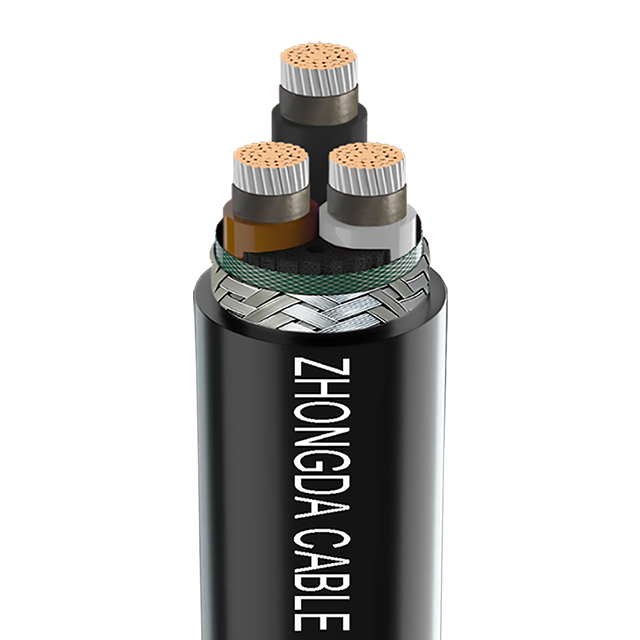
In addition to the core insulation, examine the braiding and sheathing processes. High-quality marine products often feature Tinned Copper Wire Braid armor to provide both mechanical protection and electromagnetic shielding. Ensure the facility has specialized machinery to apply this braiding seamlessly. Furthermore, the outer sheath must be robust. Look for the capability to extrude SHF1 or SHF2 outer sheaths, which provide superior resistance to oil, mud, and harsh weather conditions. Ensuring the Shipboard Cable meets exact dimensional tolerances is crucial for tight vessel routing.
To make the auditing process more concrete, compare the typical traits of an unvetted supplier against a premium manufacturer. This matrix highlights the direct operational benefits of thorough vetting.
Evaluation Criteria | Unvetted / Substandard Supplier | Premium Vetted Manufacturer |
|---|---|---|
Conductor Material | Bare copper, prone to rapid maritime oxidation. | Class 2 or Class 5 Tinned Copper for high corrosion resistance. |
Insulation & Sheath | Basic PVC, degrades quickly under UV and oil exposure. | XLPE/EPR insulation with SHF1/SHF2 mud-resistant outer sheaths. |
In-House Testing | Relies on outdated third-party lab reports; no daily batch testing. | Dedicated labs for IEC 60332 flame tests and IEC 61034 smoke emission. |
Traceability | Messy paper trails; impossible to track specific copper batches. | Advanced enterprise software tracking every meter back to raw material lots. |
Top-tier manufacturers do not rely solely on external laboratories. They stress-test their products rigorously in-house before any batch leaves the loading dock. As an engineer, the testing laboratory is often the most revealing area I explore.
Given the extreme danger of shipboard fires, advanced combustion testing capabilities are non-negotiable. Visually inspect the burn chambers to ensure they are equipped to conduct IEC 60332 tests for flame retardance on single and bunched cables. For critical emergency circuits, the facility must possess specialized rigs for IEC 60331 fire resistance standards. This verifies that the product can maintain electrical circuit integrity for at least 90 minutes while subjected to direct flames exceeding 830 degrees Celsius.
In the enclosed spaces of a submarine or commercial vessel, toxic smoke inhalation is frequently more lethal than the fire itself. Materials must be engineered with Low Smoke Zero Halogen properties, commonly referred to as LSZH. Verify that the laboratory contains a three-meter cube chamber for testing smoke emission opacity according to the IEC 61034 standard. This ensures light transmittance remains high during combustion. Tube furnaces must also be present to test for halogen acid gas release under IEC 60754 guidelines.
Even with a structured evaluation plan, certain warning signs can indicate systemic rot within a manufacturing facility. Identifying these red flags early prevents disastrous procurement decisions.
Paperwork anomalies are the most common indicator of a problematic vendor. Be highly suspicious of photocopied certificates, mismatched dates, or testing reports lacking authorized laboratory signatures. A major warning sign is a mismatch in the scope of approval. For example, presenting a certificate valid only for low-voltage communication lines while attempting to bid on a medium-voltage propulsion contract.
In contrast, transparency is the cornerstone of trust. If plant management restricts access to specific production zones citing proprietary secrets, it is often a convenient cover for substandard practices. Similarly, if the technical engineering team stumbles over detailed questions regarding stranding pitches or polymer curing times, it exposes a severe lack of internal technical competence.
Concluding the evaluation requires synthesizing all collected data into an objective, actionable procurement decision. Relying on a gut feeling is insufficient; the final choice must be driven by empirical scoring.
To eliminate internal bias, procurement teams should utilize a weighted scoring matrix. A standard maritime industry scorecard might allocate weights as follows. Assign forty percent for Quality Control and In-House Testing. Allocate thirty percent for Validated Certifications. Give twenty percent for Production Capacity and Traceability. Leave only ten percent for Pricing. This heavily weighted structure ensures that safety and compliance always supersede initial cost savings. Conducting a foolproof Supplier Audit using this methodology mitigates long-term operational risks.
Even if a facility achieves a perfect score on the matrix, transitioning immediately to a multi-million-dollar shipbuilding contract carries inherent risks. Best practices dictate initiating the relationship with a smaller trial order. Procuring a limited batch allows your engineering team to test communication efficiency. It helps verify adherence to delivery timelines and allows for independent third-party laboratory testing on the received product before scaling up to bulk contracts.
Vetting a manufacturing partner is a vital, uncompromising process involving strict document verification, physical site inspections, and rigorous quality control evaluations. Cutting corners on procurement to save a few dollars upfront can ultimately cost millions in damages and endanger human lives at sea. Partnering with a fully certified, transparent manufacturer ensures smooth sailing for your maritime projects. Do not settle for substandard materials. Visit https://www.zdcables.com to explore premium, certified products engineered specifically for the harshest marine environments, and secure your vessel's electrical infrastructure today.
Approval from recognized maritime classification societies like ABS, DNV, or Lloyd's Register is the most critical certification. It serves as independent, objective proof that the product meets strict international maritime safety and performance standards tailored for harsh environments.
A comprehensive assessment usually takes one to three days. The exact duration depends heavily on the physical footprint of the manufacturing facility, the required depth of the site inspection, and the technical complexity of the specific products being evaluated.
While virtual tours and video conferences became popular recently, a physical, on-site inspection remains highly recommended. Physical presence is absolutely necessary to accurately assess machinery conditions, verify raw material quality, and witness real-time testing procedures without the risk of camera manipulation or staged environments.
Products engineered for maritime extremes utilize tinned copper conductors for significantly enhanced corrosion resistance against saltwater. They also feature highly durable jacketing designed to withstand mud and oil, alongside strict Low Smoke Zero Halogen materials engineered to prevent the release of toxic, corrosive gases during shipboard fires.
Traceability ensures total accountability. If a component fails in the field, strict traceability protocols allow the manufacturer to track the exact batch of raw materials and the specific machine used to produce that exact length of wire. This facilitates rapid identification, containment, and correction of manufacturing defects before they impact the broader supply chain.
Industry best practice dictates that a comprehensive re-audit should occur every two to three years. However, if there is a significant change in the supplier's manufacturing location, a major shift in management, or a sudden spike in defect rates, an immediate off-cycle audit is highly recommended to ensure quality standards have not degraded.
The NEK 606 standard is a stringent Norwegian specification specifically designed for the offshore and marine industries. It dictates high requirements for mud resistance, ensuring that the outer sheathing of the wiring does not degrade, swell, or lose tensile strength when exposed to highly corrosive drilling fluids and hydrocarbons on offshore platforms.
 简体中文


