

Views: 0 Author: Site Editor Publish Time: 2026-09-15 Origin: Site


Vessel safety and maneuverability rely entirely on the uninterrupted transmission of mechanical and electrical signals in harsh offshore environments. Saltwater spray, heavy engine vibration, and extreme temperature shifts constantly threaten these critical connections. Specifying substandard cabling introduces severe operational risks. You might face signal degradation, delayed engine response, or catastrophic communication failures during emergency maneuvers and extreme weather. Evaluating cables based on strict performance metrics ensures operational continuity. Engineering teams must prioritize environmental resilience and international maritime compliance standards. We need to look at how proper cable selection drives shipboard safety and communication, focusing on mechanical durability and precise signal transmission.
System Reliability: Marine control cables are the critical link for throttle, gear, steering systems, and deck machinery; their failure directly compromises vessel maneuverability and crew safety.
Data Integrity: Integrating shielded marine communication cable is mandatory for real-time bridge-to-engine coordination, accurate navigation tracking, and rapid emergency response.
Compliance is Non-Negotiable: Procurement must prioritize cables carrying certifications from major classification societies (e.g., ABS, DNV, Lloyd’s Register) to meet insurance and regulatory requirements.
Shipboard control systems demand absolute precision. Success criteria include zero latency, high mechanical durability, and reliable performance under heavy vibration. Marine environments expose equipment to continuous dynamic forces. Cables must translate physical inputs into immediate mechanical actions. Any delay or binding within the cable housing jeopardizes vessel control. Engineering specifications must account for friction coefficients and load capacities. Proper cable selection guarantees that helm commands reach their destination without distortion.
Managing throttle systems and gear shifting mechanisms from the helm requires robust connections. Push-pull cables serve as the physical link between the bridge and the engine room. Low-friction, high-load cable designs prevent internal binding. They ensure immediate engine response during docking or collision avoidance maneuvers. Marine Control Cable provides the structural integrity needed to handle continuous mechanical stress. The internal core wire often utilizes a multi-strand stainless steel construction to resist stretching under heavy tension. The outer casing incorporates a high-density polyethylene liner to minimize friction. This construction allows the core to slide smoothly even when routed through multiple 90-degree bends. Smooth actuation allows captains to execute precise speed adjustments. We often see standard cables fail at the crimp points due to engine vibration. Upgrading to marine-specific designs with reinforced end fittings eliminates this failure point.
Translating helm inputs to rudder movements demands exact mechanical thresholds. High-sea states exert massive hydrodynamic forces on steering components. Cables must maintain steering accuracy despite heavy hull flexing. Hydraulic and mechanical steering systems rely on these cables for feedback and control. In a hydraulic setup, the control cable connects the helm pump to the steering cylinder valve. A compromised steering cable leads to a dangerous loss of directional control. The cable armor protects internal components from impact and abrasion. Flexibility allows the cable to route through complex bulkheads without kinking. Proper tensioning prevents slack, ensuring that every degree of wheel rotation translates to rudder movement. Navigating through rough weather requires a steering system that responds instantly and predictably. Engineers must regularly check the clevis pins and mounting brackets for wear, as mechanical play in the linkages mimics cable stretch.
Heavy deck equipment relies on robust actuation for safe operation. Winches, windlasses, and cargo cranes require precise control inputs. Cable actuation interfaces directly with various mooring mechanisms. They work alongside dock rope railing hardware to safely secure vessels at docks. Managing auxiliary onboard equipment requires cables that resist mechanical abrasion. Deck cables face constant exposure to saltwater, UV radiation, and physical impact. Operators depend on these controls to deploy anchors and manage heavy tow lines. A snapped control cable during a lifting operation causes immediate danger to the deck crew. High tensile strength and durable jacketing prevent premature failure in these high-stress applications. Regular lubrication of the exposed push-pull rods prevents salt crystal buildup, which can jam the mechanism.
Safety systems depend on instant signal transmission. Emergency fuel shut-offs require reliable mechanical or electrical triggers. Fire suppression systems use these cables to activate extinguishing agents. Automated watertight door controls rely on uninterrupted power and signal flow. A delayed signal in these systems leads to catastrophic outcomes. Control cables link remote activation stations to the actual safety hardware. They must function perfectly even when exposed to extreme heat or direct flame. Regulatory standards mandate that emergency systems remain operational during a crisis. Selecting cables with high thermal resistance ensures these fail-safes deploy when needed most.
Modern vessels operate as complex networks of interconnected systems. Physical control cables handle mechanical tasks, while communication cables manage data and voice transmission. High-fidelity data transfer requires specialized shielding and conductor configurations. Signal loss or distortion disrupts navigation and crew coordination. Differentiating between power, control, and communication cables is essential during vessel design. Each category demands specific performance criteria to function reliably offshore.
Maintaining uninterrupted voice and telemetry data between critical vessel zones is essential. The bridge must communicate instantly with the engine room. Signal clarity directly impacts operational efficiency and crew coordination. Modern vessels integrate these cables with advanced automated ship management systems. Marine Communication Cable ensures seamless coordination as onboard technologies become increasingly modernized. Engine sensors transmit real-time performance data to bridge displays. This telemetry includes oil pressure, coolant temperature, exhaust gas temperatures, and RPM metrics. Corrupted data streams lead to false alarms or missed mechanical warnings. High-quality communication cables prevent signal degradation over long cable runs. They utilize twisted pair configurations to maintain data integrity across the vessel. The twisting cancels out electromagnetic interference from adjacent power cables.
Advanced navigation arrays require continuous data flow. Radar, GPS, and Automatic Identification Systems (AIS) depend on reliable network connections. Receiving real-time weather updates allows crews to execute rapid route corrections. Data interruption leaves vessels blind to approaching storm fronts. Navigational hazards require immediate detection and avoidance. Communication cables link external antennas to internal processing units. They must handle high-frequency signals without attenuation. Shielding protects these sensitive signals from onboard electrical noise. Accurate position tracking ensures compliance with maritime traffic regulations. Reliable data transmission keeps the vessel safely on course.
Global Maritime Distress and Safety Systems (GMDSS) rely on secure data links. Internal public address networks must function perfectly during crises. Uninterrupted data and voice transmission drastically reduces emergency response times. Onboard incidents require immediate crew mobilization. Communication cables connect alarm panels, intercoms, and external distress beacons. They ensure that evacuation orders reach every compartment clearly. Fire-resistant communication cables maintain network integrity even during a localized blaze. This reliability allows the bridge to coordinate firefighting efforts effectively. External distress signals must transmit without fail to alert nearby vessels and rescue authorities.
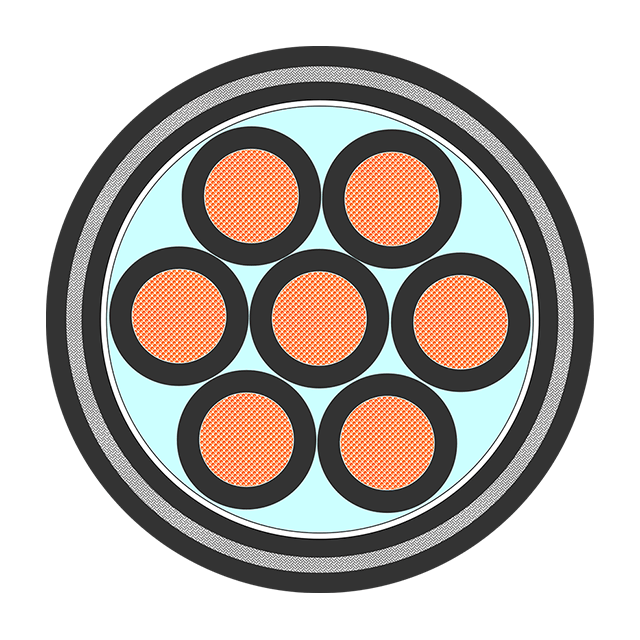
Procurement and engineering teams must evaluate cable specifications through strict technical lenses. Standard industrial cables fail rapidly in marine environments. Evaluating materials, fire ratings, and mechanical properties prevents system failures. Proper evaluation ensures the selected cables meet the specific demands of offshore operations.
Marine environments subject cables to extreme degradation factors. Mandatory resistance profiles include saltwater corrosion and continuous UV exposure. Extreme temperature fluctuations cause standard plastics to crack and peel. Petrochemical exposure from oil and fuel degrades inferior jacketing materials. Standard industrial jacketing offers insufficient protection offshore. Marine-grade cross-linked polyethylene (XLPE) provides superior thermal and chemical stability. Specialized polyurethane jackets resist abrasion and oil penetration. Tinned copper conductors prevent rapid oxidation in high-humidity environments. Each individual copper strand receives a tin coating before stranding. This prevents the black wire corrosion commonly seen in standard copper cables exposed to sea air. Mud-resistant cables are necessary for offshore drilling and support vessels. Evaluating these environmental factors ensures long-term operational reliability.
Enclosed shipboard environments require strict fire safety protocols. A vessel fire represents one of the most severe maritime emergencies. Low Smoke Zero Halogen (LSZH) properties are non-negotiable for internal cabling. Flame-retardant materials prevent fire from spreading along cable trays. Traditional PVC jackets release toxic halogen gases when burned. These gases cause severe respiratory damage to the crew. Thick black smoke obscures escape routes and hinders firefighting efforts. LSZH materials prevent the release of toxic gases. They maintain visibility during a vessel fire, allowing crews to evacuate safely. Compliance with IEC 60332 for flame retardance is a mandatory evaluation metric.
Installation feasibility depends on the cable's bend radius capabilities. Routing cables through tight bulkheads requires high flexibility. Stiff cables risk internal conductor damage during installation. Cables must resist continuous engine vibration without internal fatigue. Heavy armoring provides physical protection against impact and crushing forces. Galvanized steel wire braid offers excellent mechanical defense. Bronze wire braid provides protection while remaining non-magnetic. Engineering teams must balance the need for heavy armoring against the requirement for flexibility. Complex routing through cable transit frames demands cables that bend without compromising their structural integrity.
Evaluation Metric | Standard Industrial Cable | Marine-Grade Cable |
|---|---|---|
Jacket Material | Standard PVC | XLPE or Polyurethane (LSZH) |
Conductor Type | Bare Copper | Tinned Copper |
Fire Safety | Releases toxic halogen gas | Low Smoke Zero Halogen |
Environmental Resistance | Low moisture/oil resistance | High saltwater, UV, and oil resistance |
Vibration Tolerance | Prone to work-hardening | High flexibility, fatigue resistant |
Regulatory compliance dictates cable selection in the maritime industry. Uncertified materials introduce severe operational and legal risks. Understanding the landscape of maritime approvals ensures vessels remain seaworthy and fully insured. Engineering decisions must align with international safety standards.
Key regulatory bodies govern maritime safety and equipment standards. These include the American Bureau of Shipping (ABS) and Det Norske Veritas (DNV). Lloyd’s Register (LR) and the United States Coast Guard (USCG) also set strict guidelines. Specifying uncertified cables introduces severe liability for vessel operators. It invalidates insurance warranties and risks failing mandatory vessel inspections. Certified cables undergo rigorous testing for fire resistance, flexibility, and environmental durability. Classification societies require extensive documentation and factory audits. Using approved cables guarantees adherence to strict maritime safety protocols. Port state control inspectors actively check for compliant cabling during routine vessel examinations.
Installing marine cables involves significant practical challenges. Engineers face congested pathways, electrical interference, and strict handling requirements. Proactive mitigation strategies prevent installation damage and ensure optimal system performance. Proper planning reduces downtime during refits and new builds.
Pulling new cables through existing, congested conduits presents significant difficulty. Older vessels often feature maxed-out cable trays and tight bulkhead penetrations. Forcing cables through these spaces risks tearing the outer jacket. Mitigation tactics involve conducting thorough conduit audits before installation. Engineers must calculate fill ratios to ensure adequate heat dissipation.
Conduct a comprehensive audit of existing cable trays to identify congestion points and sharp bends.
Calculate the fill ratio of conduits to ensure adequate heat dissipation for bundled cables.
Apply marine-approved cable lubricants to reduce friction during long pulls through bulkheads.
Monitor pull-tension continuously with a dynamometer to prevent stretching the internal copper conductors.
Seal all transit frames with certified intumescent putty to maintain the vessel's watertight and fireproof integrity.
Adhering to maximum pull-tension specifications protects internal conductors from stretching. Exceeding tension limits alters the cable's electrical characteristics. Specialized transit sealing systems must be repacked correctly to maintain watertight integrity.
Heavy shipboard machinery generates Electromagnetic Interference (EMI). Generators, variable frequency drives, and large motors emit strong electrical noise. Radio Frequency Interference (RFI) from communication antennas also threatens data integrity. This interference disrupts communication and control signals. Unshielded cables act as antennas, absorbing this noise.
Variable Frequency Drives (VFDs) controlling large pumps and ventilation fans.
Main diesel generators producing high-voltage electrical fields.
High-power radio transmitters and radar arrays on the mast.
Heavy-duty contactors and relays switching large inductive loads.
Mitigation requires specifying properly grounded, braided-shield or foil-shield cables. Shielding isolates data streams and prevents erratic system behavior. Copper braid shields provide excellent low-frequency protection. Aluminum foil shields block high-frequency interference. Combining both shield types offers comprehensive protection for critical navigation and engine telemetry data. Proper grounding of the shield at the equipment panel is mandatory to drain induced currents.
Audit current vessel cabling infrastructure for signs of jacket degradation or stiffness.
Consult with a certified marine cable manufacturer for application-specific shielding recommendations.
Request technical spec sheets to verify LSZH compliance and classification society approvals.
Schedule routine visual inspections for high-vibration routing zones near engines and generators.
A: Marine cables feature specialized jacketing to resist saltwater, oil, and continuous UV exposure. They utilize tinned copper conductors to prevent rapid corrosion in highly humid environments. Standard industrial cables lack these protections and degrade quickly offshore. Marine cables also carry specific maritime certifications ensuring they meet strict safety and performance standards.
A: Low Smoke Zero Halogen (LSZH) jacketing is a strict safety requirement. During a fire, standard PVC jackets release toxic halogen gases and thick black smoke. LSZH materials prevent this toxic release and minimize smoke production. This maintains visibility in confined ship spaces, allowing crews to evacuate safely and fight fires effectively.
A: Inspection schedules depend on usage and environmental exposure. Visual inspections should occur every six months. Look for signs of jacket cracking, mechanical stiffness, or corrosion at the terminals. Cables in high-vibration or exposed deck areas may require replacement every few years, while protected internal cables can last much longer.
A: Yes, heavy machinery like generators and variable frequency drives emit strong EMI. Unshielded cables absorb this electrical noise, leading to signal degradation. This causes erratic system behavior, false sensor readings, and communication drops. Using properly grounded, shielded cables isolates the data streams and prevents interference.
A: Procurement teams should look for approvals from major marine classification societies. The most recognized include the American Bureau of Shipping (ABS), Det Norske Veritas (DNV), and Lloyd’s Register (LR). Compliance with IEEE 45 and IEC 60092 standards also serves as a baseline for maritime electrical installations.
A: Shipboard routing requires navigating tight bulkheads, complex cable trays, and confined spaces. High flexibility allows the cable to achieve a tight bend radius without kinking. If a cable is too stiff, forcing it around corners can fracture the internal conductors or tear the outer jacket, compromising the entire system.
A: Yes, heavy-duty control cables are essential for operating deck machinery. They control winches, cargo cranes, and windlasses. These cables actuate the mechanisms that work alongside dock rope railing hardware to secure vessels. They must feature rugged, abrasion-resistant jacketing to survive constant exposure to the elements and physical impact.
 简体中文
简体中文 

