

Views: 0 Author: Site Editor Publish Time: 2026-10-29 Origin: Site


Imagine a newly installed robotic welding arm suddenly stuttering mid-weld. Or consider a chemical mixing vat reporting erratic, inexplicable temperature spikes. While hardware defects are often the first suspect, invisible electrical noise is frequently the true culprit behind these disruptive errors.
Heavy machinery, variable frequency drives, and dense power grids create severe signal interference on a daily basis. To combat this, shielded wire acts as a critical frontline defense. It blocks harmful electrical noise from corrupting sensitive data. In this comprehensive guide, you will learn exactly when, why, and how to specify the right shielding infrastructure to protect your plant operations.
Key Takeaways
Interference Protection: Shielded infrastructure is essential in environments with high electromagnetic noise to maintain signal integrity and prevent catastrophic data loss.
Application-Specific Selection: Choosing between foil, braid, or combination shielding depends entirely on the physical plant environment, flexibility requirements, and specific interference frequencies.
Critical Scenarios: Shielding is an absolute requirement when routing wiring near heavy motor drives, high-voltage power lines, or when deploying highly sensitive low-voltage instrumentation networks.
Specialized Environments: For offshore platforms or nautical facilities, specialized marine-grade wiring provides necessary electrical shielding alongside extreme resistance to saltwater, oil, and mechanical stress.
Proper Grounding is Mandatory: A protective metallic shield is only effective if correctly grounded at one end to safely drain electrical noise away from the inner conductors.
To understand when to upgrade a facility's wiring, engineers and procurement managers must first grasp the fundamental construction of these vital components. The physical distinction between shielded and unshielded designs directly dictates how effectively a plant can operate under heavy electrical loads.
At its core, a standard Control Cable is a multi-conductor assembly designed specifically to transmit low-voltage electrical signals. These signals govern the operation of machinery and equipment. The basic anatomy consists of inner bare copper conductors, typically stranded to ensure maximum flexibility. A layer of dielectric PVC or cross-linked polyethylene insulation surrounds each conductor to prevent short circuits. Finally, a durable outer jacket protects the internal components from physical damage, moisture, and mild chemicals. Functionally, these assemblies serve as the nervous system of an automated plant. They carry precise commands from programmable logic controllers to valves, actuators, and relays.
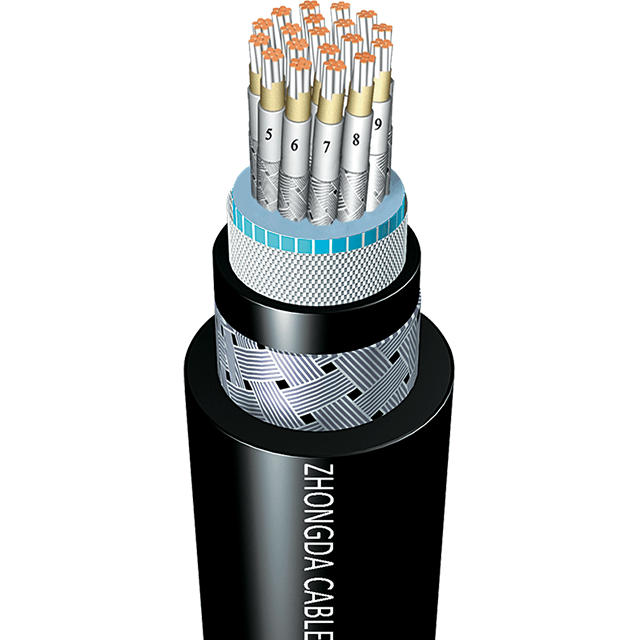
Specifically, the primary physical difference between an unshielded and a shielded variant lies in an additional layer of material integrated just beneath the outer jacket. Shielded designs incorporate a continuous metallic envelope. This envelope is typically constructed from aluminum foil or woven tinned copper braid, wrapping completely around the insulated inner conductors.
Unshielded wiring is perfectly adequate for clean, noise-free environments where power distribution and control signals are routed in entirely separate, isolated conduits. In contrast, a typical industrial plant requires a shielded jacket to act as a Faraday cage. This metallic barrier performs a crucial dual function. It reflects external electromagnetic noise away from the sensitive internal conductors. Simultaneously, it captures any internal signal noise, preventing it from leaking out and disrupting adjacent communication lines.
Industrial manufacturing floors are inherently hostile environments. They are not just acoustically or chemically harsh, but electrically volatile. The invisible threats of electromagnetic interference can cause unexplained machinery behavior. This leads to excessive troubleshooting hours and inflated maintenance costs.
Recent industry data reveals a massive spike in factory floor electromagnetic noise. As plants transition toward Industry 4.0, integrating thousands of wireless IoT sensors and smart automated nodes, the ambient electrical environment has become highly saturated. This digital transformation means the baseline electromagnetic noise is denser than ever. Consequently, shielded cabling has shifted from an optional upgrade to a foundational requirement for modern smart manufacturing.
Electromagnetic Interference, known as EMI, and Radio Frequency Interference, known as RFI, are unwanted electrical signals that disrupt intended operations. EMI generally refers to lower-frequency interference generated by shifting magnetic fields. Meanwhile, RFI denotes higher-frequency interference transmitted through the air. Consider the static you hear on a car radio when driving directly under high-voltage power lines. The external electrical field overpowers the intended broadcast. Similarly, in a manufacturing facility, this electrical static overwhelms the weak commands traveling through control circuits. It causes logic controllers to register false inputs or drop critical connections entirely.
The most prominent culprits of this interference include heavy rotating equipment and power delivery systems. Variable frequency drives regulate motor speed by rapidly switching voltage on and off. This rapid switching creates high-frequency voltage spikes that easily couple into nearby unshielded wires. Furthermore, large electric motors generate massive, fluctuating magnetic fields during startup and sustained operation. Arc welding stations produce intense, broadband electromagnetic noise that can travel significant distances across a facility. Whenever low-voltage signal wires are routed parallel to high-voltage lines, the power lines induce an unwanted voltage onto the control circuits, severely corrupting data transmission.
Deciding when to upgrade to a shielded infrastructure requires a thorough evaluation of the physical layout. The specific applications within your facility also play a major role. The following scenarios represent situations where shielding transitions from a best practice to an absolute engineering necessity.
If your plant layout dictates that signal wires must share cable trays with power lines, shielding is non-negotiable. The same applies if they are routed within a few feet of induction motors. These drives generate common-mode noise and harmonic distortion. This interference effortlessly induces false voltages in adjacent pathways. Without a grounded metallic barrier to intercept and drain this noise, the induced voltage can reach dangerous levels. It can physically damage sensitive circuit boards or trigger phantom emergency stops.
While standard control circuits might operate at 120V or 24V, an Instrumentation Cable handles highly sensitive, extremely low-voltage analog signals. These include 4-20mA loops from pressure sensors or millivolt outputs from thermocouples. Because the baseline signal is incredibly weak, even a microscopic amount of interference can distort the data. For instance, a distorted temperature reading in a petrochemical plant could lead to dangerous overheating. In these precision applications, individual pairs of wires are often shielded independently. An overall shield then covers the entire bundle, guaranteeing absolute signal purity.
Modern industrial complexes rely heavily on integrated Building Automation Systems to manage HVAC, access control, and automated lighting. These interconnected systems require data to travel over vast distances across the facility. They frequently pass through mechanical rooms packed with pumps and compressors. Utilizing shielded infrastructure for these communication protocols ensures that vital data packets are not dropped or corrupted during transmission across long, electrically noisy runs.
Facilities located in coastal or maritime environments face a unique combination of electrical and environmental threats. Dense arrays of radar and heavy drilling equipment create an intensely saturated interference environment. Standard industrial plastics are entirely insufficient here. Instead, specialized Marine Control Cable is required. These robust products feature multi-layered shielding to block intense radio frequencies. They also utilize specialized thermoset or Low Smoke Zero Halogen jackets. This specialized engineering ensures the cables remain resistant to corrosive saltwater and oil degradation while meeting strict maritime fire safety standards.
Selecting the correct type of shield is just as critical as the initial decision to use one. Shielding is not a universal, one-size-fits-all solution. The physical environment and the expected interference frequencies dictate the optimal construction. To make an informed decision, engineers must evaluate the mechanical demands placed on the installation.
Shielding Type | Material | Surface Coverage | Best Application | Pros & Cons |
|---|---|---|---|---|
Foil Shield | Aluminum bonded to polyester tape | 100% | High-frequency RFI, stationary trays | Pros: Lightweight, cost-effective. |
Braid Shield | Woven tinned or bare copper mesh | 70% - 95% | Low-frequency EMI, heavy motors, high flex | Pros: Excellent mechanical strength. |
Combination | Foil inner layer + Braid outer layer | 100% | Severe industrial zones, offshore platforms | Pros: Ultimate broadband protection. |
Foil shielding consists of a microscopic layer of aluminum bonded to a polyester backing for enhanced tensile strength. This method completely wraps the inner conductors. The most significant advantage of foil is its total surface coverage. Because there are no microscopic gaps, it is exceptionally effective at reflecting high-frequency radio interference. Looking at standard industry specifications, a high-quality foil shield often includes a tinned copper drain wire. This wire maintains continuous contact with the foil, making termination and grounding much easier. However, aluminum foil is inherently fragile. It lacks the structural robustness required for continuous flexing applications. If installed in a moving robotic arm, the foil will quickly tear and instantly destroy the shield's effectiveness.
Braided shielding is constructed by weaving a tight mesh of fine bare or tinned copper strands around the insulated conductors. This creates a flexible physical cage. Unlike foil, a braided shield offers exceptional structural integrity. It can easily withstand repeated movement and continuous flexing without degrading. Electrically, copper braids provide excellent conductivity. This makes them highly effective at minimizing low-frequency magnetic interference generated by heavy motors. The primary drawback is that the woven design only provides partial surface coverage, leaving tiny gaps where high-frequency radio waves can penetrate.
For the most severe industrial environments, a multi-layer Shielded Control Cable utilizing both foil and braid is deployed. The inner foil layer provides absolute coverage against high-frequency radio noise. Meanwhile, the outer woven copper braid delivers structural durability and blocks low-frequency magnetic interference. Premium cables in this category, such as those featuring individual pair shielding plus an overall braided shield, offer uncompromising defense across the entire electromagnetic spectrum.
The decision to specify premium shielded infrastructure inherently involves a higher initial capital expenditure. Nevertheless, evaluating this choice strictly on upfront procurement costs ignores the broader financial realities of factory operations. The true value lies in long-term risk mitigation and return on investment.
In automated manufacturing, data is just as critical as electrical power. When interference infiltrates these systems, the results rarely manifest as immediate catastrophic failures. Instead, they present as erratic, maddening behavior. Sensors report false spikes, causing automated safety protocols to shut down assembly lines unnecessarily. Factory downtime is frequently measured in thousands of dollars per minute. When maintenance teams are forced to halt production to trace ghost electrical faults, operational losses rapidly dwarf the incremental cost of premium cabling. By investing proactively, plant managers eliminate one of the most notoriously difficult-to-diagnose causes of equipment malfunction.
A crucial technical reality often overlooked during installation is that a shield is completely ineffective if not grounded correctly. An ungrounded shield acts as a highly efficient antenna. It actively absorbs ambient electromagnetic noise and couples it directly into the inner conductors. To achieve the intended Faraday cage effect, captured electrical noise must be safely drained to the facility's grounding system. Industry best practices strictly dictate that a shield should generally be grounded at one end only. Grounding at both ends can create a ground loop if a voltage difference exists between the two points. This causes unwanted current to flow directly through the shield, introducing severe noise into the system.
To ensure operational reliability and maximize lifespan, electrical engineers should follow a systematic approach when specifying infrastructure for a plant. Abstract requirements must be translated into direct, actionable specifications.
Assess the Threat Level and Frequency. Begin by mapping the physical routing path. Will the installation run parallel to high-voltage lines? If the environment contains heavy machinery generating low-frequency magnetic fields, prioritize braided shielding. If the threat is primarily high-frequency radio noise, foil shielding may suffice.
Determine Mechanical and Flexibility Needs. Evaluate the mechanical life cycle of the installation. Is the wiring being laid permanently in a stationary overhead tray? Stationary applications safely utilize foil. In contrast, continuous-flex applications, such as robotic arms, absolutely mandate braided shielding to prevent material fatigue and tearing.
Check Environmental and Chemical Factors. Assess ambient chemical and temperature exposure. Standard PVC jackets handle dry, indoor environments perfectly. However, if the facility processes caustic chemicals, specialized jacketing materials like polyurethane must be specified. For maritime vessels requiring a rugged Shipboard Control Cable, extreme moisture and salt resistance are mandatory.
Verify Industry Standards and Certifications. Finally, ensure the selected product meets all relevant regulatory requirements. Look for specific voltage ratings, such as 300V or 600V, depending on the application. Compliance with the National Electrical Code or specific maritime certifications ensures the system will pass safety inspections and perform reliably.
While unshielded wiring certainly has its place in highly controlled environments, modern automated industrial plants are simply too electrically noisy to risk signal degradation. The ever-increasing density of variable frequency drives, heavy induction motors, and wireless communication systems creates an invisible web of interference. This threatens operational stability every single day.
Matching the correct shield type to your specific interference level is the foundation of plant reliability. Investing in the proper shielding technology upfront guarantees cleaner signals, fewer maintenance headaches, and maximum operational uptime. If you are experiencing unexplained sensor drops or planning a new automated line, upgrading your infrastructure is the most effective preventative measure available. Explore high-performance industrial wiring solutions at ZD Cables to safeguard your critical plant operations today.
This is only advisable in highly controlled environments completely free of heavy machinery, parallel power distribution lines, and motor drives. In a typical modern industrial plant, the minor upfront financial savings of buying unshielded infrastructure will quickly be lost. Operational downtime, complex troubleshooting labor, and costly signal errors easily outweigh the initial cost difference.
While both types are frequently shielded to prevent interference, they serve different operational purposes. A standard control circuit typically handles higher voltages, such as 24V to 120V, for regulating relays, valves, and machinery operation. An instrumentation cable handles very low-voltage analog signals used for precision sensors and data transmission. Because instrumentation signals are exceptionally weak, they are much more susceptible to interference and require stricter shielding standards.
No. In standard industrial applications, it is generally recommended to ground a shielded layer at only one end. Grounding at both ends can create ground loops due to differing voltage potentials between the two ground points. A ground loop causes current to flow through the shield itself. This can actually introduce more noise into the system than having no shield at all.
Marine or shipboard variants are strictly required in offshore rigs, port facilities, or nautical vessels. In these harsh environments, the infrastructure must provide heavy-duty protection against radar and shipboard radios. Furthermore, the outer jacket must withstand continuous salt spray, extreme moisture, and drilling mud. They must also meet highly strict maritime fire safety and low-smoke zero-halogen standards.
Engineers typically use a digital multimeter to verify ground continuity. By measuring the resistance between the shield's drain wire and the main grounding busbar at the control panel, you can confirm a solid connection. The resistance reading should be extremely low, typically a fraction of an ohm. High resistance indicates a poor termination or a broken drain wire.
The minimum bend radius depends heavily on the shield construction. Foil-shielded cables generally require a larger bend radius, often 8 to 10 times the outer diameter, to prevent the aluminum tape from tearing. Braided shields are more flexible and can often accommodate tighter bends. Always consult the manufacturer's specific datasheet, as exceeding the bend radius will permanently damage the metallic barrier.
 简体中文


