

Views: 0 Author: Site Editor Publish Time: 2025-11-03 Origin: Site


Marine cables are an essential part of any maritime operation. Whether you're working on commercial vessels, luxury yachts, or underwater systems, the reliability of the electrical and communication infrastructure is crucial for the safety, performance, and longevity of the vessel. Without proper marine cables, crucial systems like navigation, lighting, communication, and power transmission could fail, putting the crew, passengers, and vessel at risk.
In this article, we will explore what marine cables are, why they are important, and how they are designed to withstand the unique challenges of the maritime environment. We’ll also dive into the various types of marine cables, their construction, and why choosing the right cable is key to ensuring safe and efficient maritime operations.
Marine cables, also known as marine-grade cables, are electrical cables specifically designed to meet the unique demands of maritime applications. These cables are used for power transmission, data communication, and control systems on ships, boats, and offshore platforms. What makes marine cables different from regular cables is their ability to withstand the harsh and corrosive conditions of the sea, including saltwater, moisture, UV exposure, temperature variations, and mechanical stress.
The construction of marine cables is optimized for the marine environment, ensuring the safety and reliability of the vessel’s electrical systems. They are engineered to meet various industry standards and certifications, ensuring that they can function efficiently and safely under the extreme conditions encountered on the water.
Marine cables are designed with several specific features that make them suitable for the marine environment. Some of these features include:
The most significant challenge for cables used in marine environments is exposure to saltwater, which is highly corrosive. Marine cables are built with special corrosion-resistant materials to ensure that the cables do not degrade when exposed to saltwater or moisture. Common materials used for corrosion resistance include tinned copper (instead of bare copper) and coated conductors, which help protect against oxidation.
Marine cables are built to withstand physical stresses that are not common in other environments. The cables are designed with strong insulation to protect against abrasions, impacts, and mechanical wear. Additionally, marine cables often have high tensile strength, allowing them to endure the vibrations, movements, and rough conditions encountered at sea.
Marine cables are designed to resist water ingress. They are typically made with waterproof coatings or materials that prevent moisture from entering the core, which would otherwise cause short circuits or electrical failures. Special coatings also prevent mold or fungus growth, which can degrade the cable over time.
Exposure to sunlight can degrade many materials, including cable insulation. Marine cables often feature UV-resistant coatings that protect the cables from the sun’s harmful rays. This is especially important for vessels that are exposed to direct sunlight for long periods.
Marine cables are designed to be flexible, making them easier to route and install in tight spaces onboard a vessel. The insulation is often made from materials that allow the cable to bend without cracking, making it ideal for use in applications where the cable may need to follow curved paths or be installed in confined areas.
Safety is paramount in maritime operations. Marine cables are often built with flame-retardant insulation to ensure that they can withstand potential fire hazards. In case of an onboard fire, these cables are less likely to spread the fire, helping to protect both the crew and the vessel.
There are various types of marine cables, each designed for specific applications on board a vessel. Let’s look at some of the most common types and their uses:
Power cables are used to transmit electrical power to different parts of the vessel. These cables are often the most robust and heavy-duty, as they need to handle high current loads for systems like engines, lighting, and HVAC systems. Power cables can be further divided into different subcategories, including:
Low Voltage Power Cables: These are used for low-voltage systems that require less power, such as lighting and small appliances.
High Voltage Power Cables: These cables are used in high-voltage systems that transmit large amounts of electricity, such as those used for propulsion and heavy equipment.
Control cables are used for sending signals between different parts of the vessel’s systems. These cables are typically smaller than power cables and are used to control equipment like motors, valves, alarm systems, and control panels. Control cables often feature multiple insulated wires bundled together to allow the transmission of different signals or controls.
Communication cables are used for onboard communication systems, including intercoms, radio systems, and data transmission. These cables must be capable of handling high-frequency signals without loss of quality or interference. Coaxial cables and fiber optic cables are often used in these applications, depending on the required data transfer rates and distance.
Instrumentation cables are used for monitoring and measuring the vessel’s operations. These cables connect sensors and instruments to the main control system, providing data about temperature, pressure, fuel levels, and other important metrics. These cables are designed to be highly accurate and reliable, often having a higher number of conductors to carry multiple signals.
Hybrid cables combine the functionality of multiple cables into a single unit. For example, a hybrid cable might combine power cables, communication cables, and control cables into one bundle to simplify installations and reduce clutter. These cables are often used in complex systems where multiple types of signals need to be transmitted.
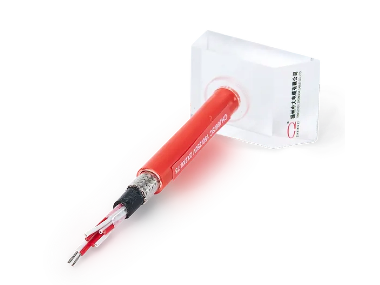
The construction of marine cables is engineered to ensure the highest level of safety and performance. Marine cables are generally constructed with the following layers:
The conductor is the core of the cable, responsible for carrying the electrical current. Marine cables use copper or aluminum as conductors, though copper is preferred due to its better conductivity. In some cases, tinned copper is used to improve the corrosion resistance of the conductor.
The insulation surrounds the conductor and protects it from physical damage, moisture, and electrical faults. PVC (Polyvinyl Chloride) and XLPE (Cross-Linked Polyethylene) are commonly used materials for insulation due to their resistance to water, UV, and heat. Rubber is also sometimes used for more flexible cables, especially in control and communication cables.
To prevent electromagnetic interference (EMI) and ensure signal integrity, many marine cables are equipped with shielding. This can be achieved using metallic foil or braided wire. Shielding is particularly important for communication and data transmission cables.
The outer sheath provides additional protection against environmental factors, including abrasions, chemical exposure, and UV rays. Marine cables are typically sheathed in durable materials like PVC, nylon, or thermoplastic elastomers (TPE). In some cases, the sheath may be fire-retardant to protect the cable in case of a fire.
Choosing the right marine cable depends on several factors, including the type of vessel, the environmental conditions, and the specific applications for which the cable is required. Here are some key considerations to keep in mind:
Ensure that the marine cable is marine-grade certified, meeting relevant standards such as ISO 9001, IEC 60092, and UL 1309. These certifications guarantee that the cable meets strict performance and safety requirements for use in marine environments.
When choosing marine cables, it's essential to match the voltage rating, current rating, and insulation type with the electrical needs of the system. For example, power cables should have an adequate voltage rating to handle high current, while communication cables should be capable of carrying signals without loss of quality.
Consider the specific environmental conditions the cable will be exposed to. Will the cable be exposed to saltwater or chemicals? Is it going to be used in an area with high vibration or mechanical stress? The answers to these questions will help determine the appropriate type of cable and protective coatings.
For tight spaces or areas where cables need to be routed around corners, flexible cables are ideal. Marine cables that are highly flexible and can easily bend without damage are perfect for these installations.
Marine cables are vital components for the safety, efficiency, and longevity of maritime operations. Whether you're wiring a luxury yacht or a commercial ship, choosing the right marine cable is crucial for ensuring that systems like power distribution, communication, and control remain reliable under harsh marine conditions. By understanding the various types of cables, their construction, and the environmental factors at play, you can make informed decisions about the cables best suited for your maritime needs.
Ultimately, the strength, durability, and reliability of marine cables contribute to the safe and smooth operation of vessels across the globe. Whether it’s for powering critical systems or enabling seamless communication, marine cables are key to ensuring that every operation on the water is efficient and secure.
 简体中文
简体中文 

